
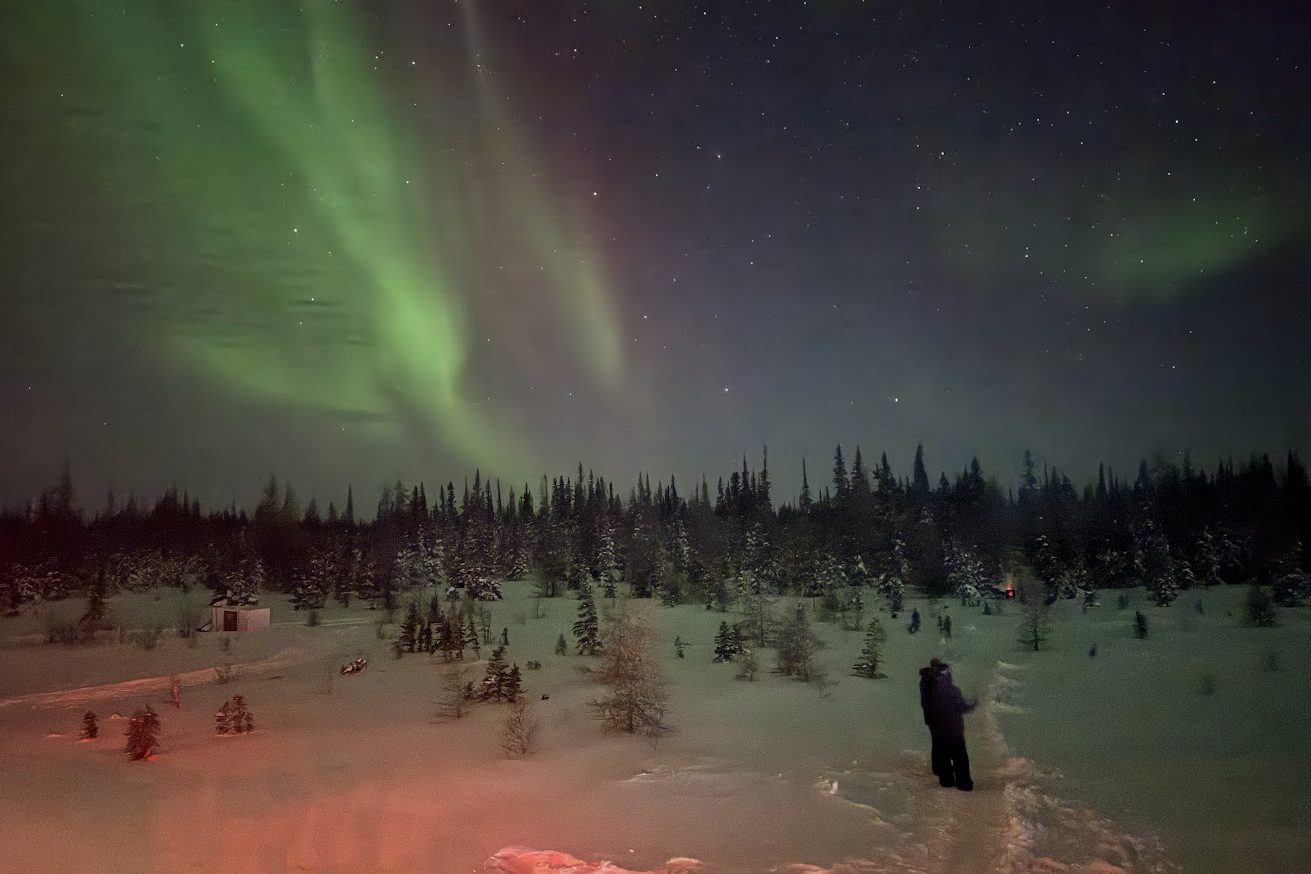
Seeing the northern lights had always been my dream. I spent years admiring photos of the glowing green sky, but nothing prepared me for witnessing the aurora in person. When I finally booked a Churchill Northern Lights tour, we quickly discovered why Churchill, Manitoba, is considered one of the world's best places to see this unforgettable spectacle.
Jump to:
- Why Churchill Is One of the Best Places to See the Northern Lights
- Best Time to Visit Churchill for the Northern Lights
- How to Get to Churchill
- Where to Stay in Churchill
- Where to Eat in Churchill
- 4-Day Churchill Northern Lights Tour Itinerary
- Know Before You Book Your Churchill Northern Lights Tour
- Looking Back on Our Churchill Adventure
Most travelers think of Iceland or Norway when they imagine the Aurora Borealis, but Churchill offered something different. Not only are the chances of seeing the northern lights among the highest in the world, but the experience goes far beyond simply waiting for the sky to light up.
Over four days, I got to explore Churchill, learn about Indigenous culture and Arctic wildlife, ride aboard the iconic Tundra Buggy, and enjoy one of the most memorable dinners we've ever had.
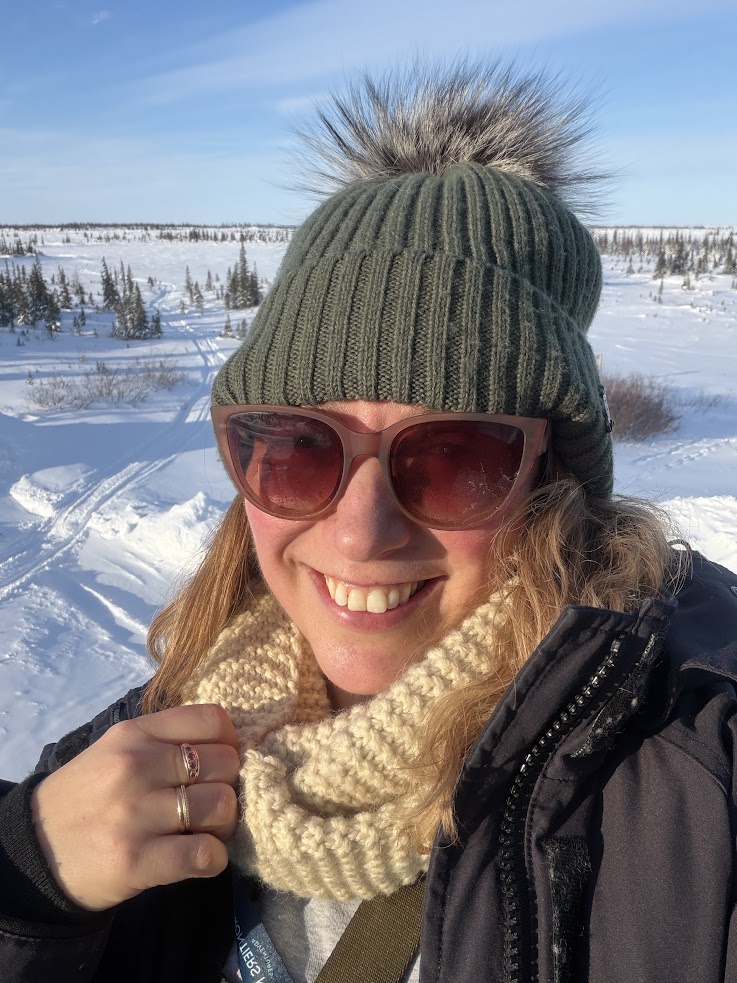
Frontiers North Adventures runs this trip as a six-day, five-night itinerary that includes four full days in Churchill. Ours was a condensed version built around those four days on the ground, so we skipped the bookend nights in Winnipeg that most guests enjoy.
Everything else was thoughtfully organized, from flights and accommodations to guided excursions and nightly aurora viewing at several unique locations, which meant we could focus on soaking up the experience instead of worrying about the logistics.
Plan Your Trip
Save on fees abroad with the Wise Card—use it at ATMs, restaurants, and for flights or hotels in over 150 countries. Manage 40+ currencies in real-time with the Wise app.
Need Help Planning?
- Cheap Flights: Find the best deals.
- Accommodation: From hostels to luxury stays.
- Car Rental: Affordable options worldwide.
- Sightseeing Tours: Explore without breaking the bank.
- Travel Adapter: One adapter for all your needs.
- Travel Insurance: Don’t risk it—stay covered.
This post includes affiliate links, and as an Amazon Associate I earn from qualifying purchases. Read my full disclosure and privacy policy.
In this guide, we'll share exactly what our northern lights experience was like, from the day-by-day itinerary to practical tips on when to visit, how to get there, where to stay and eat, and whether it's worth the cost.
Why Churchill Is One of the Best Places to See the Northern Lights
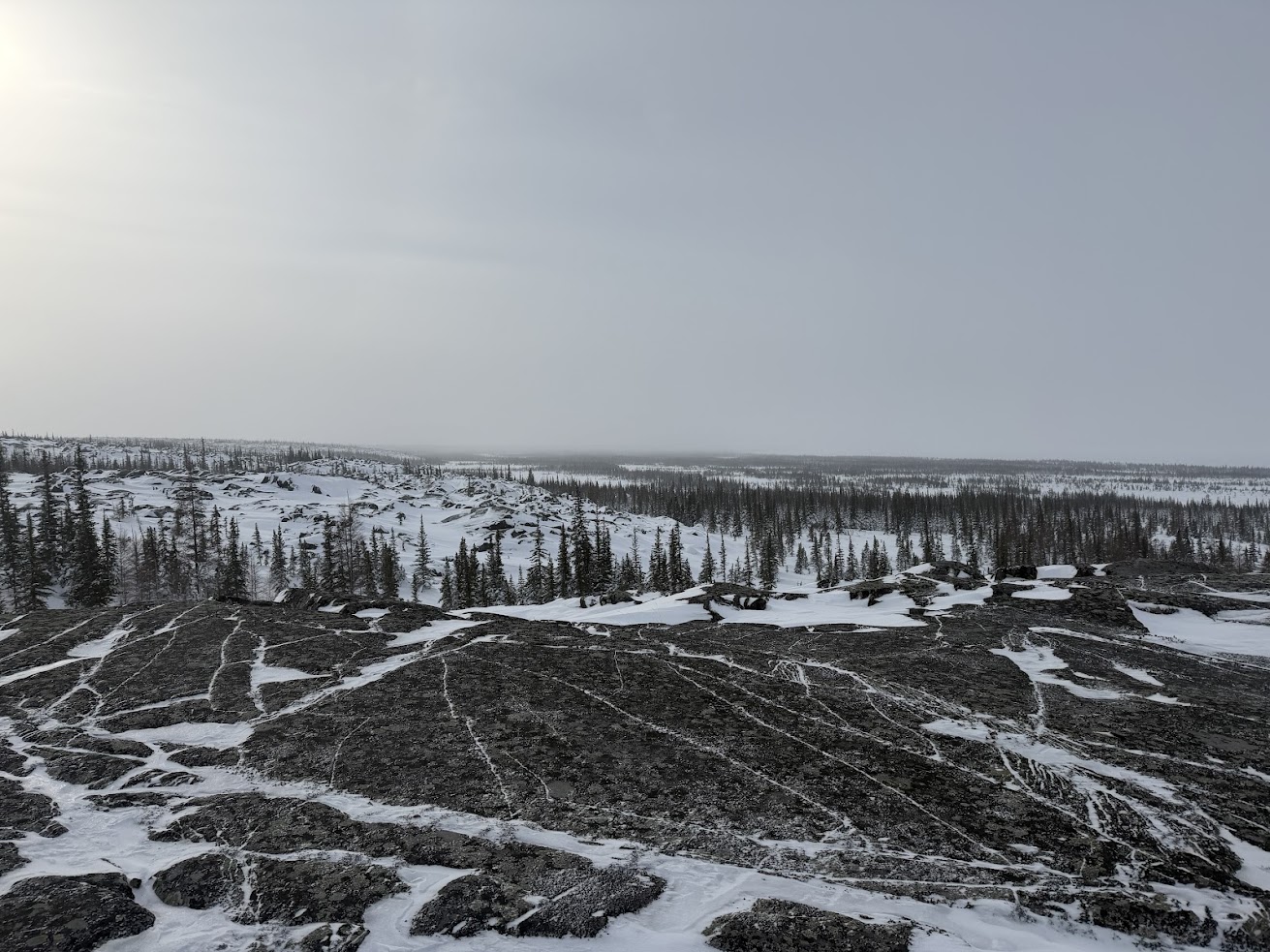
There is a reason travelers from around the world brave subzero temperatures to visit Churchill each winter.
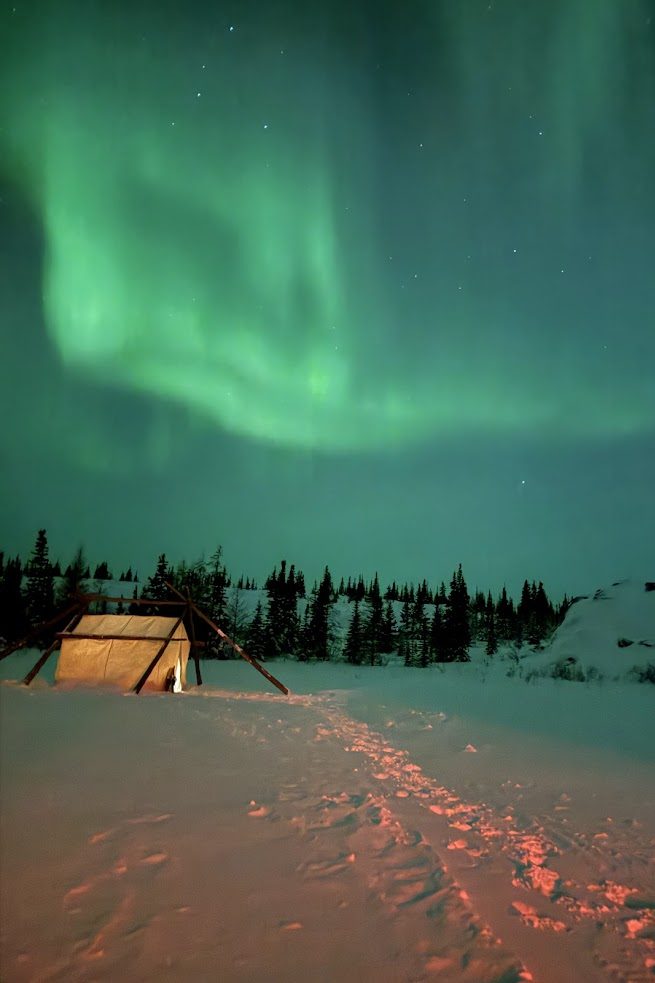
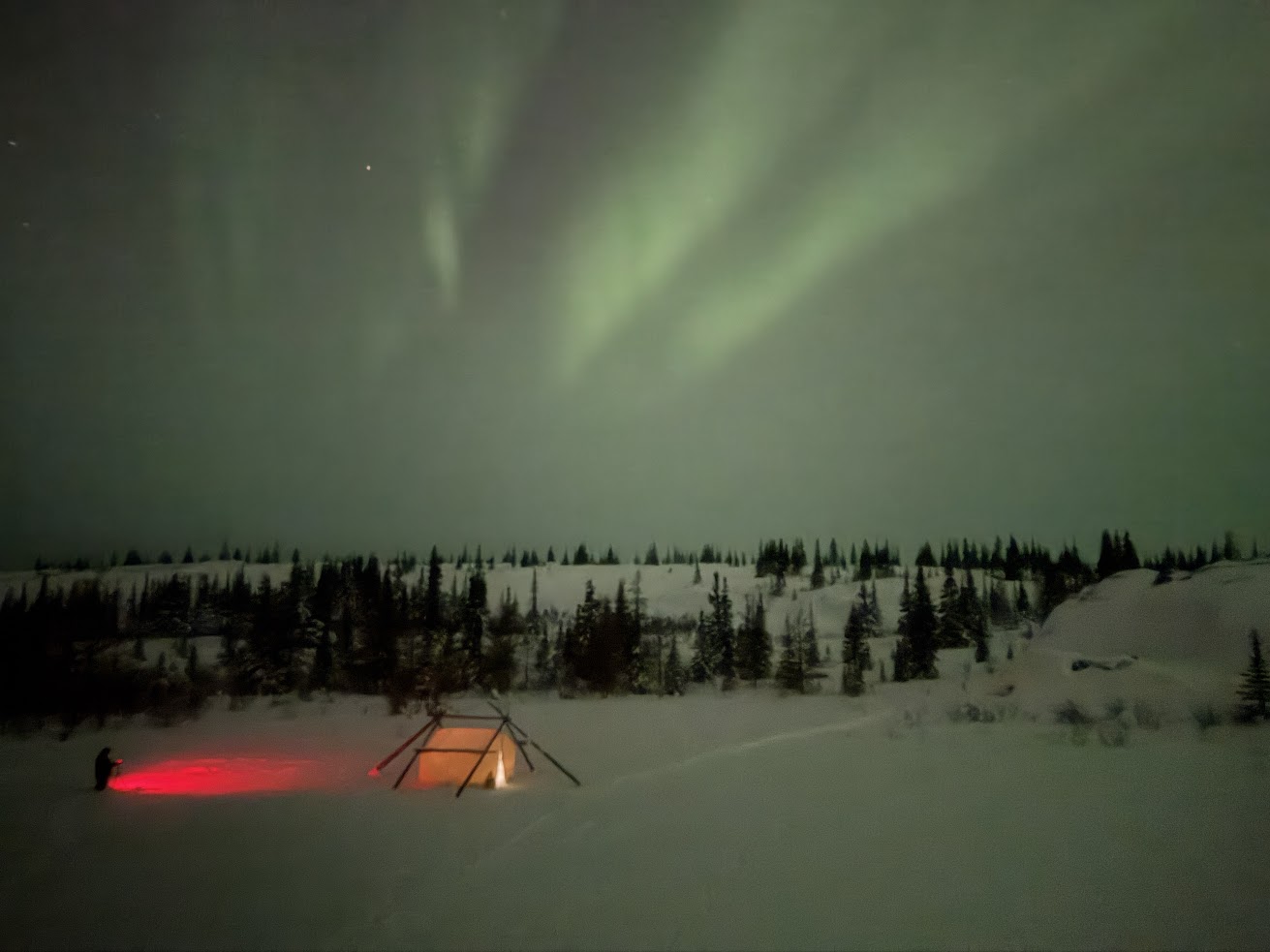
This small town on the Hudson Bay coast is located directly beneath the auroral oval, the ring around the Arctic where the northern lights appear most frequently.
Thanks to this, Churchill experiences some level of auroral activity on roughly 300 nights each year. Few places on Earth to see the northern lights can make that claim.
Churchill actually helped scientists understand this phenomenon.
The aurora occurs when charged particles from the Sun, funneled by Earth's magnetic field, collide with atoms in the upper atmosphere, releasing energy as colorful light. Green is the color you'll see most often, although strong levels of solar activity can produce shades of pink, purple, and even red.
Today, the Churchill Northern Studies Centre continues that legacy as a research and education facility where visitors can join solar scientists and watch the sky from its heated aurora domes.
Best Time to Visit Churchill for the Northern Lights
Cold is your friend here, strange as that sounds. The best time to see the lights in Churchill is February and March. Those are the months when the nights are long, and the cold temperatures push moisture out of the air.
Churchill is a semi arid place, which means it does not get much snow or rain in a normal winter. When the air is that dry and that cold, you get clear skies, and clear skies are exactly what you need for aurora viewing.
Our guide put it simply: it might drop to -35°C, but you came to see the northern lights, and you came at the right time to the right place. That line stuck with me. Even a short sighting of green overhead makes the cold worth every minute.
How to Get to Churchill
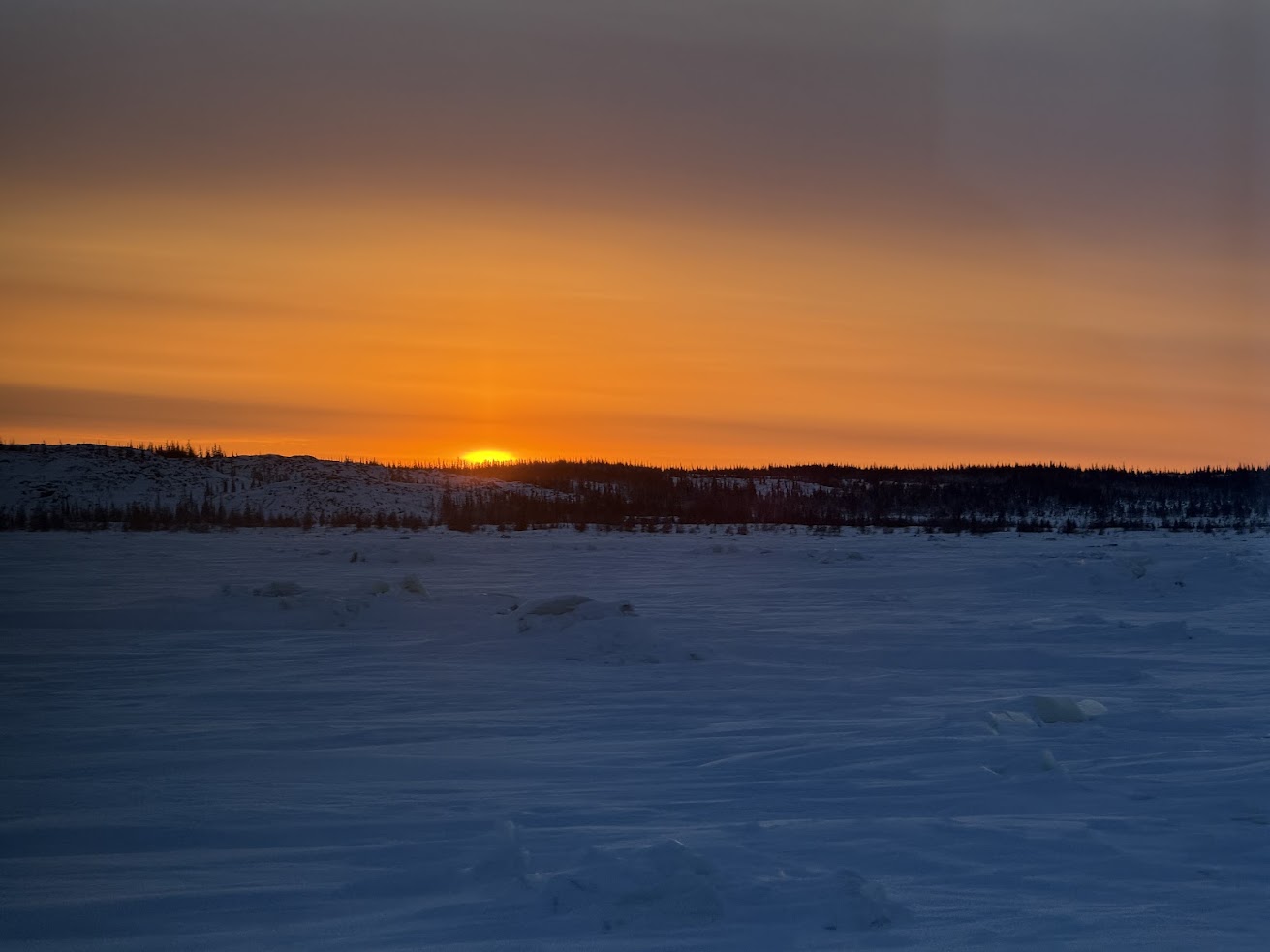
Despite its remote location on the western shore of Hudson Bay, getting to Churchill is easier than many travelers expect. Since there are no roads connecting Churchill to the rest of Canada, you'll need to arrive by plane or train.
We began our journey in Montreal, making our way west to Winnipeg, Manitoba, before continuing north to Churchill. While the destination feels wonderfully remote, getting there is more straightforward than you might expect.
Flying to Churchill
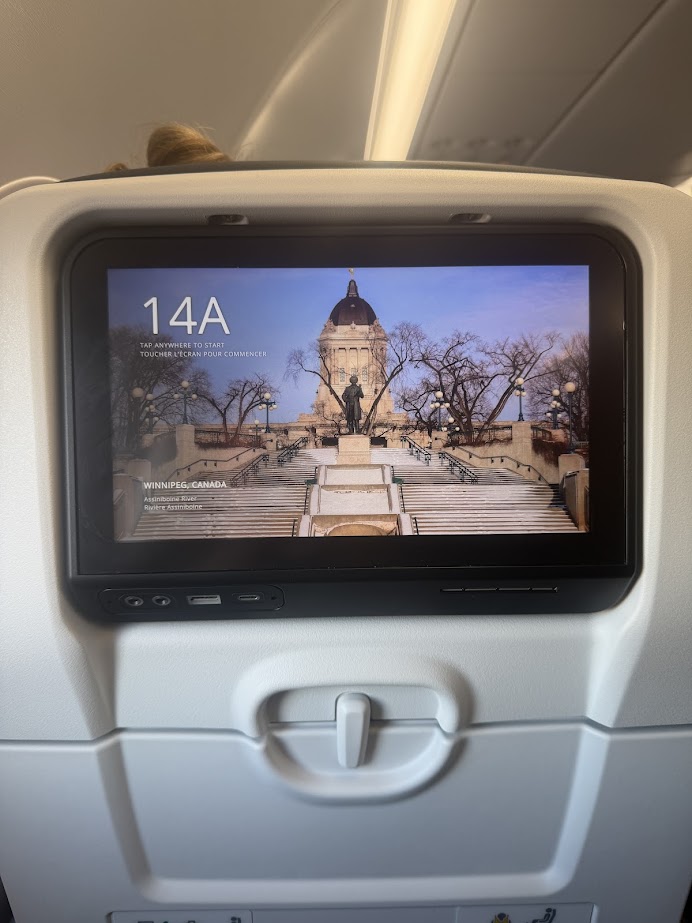

For most travelers, flying is by far the fastest and most convenient option.
Most visitors first fly into Winnipeg (YWG), Manitoba's largest city. From there, they board a regional flight to Churchill Airport (YYQ), which takes around two hours.
If you're traveling from the United States, you'll typically connect through one of Canada's major airports before continuing to Winnipeg. Common routes include:
- New York → Toronto → Winnipeg → Churchill
- Chicago → Winnipeg → Churchill
- Minneapolis → Winnipeg → Churchill
- Denver → Calgary → Winnipeg → Churchill
- Seattle → Vancouver → Winnipeg → Churchill
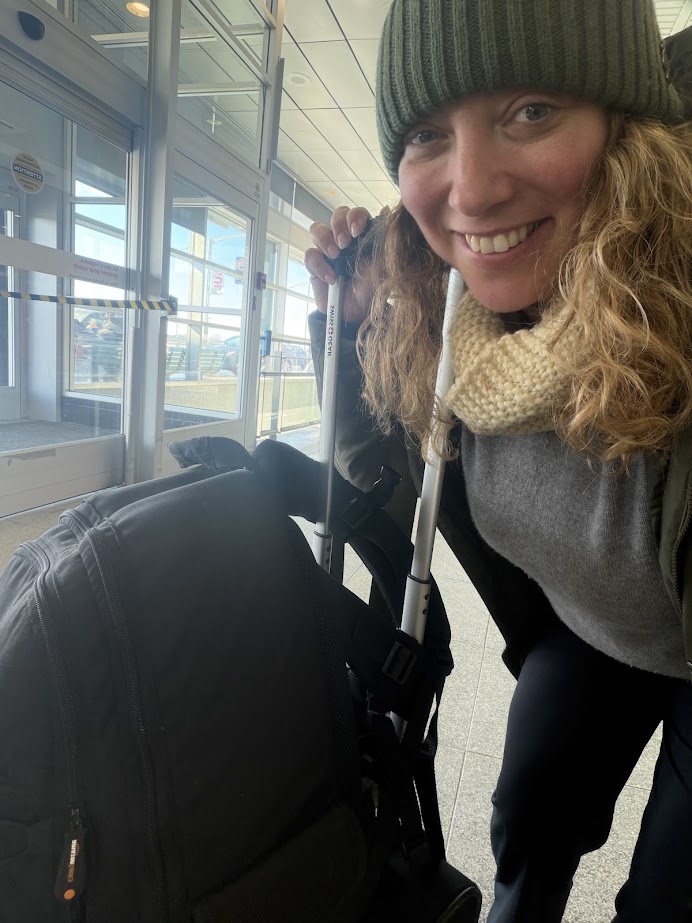
Travelers from the West Coast may find it easier to connect through Vancouver, while those on the East Coast often have convenient connections through Toronto.
One tip we'd recommend is arriving in Winnipeg the day before your flight to Churchill, especially if you're traveling from the U.S. Winter weather can occasionally delay flights, and having a little extra time makes the journey much less stressful.
Where to Stay in Churchill
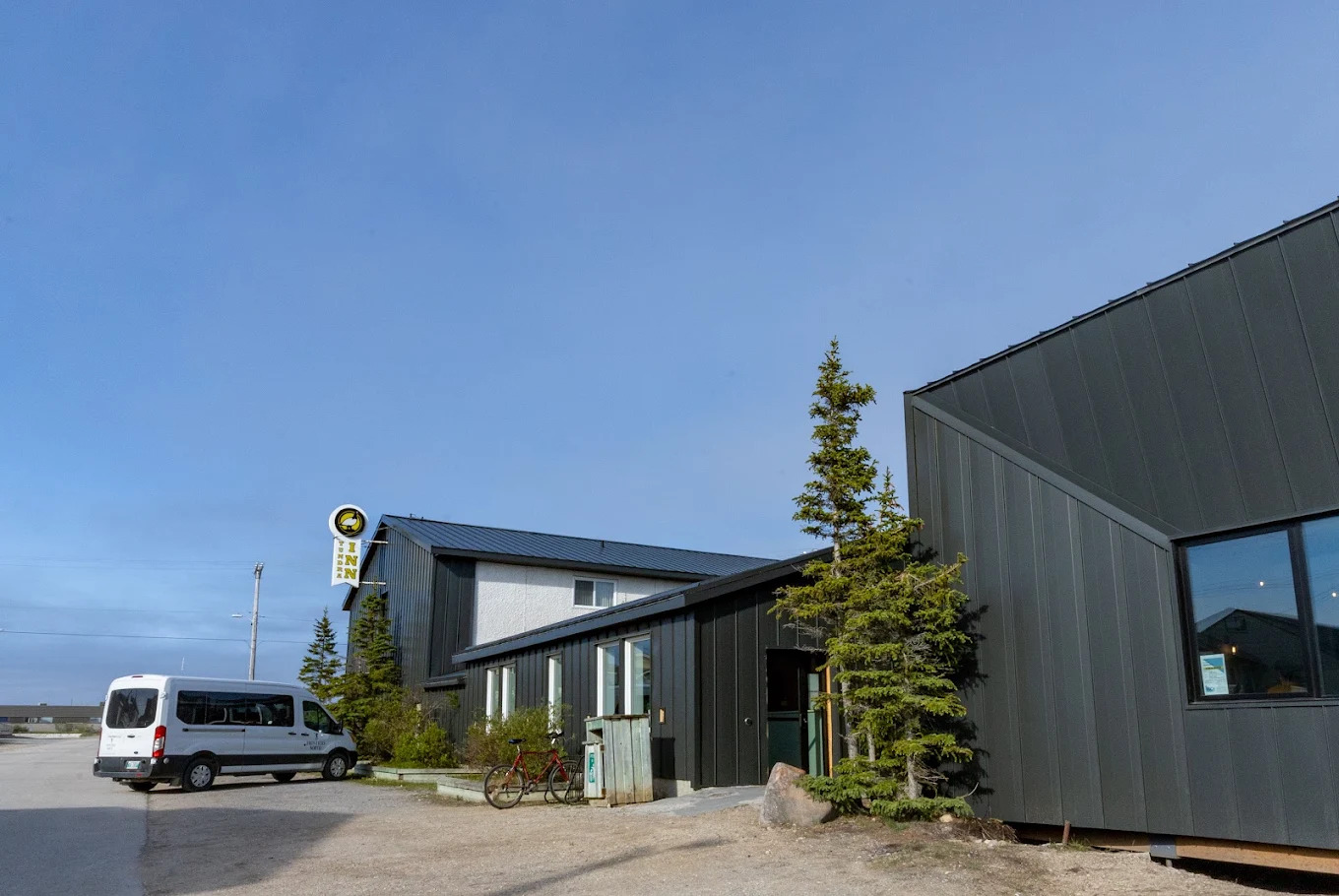
Accommodations in Churchill are limited, which is one more reason to book early. The town has only a handful of hotels and inns, and during aurora season they fill up quickly with tour groups.
We stayed at the Tundra Inn, a comfortable, locally run property that Frontiers North also operates. Rooms are simple and warm, which is exactly what you want after a night standing outside in the cold, and everything in town is within a short walk or a quick shuttle ride.
Most Churchill Northern Lights tours include accommodation in their packages, so you generally won't need to arrange lodging separately unless you're traveling independently.
Where to Eat in Churchill

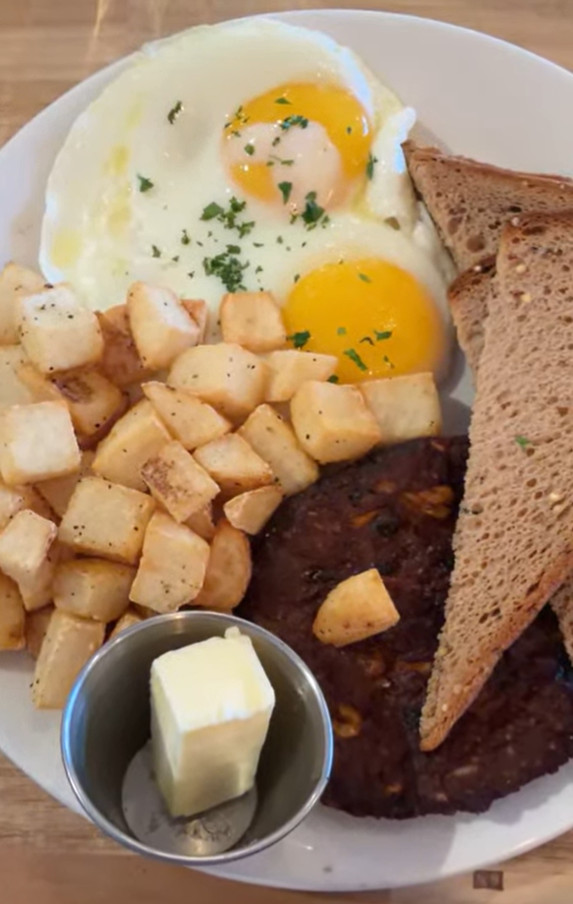
For a town of a few hundred people, Churchill eats surprisingly well.
The Ptarmigan is the local favorite and the place where we ate most of our meals. It's Frontiers North's restaurant, open seven days a week during the season, and it doubles as the spot where residents grab their morning coffee.
Before it opened, locals told us there wasn't really anywhere in town to take a spouse or a friend for a proper night out, which tells you how much it means to the community.
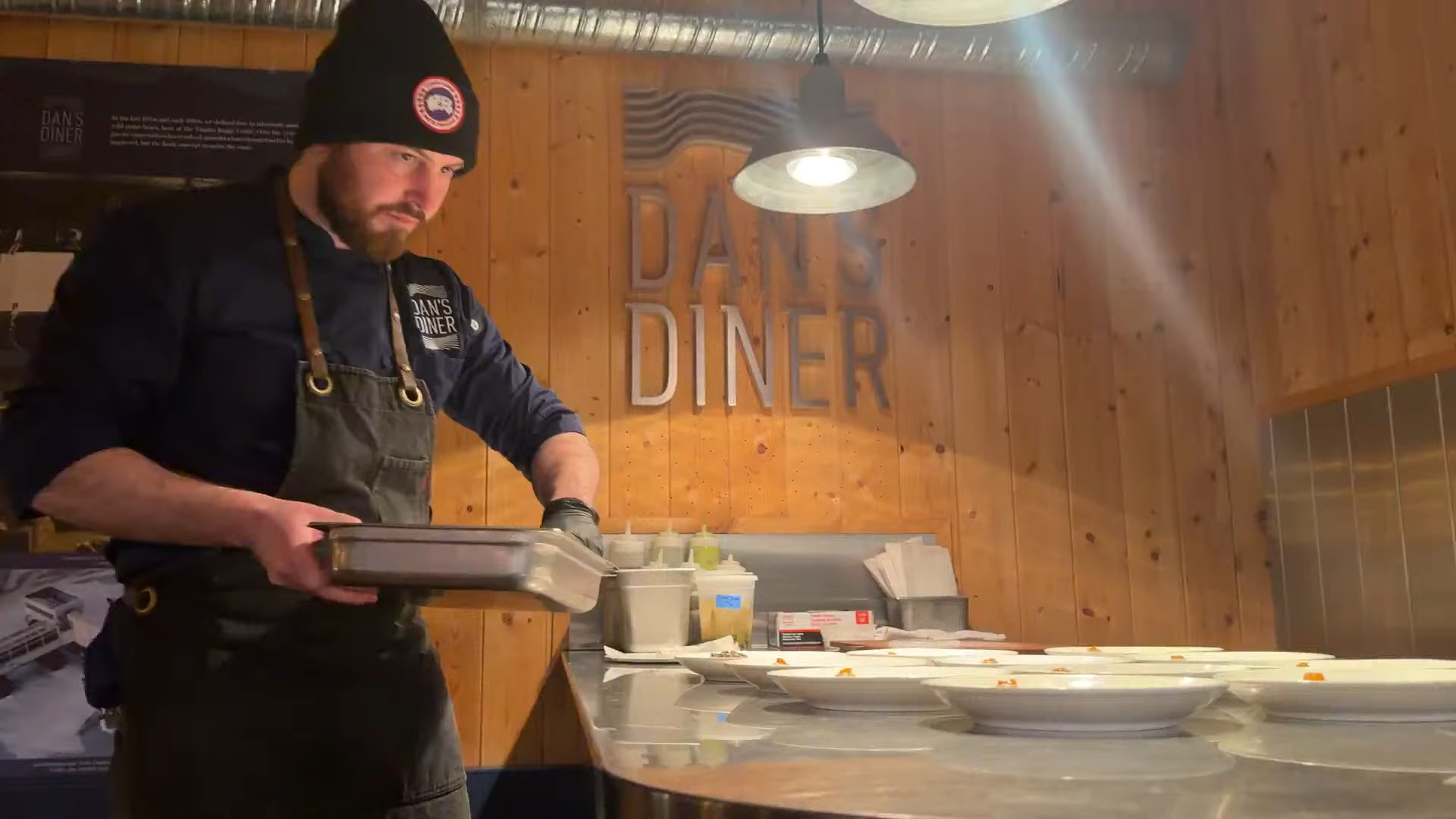
Then there's Dan's Diner, which is in a category of its own and worth planning your whole trip around.
Head chef Connor MacAulay builds the menu around what grows and lives in the region, with three main courses themed around forest, land, and sea.
Berries feature heavily, since nearly every berry in Churchill is edible, so expect cloudberries, lingonberries, crowberries, and bearberries to turn up on your plate. Drink pairings lean on Canadian wines, and the cocktails use foraged northern ingredients.
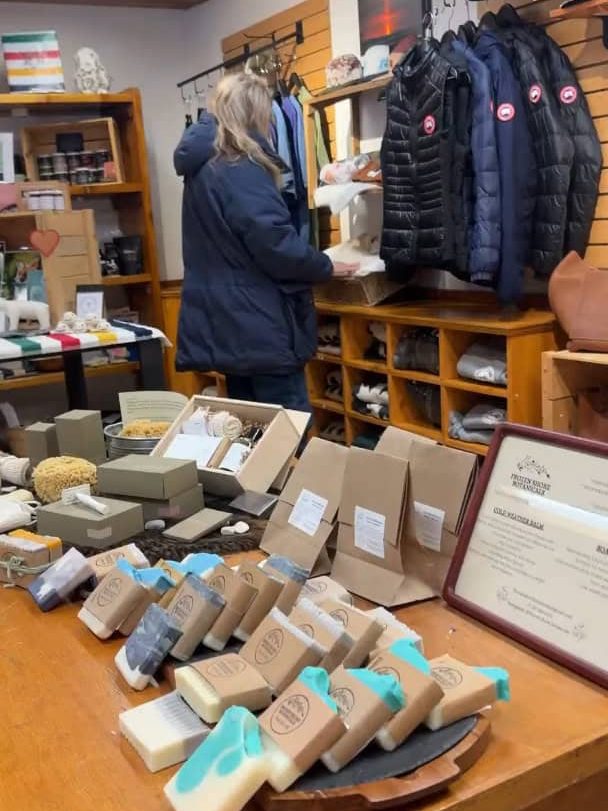

The Northern Store, a big blue warehouse on Kelsey Boulevard, is where you'd pick up snacks, groceries, or, as our guide pointed out with a straight face, a snowmobile.
4-Day Churchill Northern Lights Tour Itinerary
Here's what you can expect during each day of our Churchill Northern Lights tour, from your arrival through the end of your trip.
Day 1: Arrival
Our first day covered a lot of ground, from the flight north to our first night under the aurora. It set the tone for everything that followed.
Morning Flight from Winnipeg to Churchill
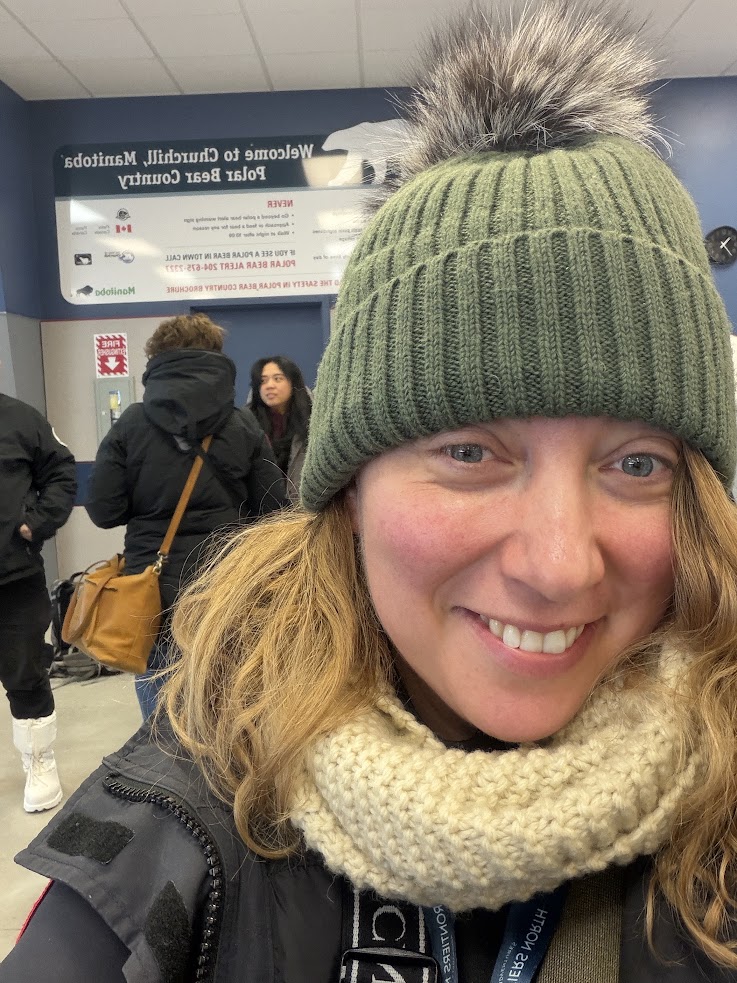
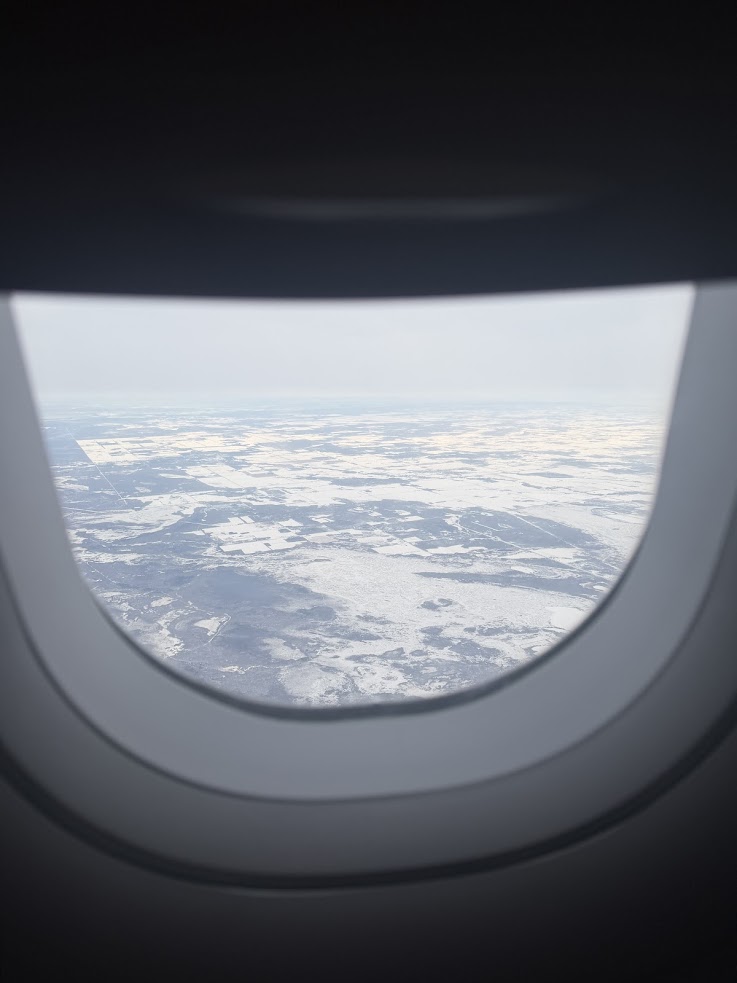
Our adventure began with an early morning flight from Winnipeg to Churchill. As the landscape below transformed into frozen rivers, snow-covered forests, and endless tundra, it finally sank in that we were headed to one of the best places on Earth to see the northern lights.
Welcome Orientation with Your Guide
After checking into our hotel, we met our guide, Ward Cameron, for a welcome orientation.
With over 35 years as a wilderness guide, he shared what to expect over the coming days, explained the science behind the aurora, and offered northern lights photography tips that proved invaluable later in the trip.
One piece of advice stuck with us: if you take your camera outside, leave it there for the night. Bringing it back indoors can cause condensation to freeze on the lens when you head outside again.
Ride a Tundra Buggy
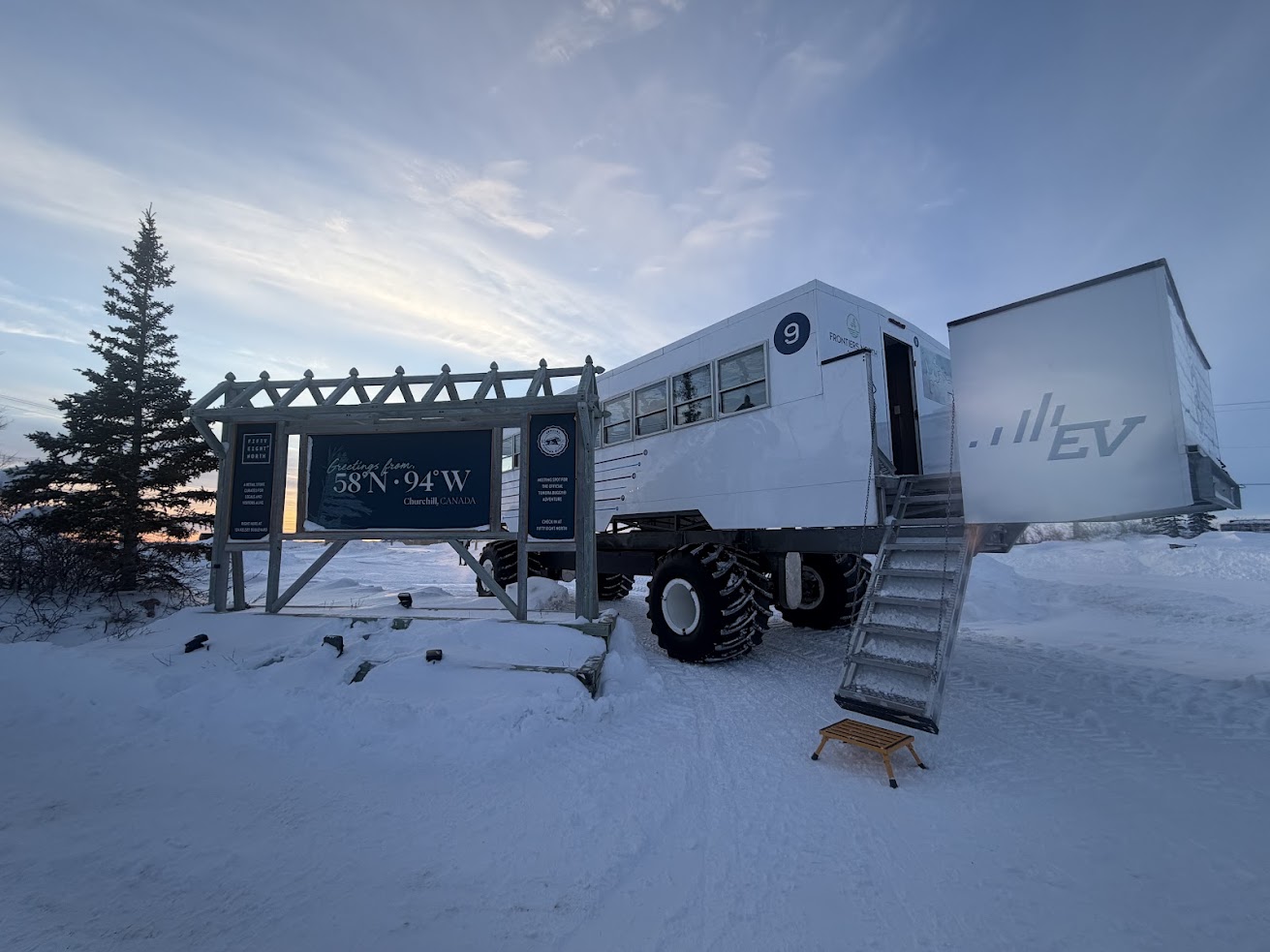
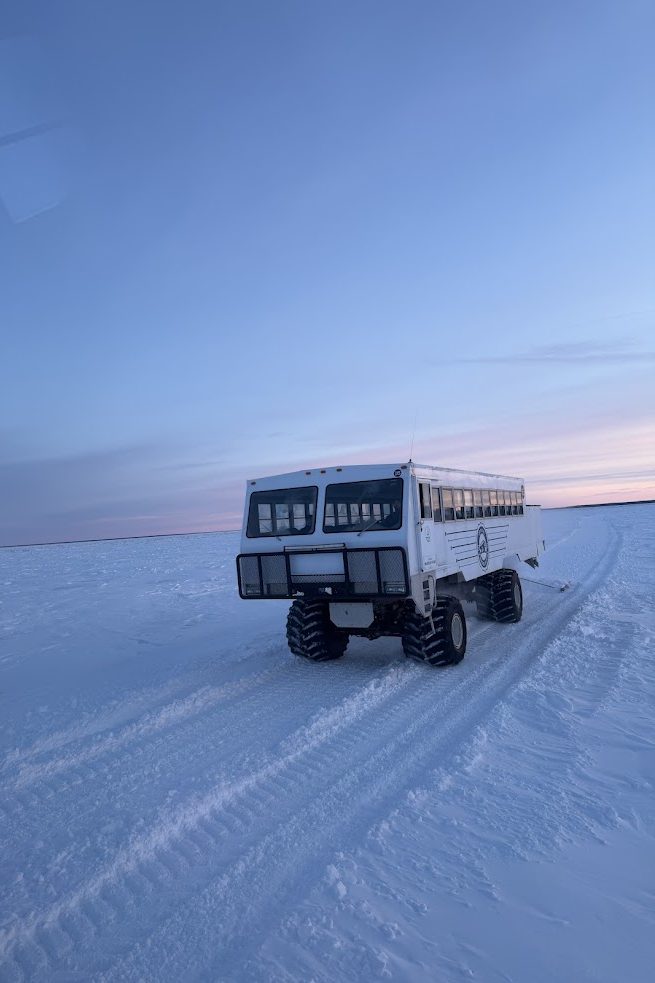
We boarded a Tundra Buggy for transportation. The buggy is worth a moment on its own. Len Smith built the first one here in 1979, a custom vehicle designed to move safely across fragile tundra without tearing it up.
Frontiers North later acquired the fleet in the 1990s. Nothing else quite like it exists, and the one that carries guests to dinner is now fully electric, which means you cross the frozen Churchill River in near silence.
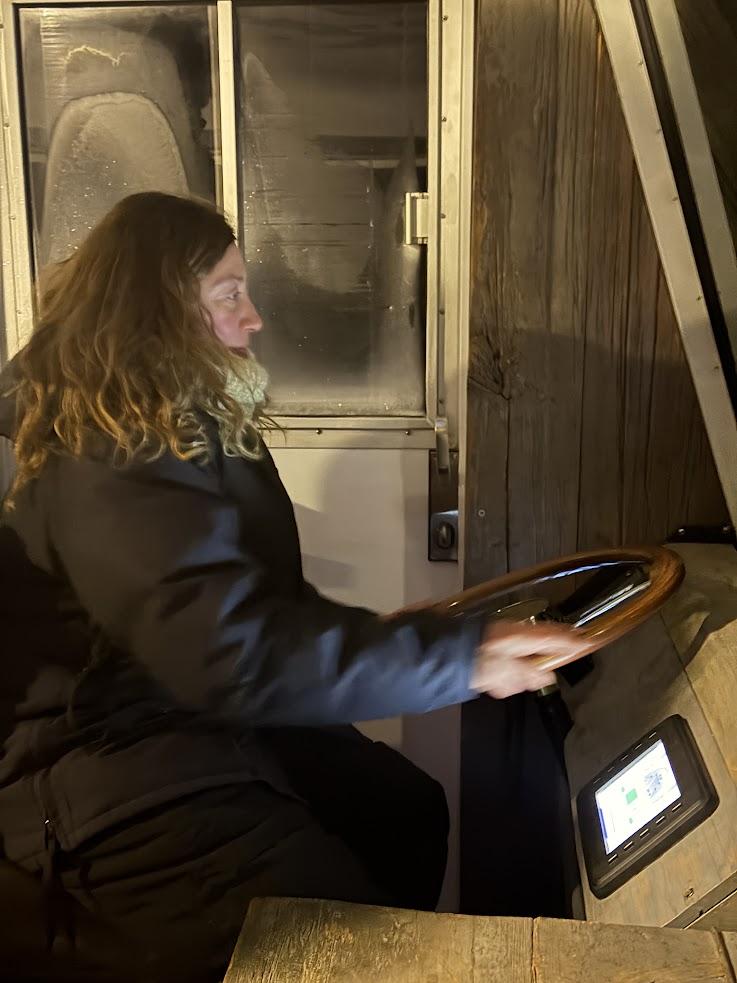
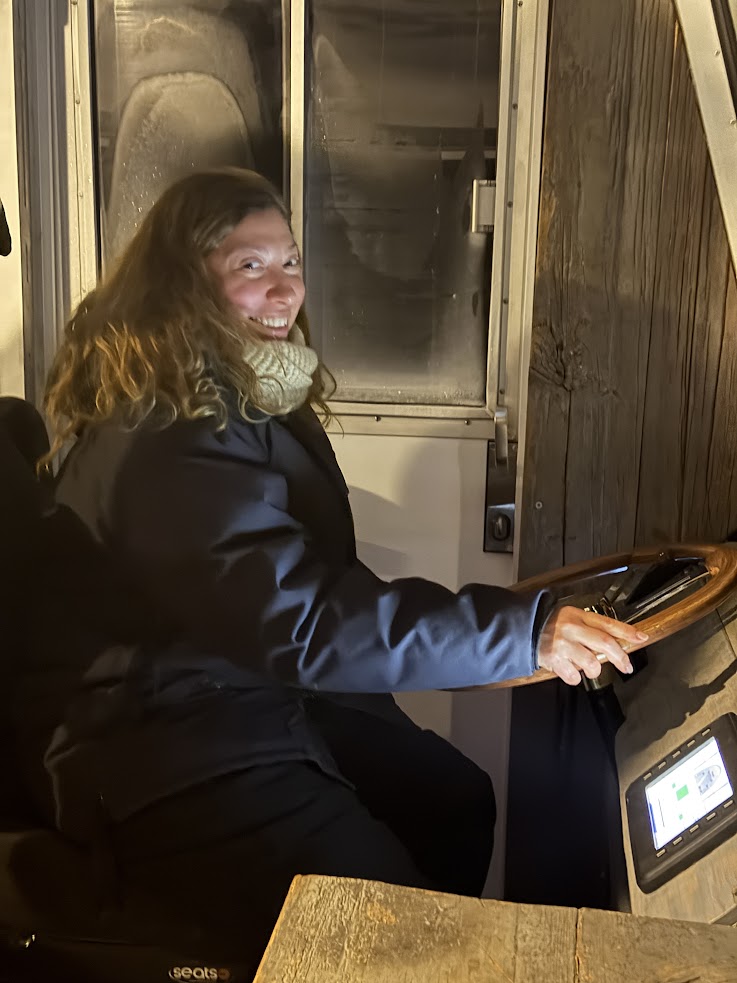
At one of our stops, our driver waved me up to the front and let me climb into the seat. The steering wheel is enormous, and the windshield was thick with frost.
From up there, you sit high enough to see over everything. I obviously didn't go anywhere, but I understood in about four seconds why the people who drive these things love their jobs.
Evening Dinner at Dan's Diner
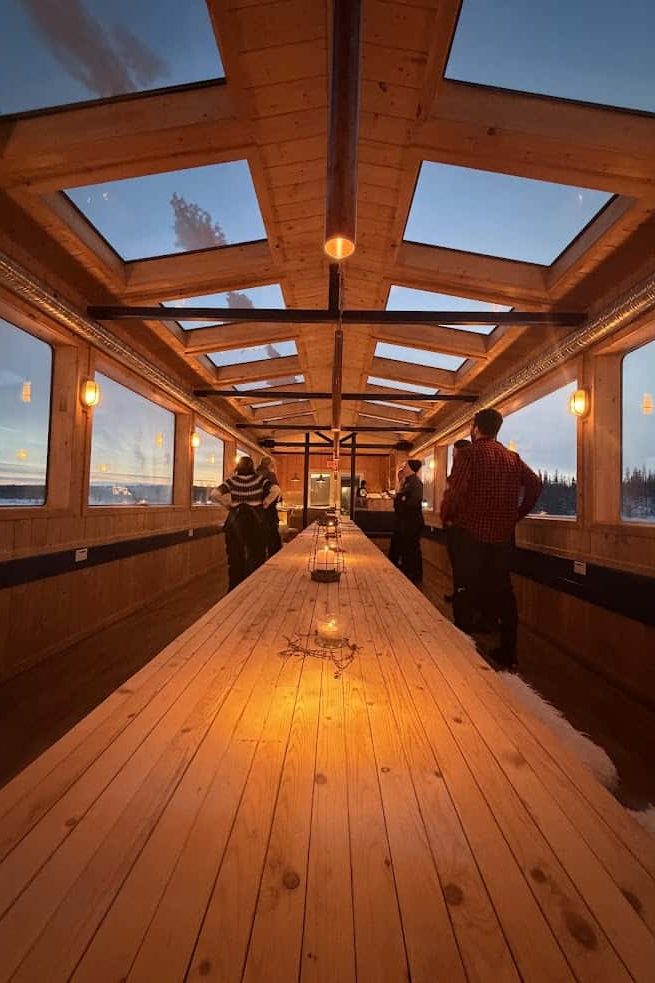
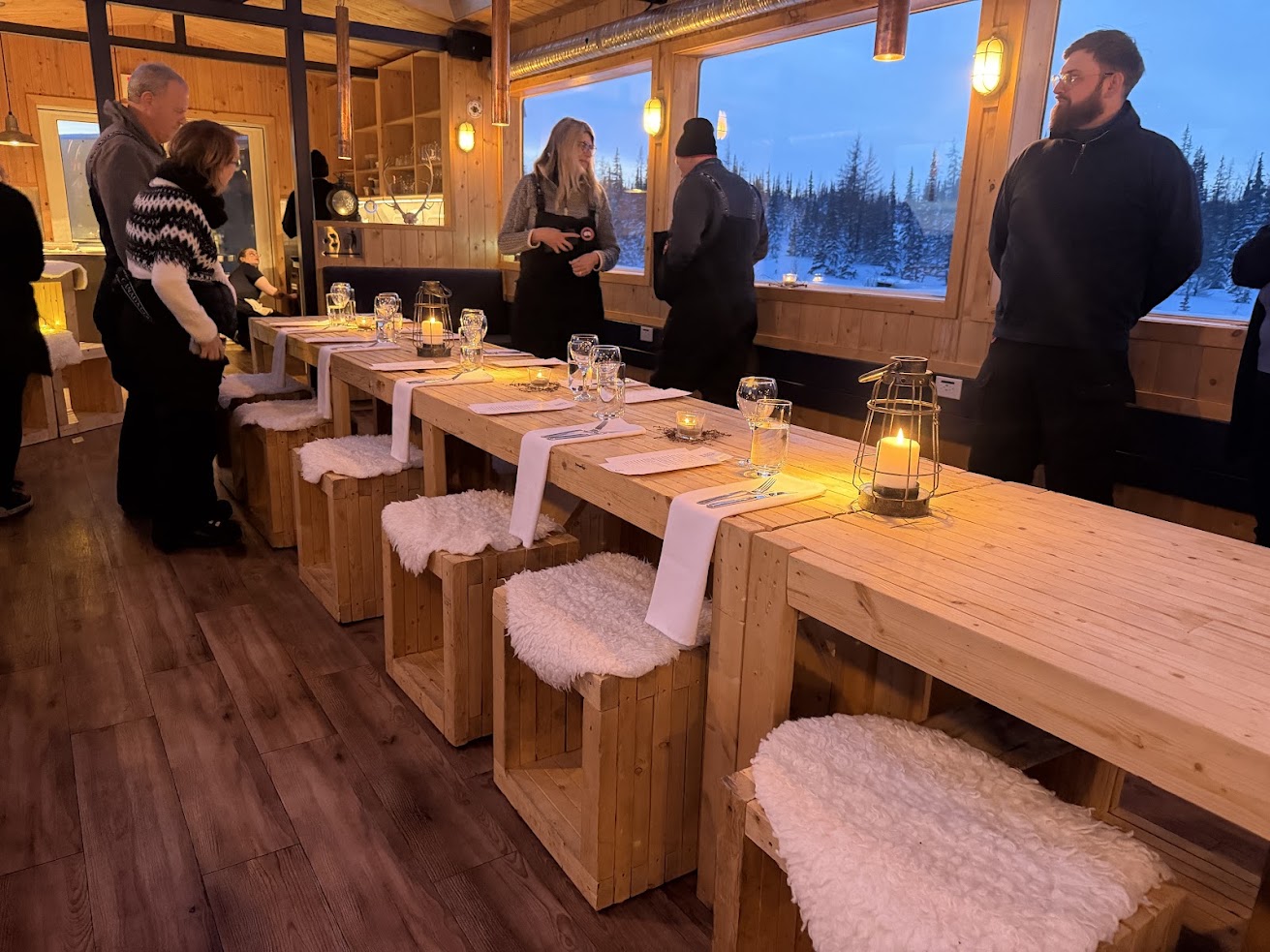
Dan's Diner is an unforgettable dining experience located across the frozen Churchill River, far from the town's lights.
This custom-built pop-up restaurant features wide windows and skylights that offer a view of the night sky from your seat.
Want to save this?
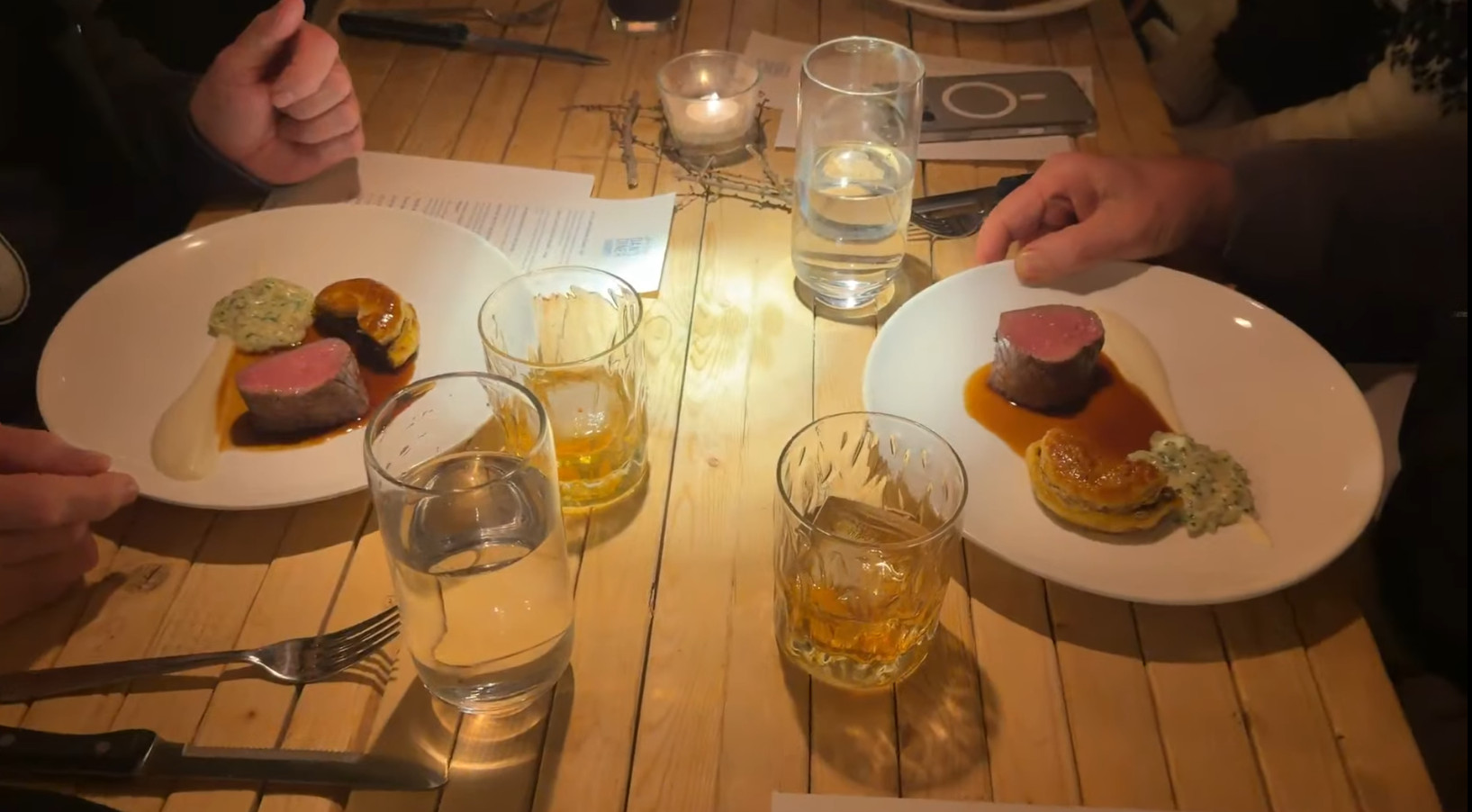

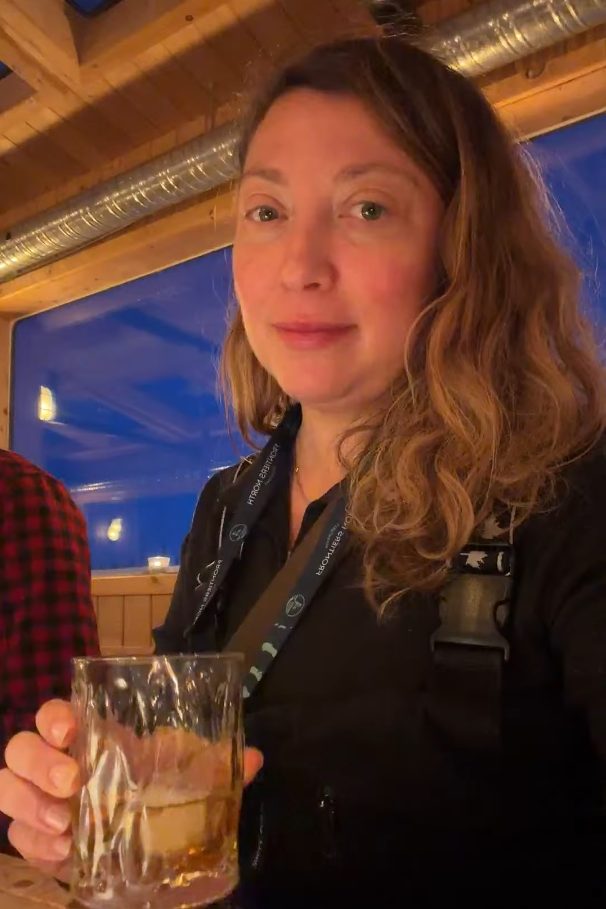
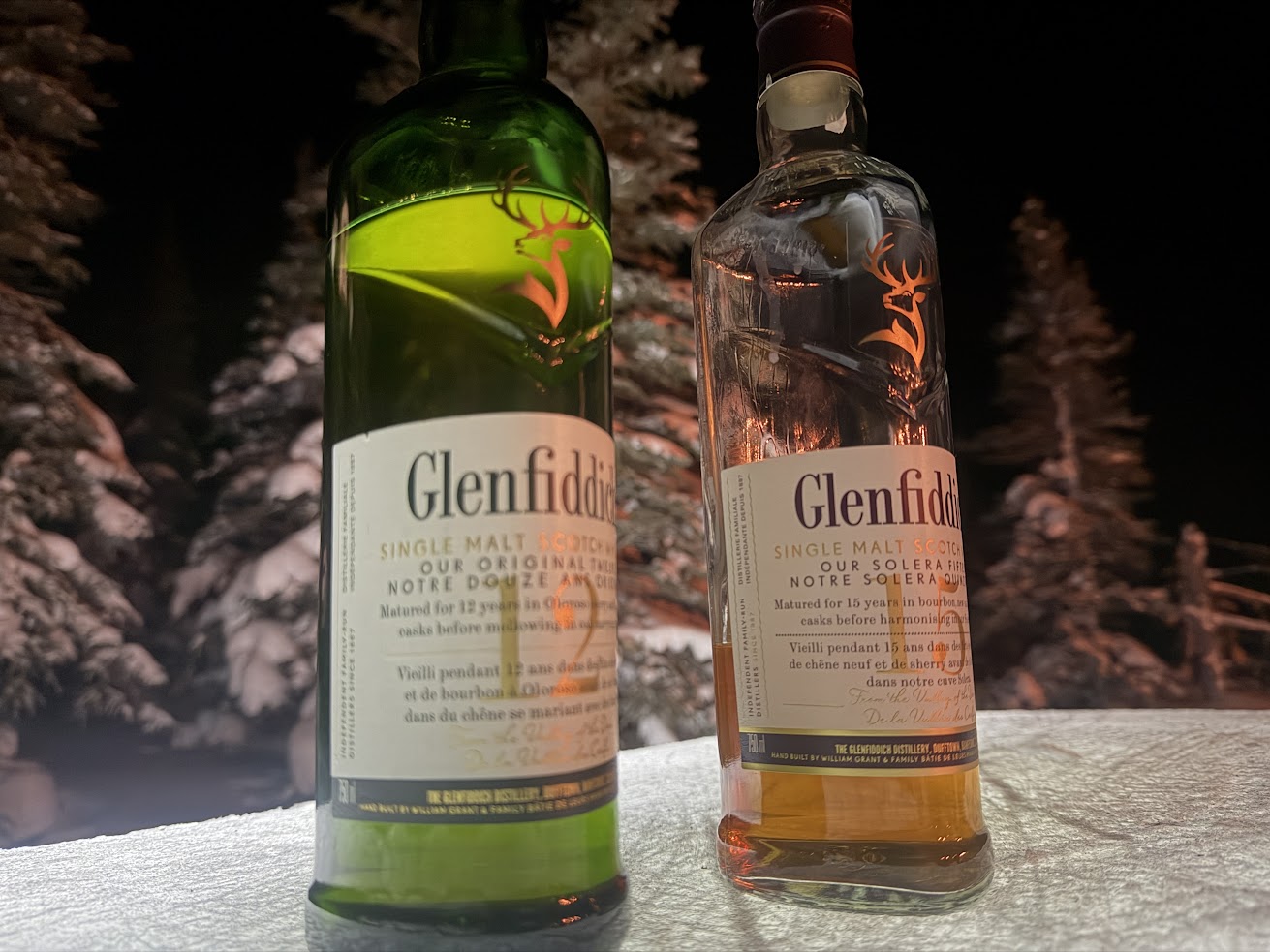
Between beautifully plated courses inspired by northern Manitoba's forests, land, and sea, guests stepped outside to gather around a crackling fire and scan the sky.
It was the perfect introduction to Churchill, and if the aurora borealis decides to appear, there's hardly a more memorable place to observe it.
Day 2: Explore Churchill's History
The second day was our chance to get to know the town itself, its history, its wildlife, and the people who live here year-round. It ended with another night of aurora viewing from a new location.
Churchill and Area Town Tour
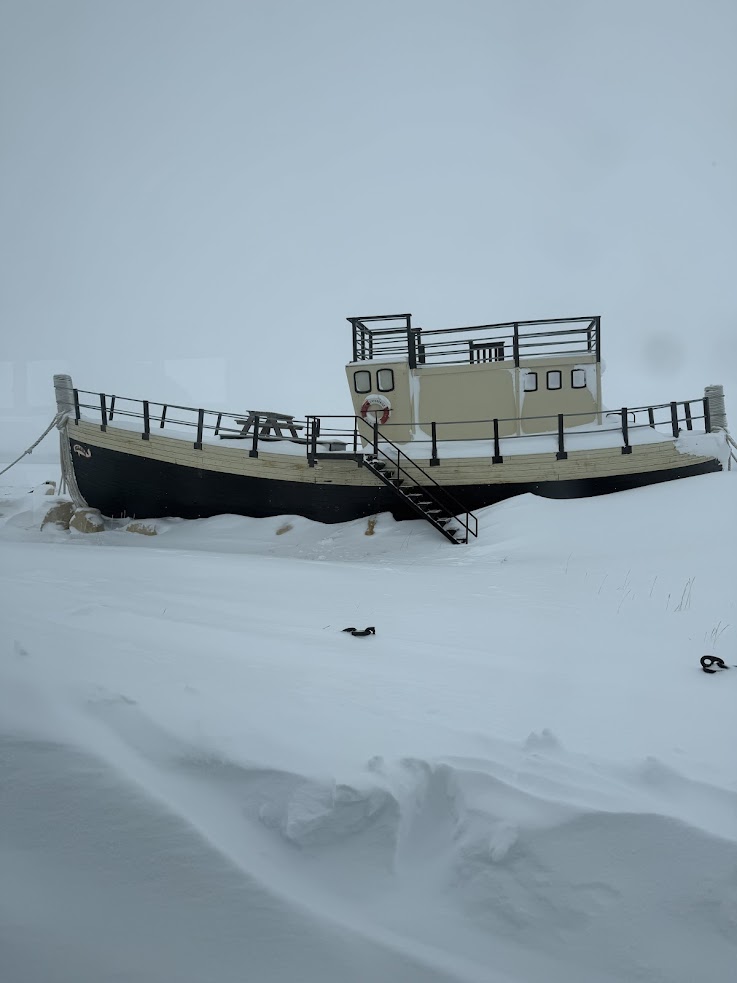
We explored Churchill's historic streets and learned about the town's fascinating connection to Arctic exploration. It's a small place, with two four-way stops in the entire town and streets named after the explorers who came before.
Kelsey Boulevard runs through the middle of it, with the port and its grain elevators standing at one end, a reminder that this was a working harbor long before it was a tourist town.
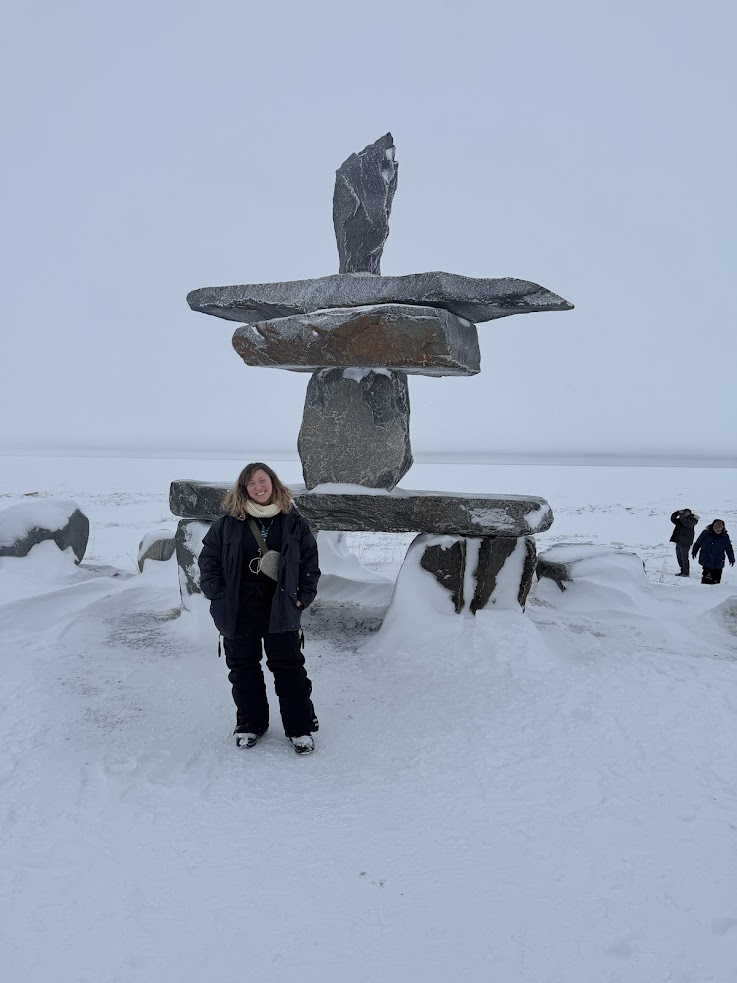
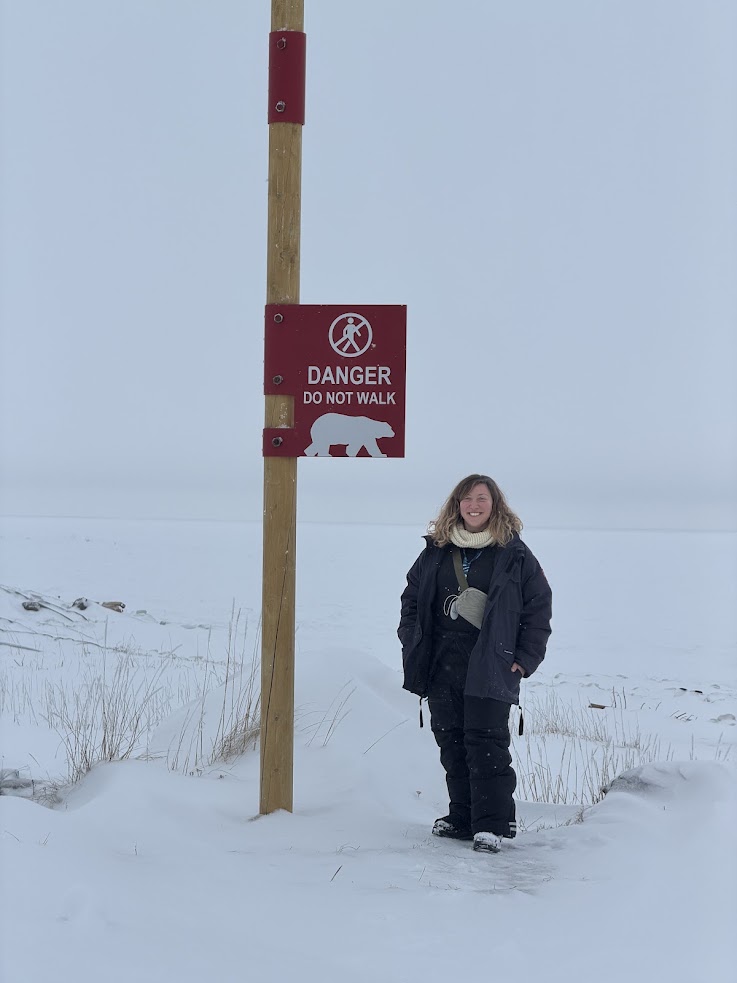
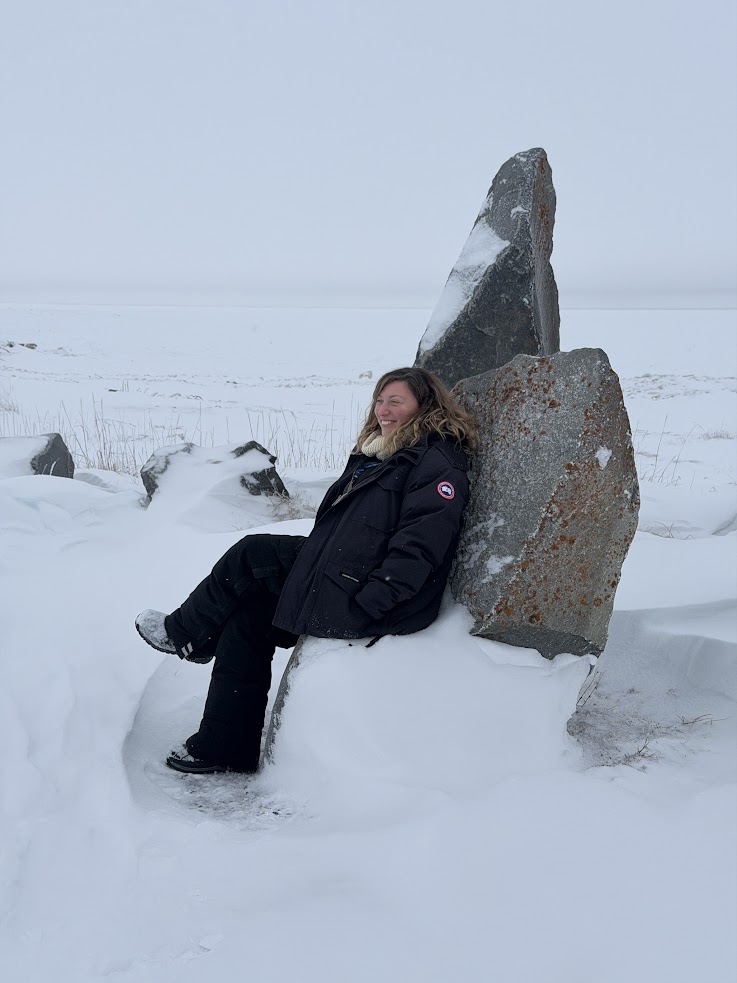
Our guide brought us to the Inukshuk overlooking Hudson Bay, one of Churchill's most photographed landmarks. We also drove past the Polar Bear Holding Facility on the edge of town, where bears are kept temporarily before being released back onto the ice.
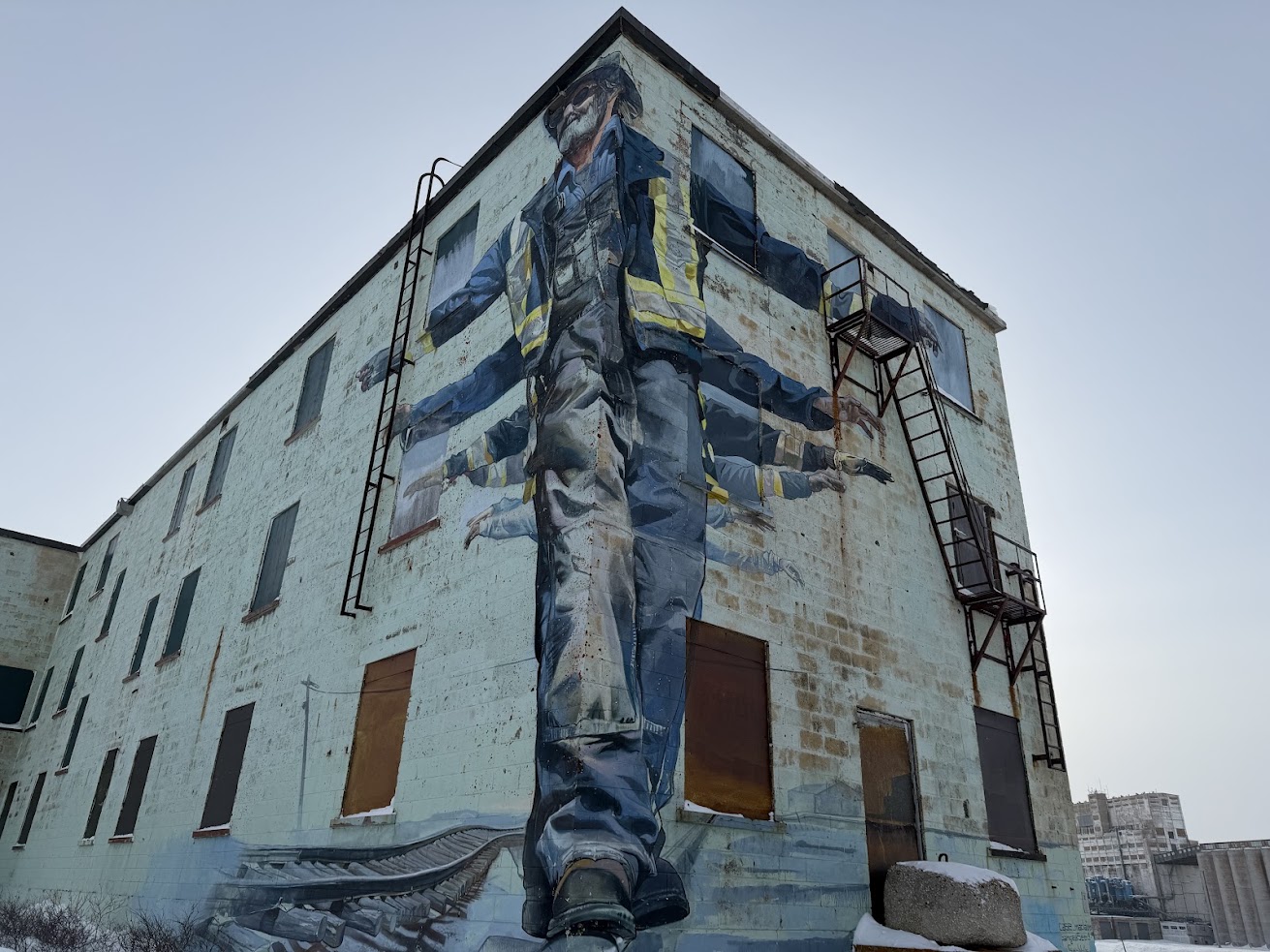
What surprised us most were the colorful murals scattered throughout Churchill. One of our favorites was a railway worker by the waterfront, a striking reminder of the town's rich history.
Spotting Arctic Wildlife Around Town
Along the way, our guide pointed out Arctic wildlife around Churchill, from foxes and snowshoe hares to ptarmigan blending almost perfectly into the snowy landscape.
In February, everything wears the same white coat, so you learn to look for movement rather than color.
Evening Aurora Viewing at the Thanadelthur Lounge
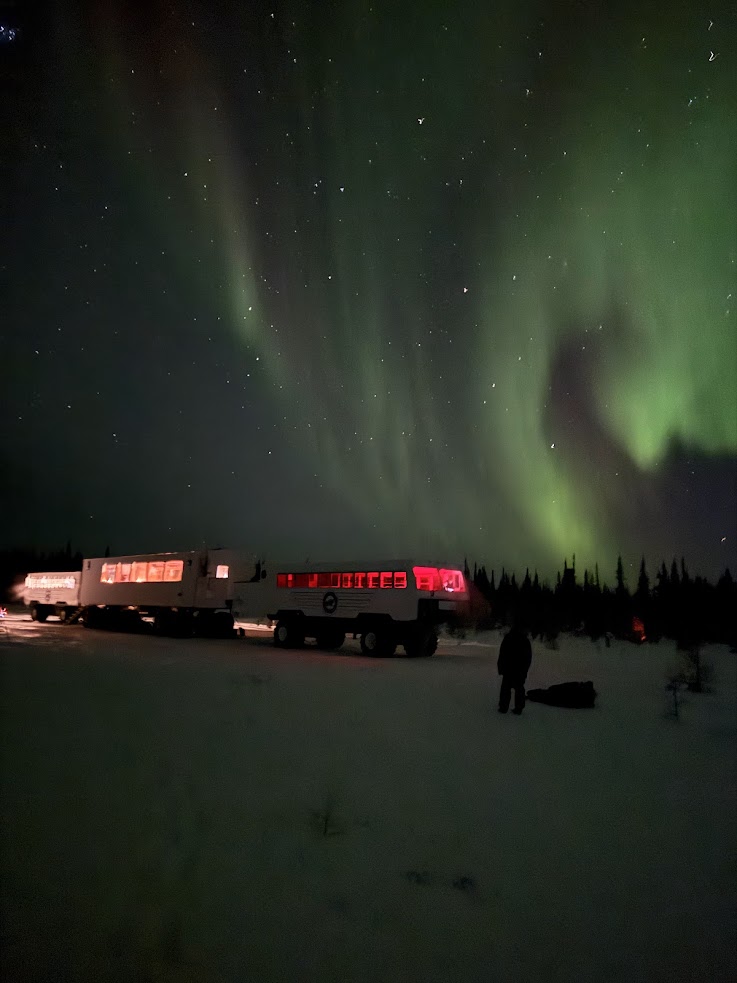
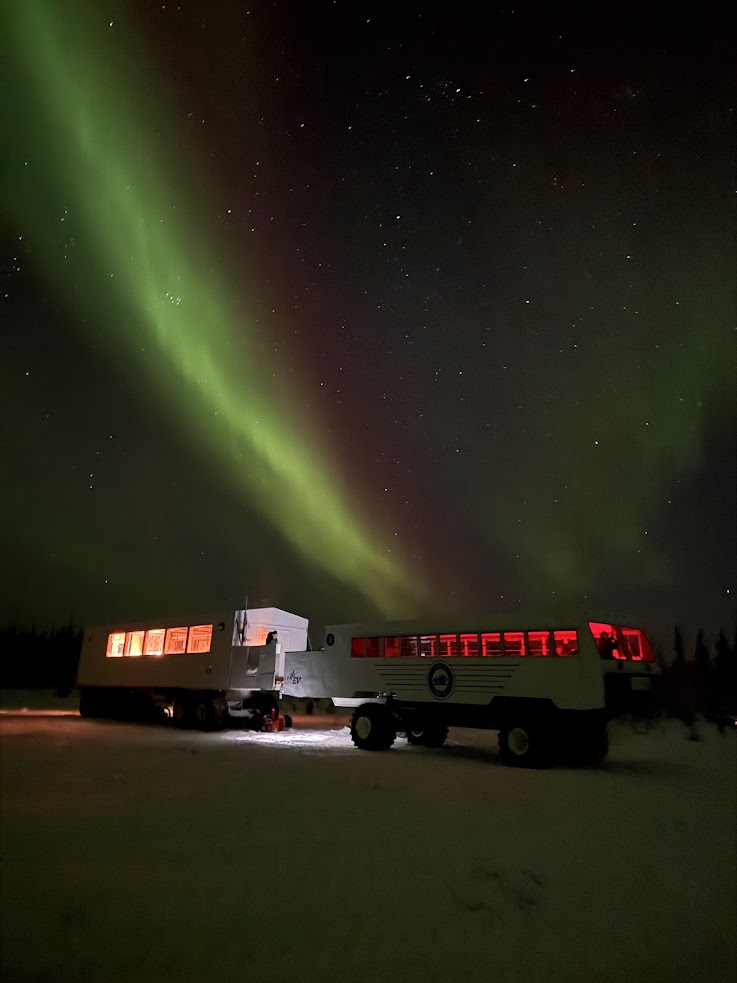
That evening brought another chance to watch the northern lights, this time from the Thanadelthur Lounge.
Warm drinks, panoramic windows, and stories from our guides made the waiting part of the experience. Every so often, someone would glance outside, hoping the green ribbons had started dancing overhead.
Day 3: Visit the Churchill Northern Studies Centre and Learn Local History
Day three was one of the busiest and most rewarding days of the trip. We spent it learning where our understanding of the aurora comes from and hearing the stories of the people who have called this region home the longest.
Touring the Churchill Rocket Research Range
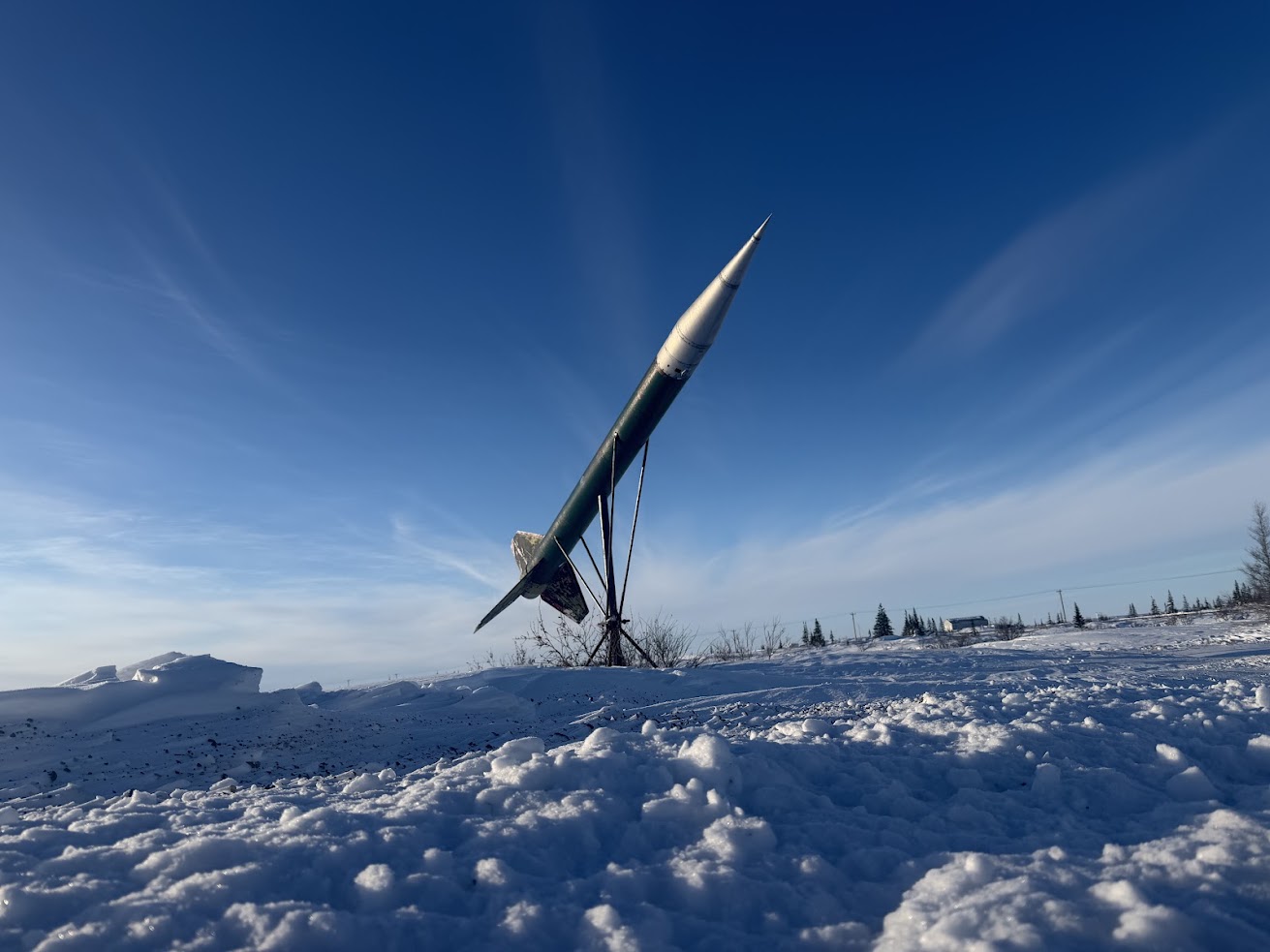
A short drive from town sits one of the strangest places we've ever visited. Built in 1954, the Churchill Rocket Research Range became Canada's foremost upper atmosphere research centre.
Roughly 3,500 rockets launched from here before it closed in 1985, most carrying instruments to study the aurora.
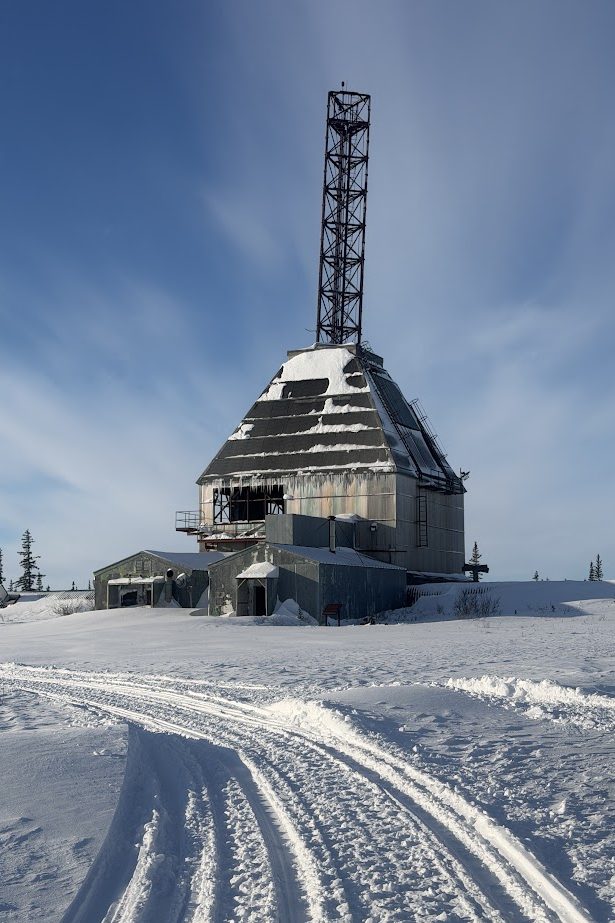
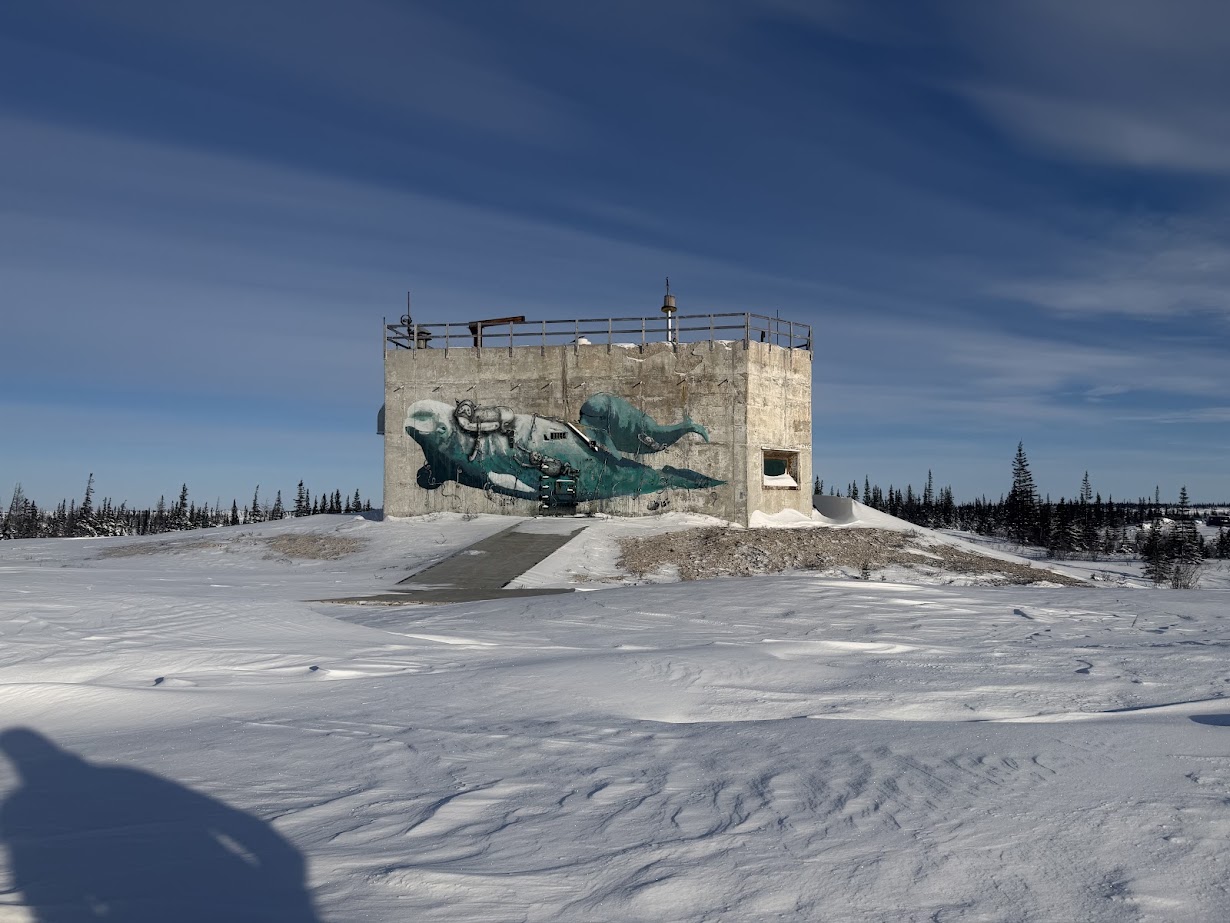
Designated a National Historic Site in 1988, much of the range still stands. Launch pads, towers, bunkers, and the old auroral observatory sit scattered across the snow, and one concrete blockhouse now wears a mural of belugas.
Guided Historic Rocket Range Tours take you through it, and walking among those rusted towers is unforgettable.
Visiting the Churchill Northern Studies Centre
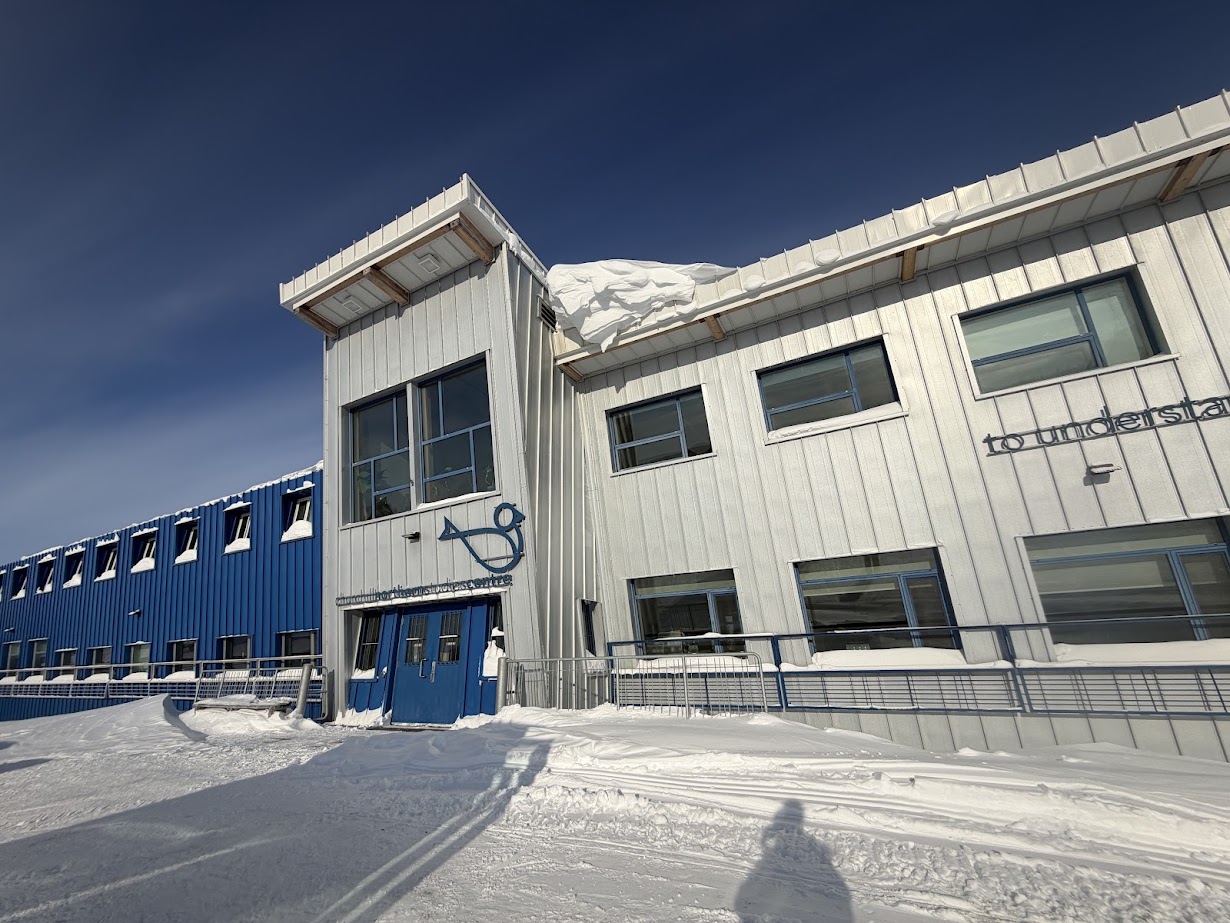
The Centre sits on the range grounds, a stone's throw from the launch pads.
Founded in 1976, this independent research and education facility continues its work in a different form, hosting scientists from around the world in a LEED-certified building designed to operate self-sufficiently in the subarctic. It also has an elevated viewing platform and an indoor aurora dome.
A Sayisi Dene Presentation with Florence Hamilton
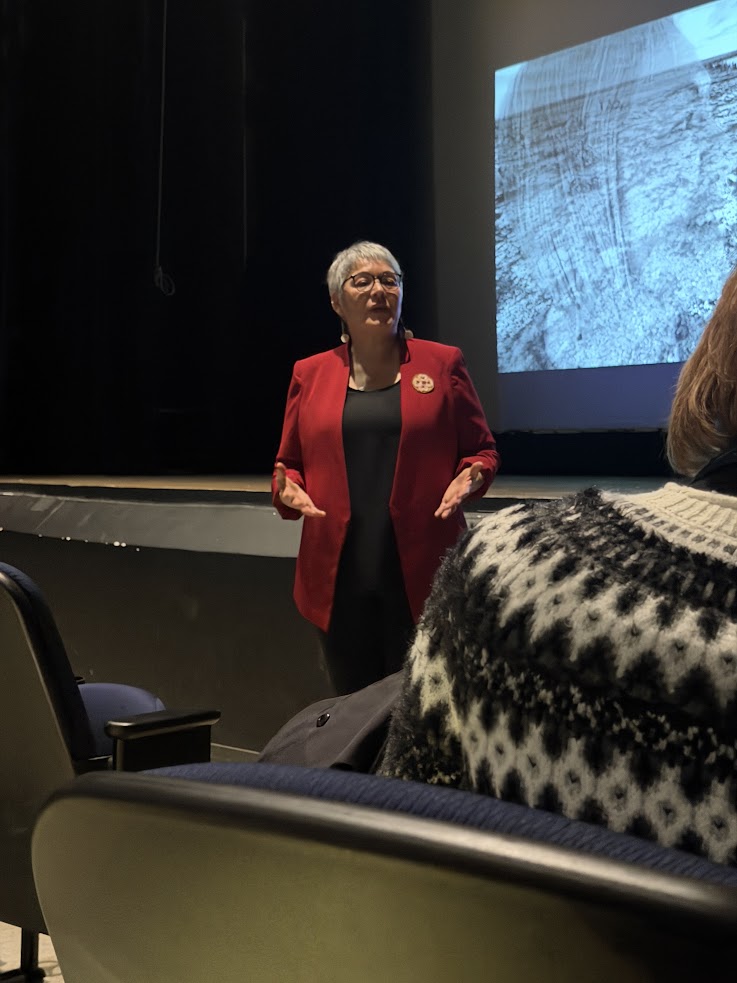
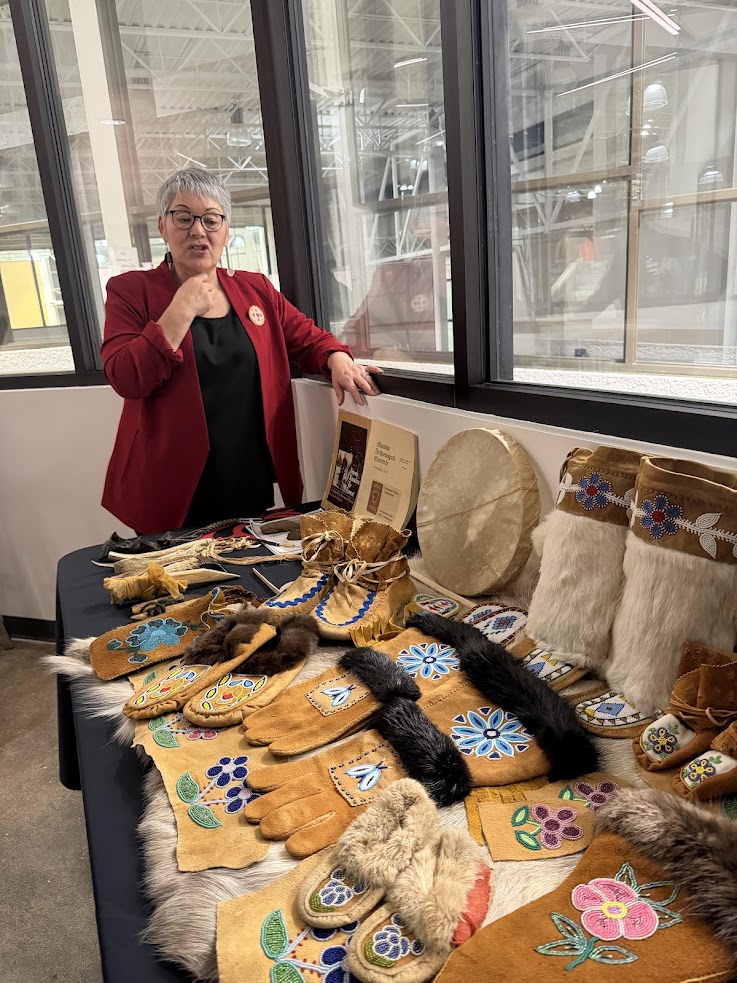
Later, we heard from Florence Hamilton, the founder of Dene Routes and a Sayisi Dene woman born and raised in Churchill.
She told us about a nomadic people who followed the caribou migration from tundra to taiga, wasting no part of the animal, and about the 1956 relocation that uprooted her community with nothing prepared for them on arrival.
"People would come to see the aurora, the polar bears, but they'd leave without knowing anything about the Sayisi Dene culture," she said. "I wanted to change that." It was the most moving hour of our trip.
Evening in a Heated Yurt in the Boreal Forest
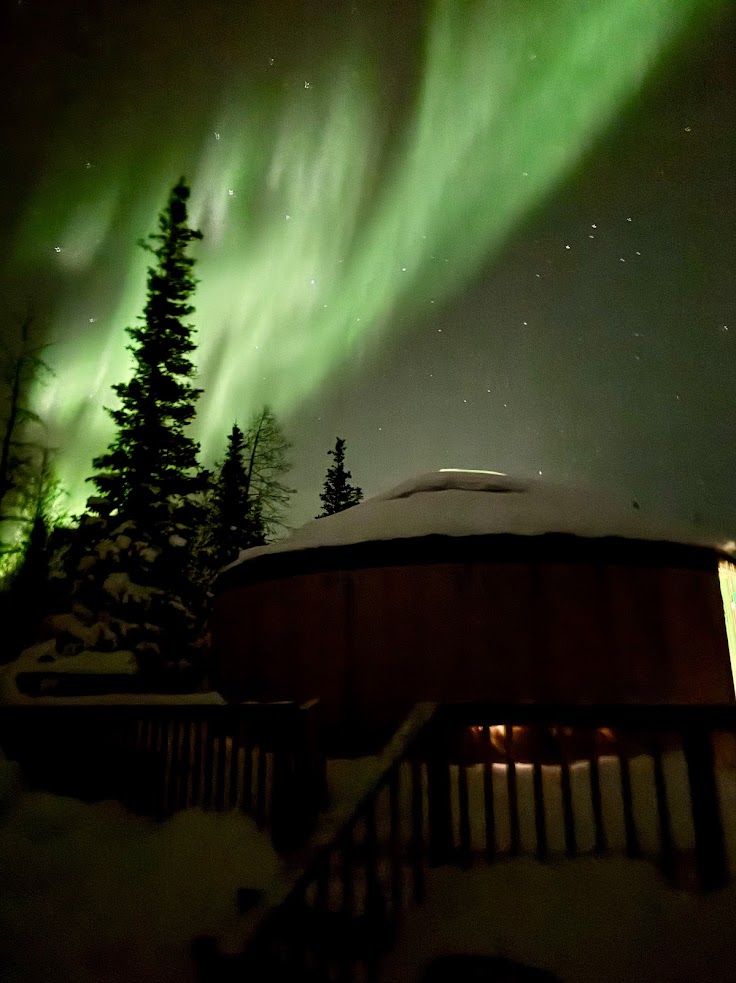
That evening, we swapped the open tundra for the quiet boreal forest, where a cozy heated yurt served as our aurora viewing location. Hot drinks and snacks kept everyone warm while we stepped outside whenever the sky began to glow.
Watching the northern lights ripple above dark spruce trees created a completely different atmosphere than the wide-open tundra, and it ended up being one of our favorite moments of the trip.
Day 4: Experience Northern Traditions Before Heading Home
Our last morning in Churchill was short but memorable, ending with one final northern tradition before the flight south.
Dog Sledding and Métis Traditions
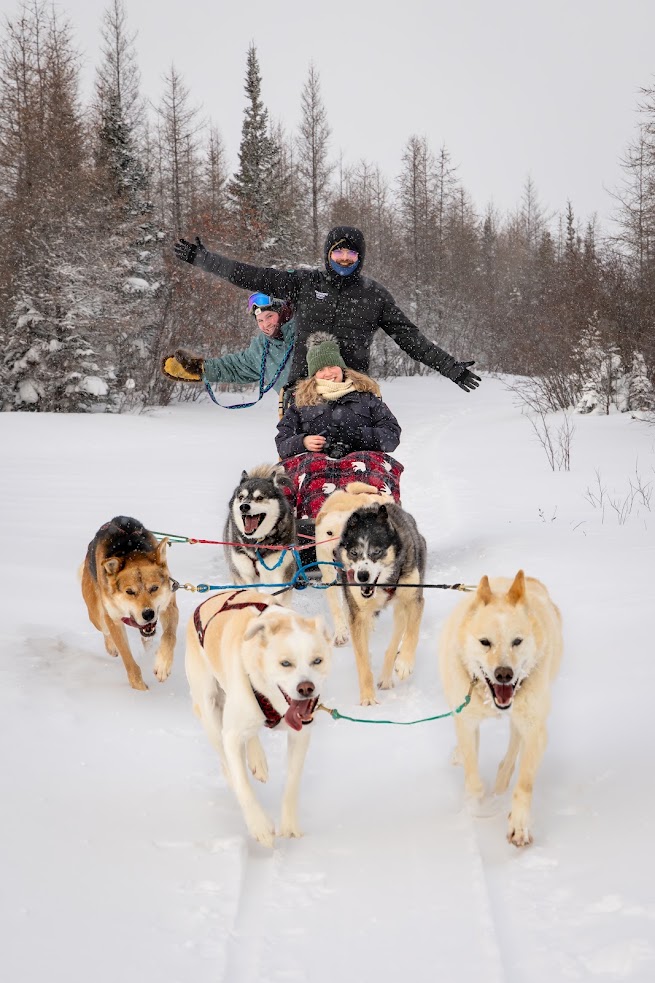
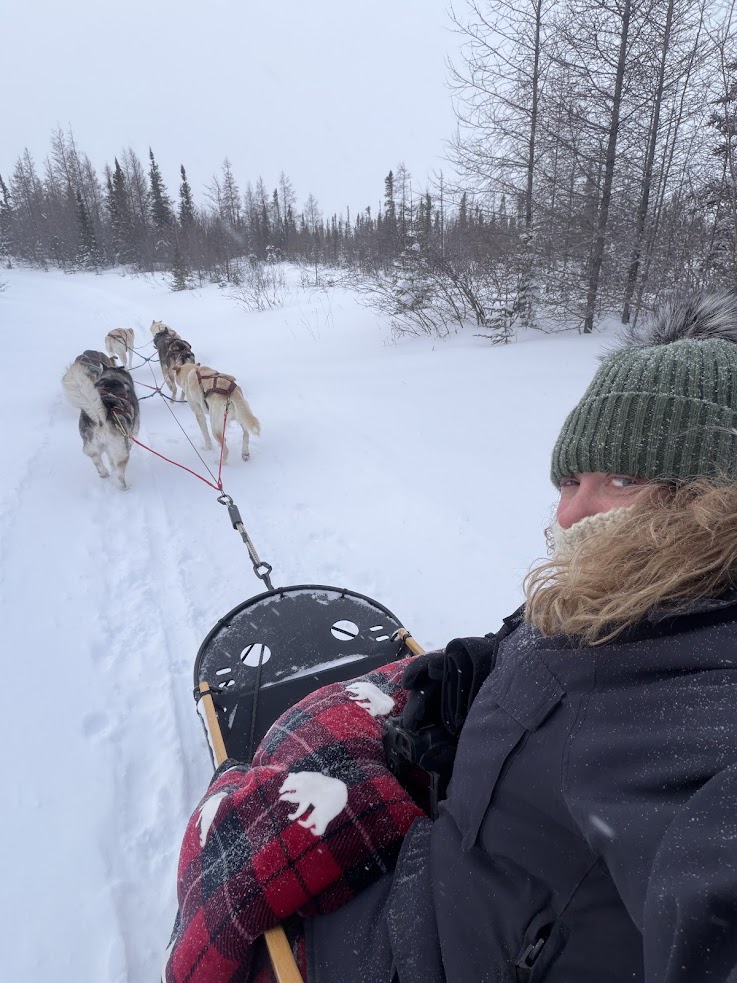
Our final day introduced us to another part of northern life through a traditional dog sledding experience.
Beyond the thrill of gliding across the snow behind an eager team of sled dogs, we learned about the important role dog sledding has played in Métis and northern communities for generations.
A Trapping and Hunting Demonstration with Stanley Spence
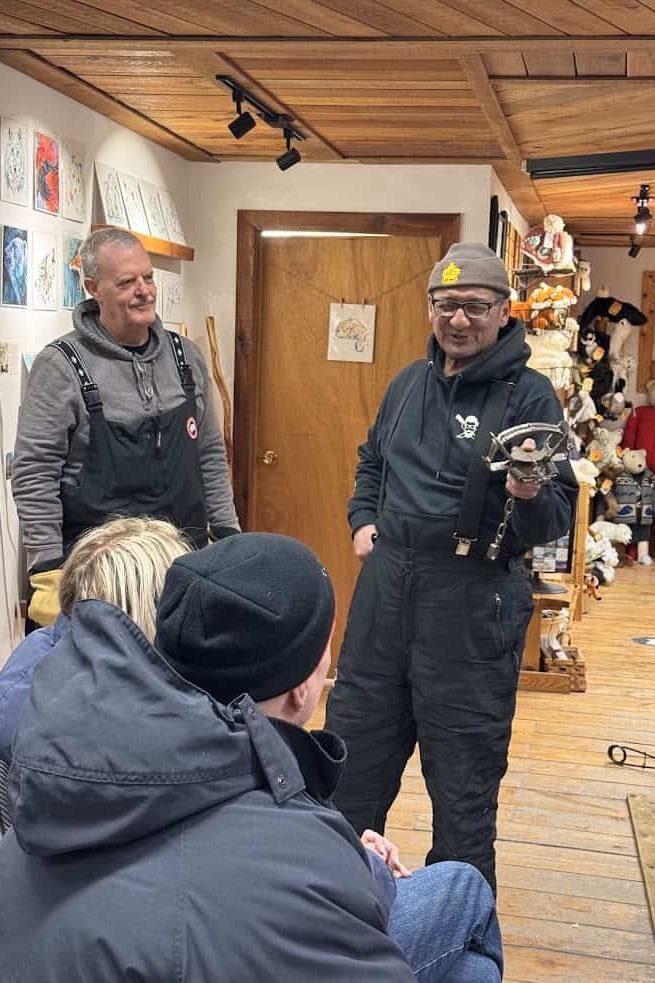
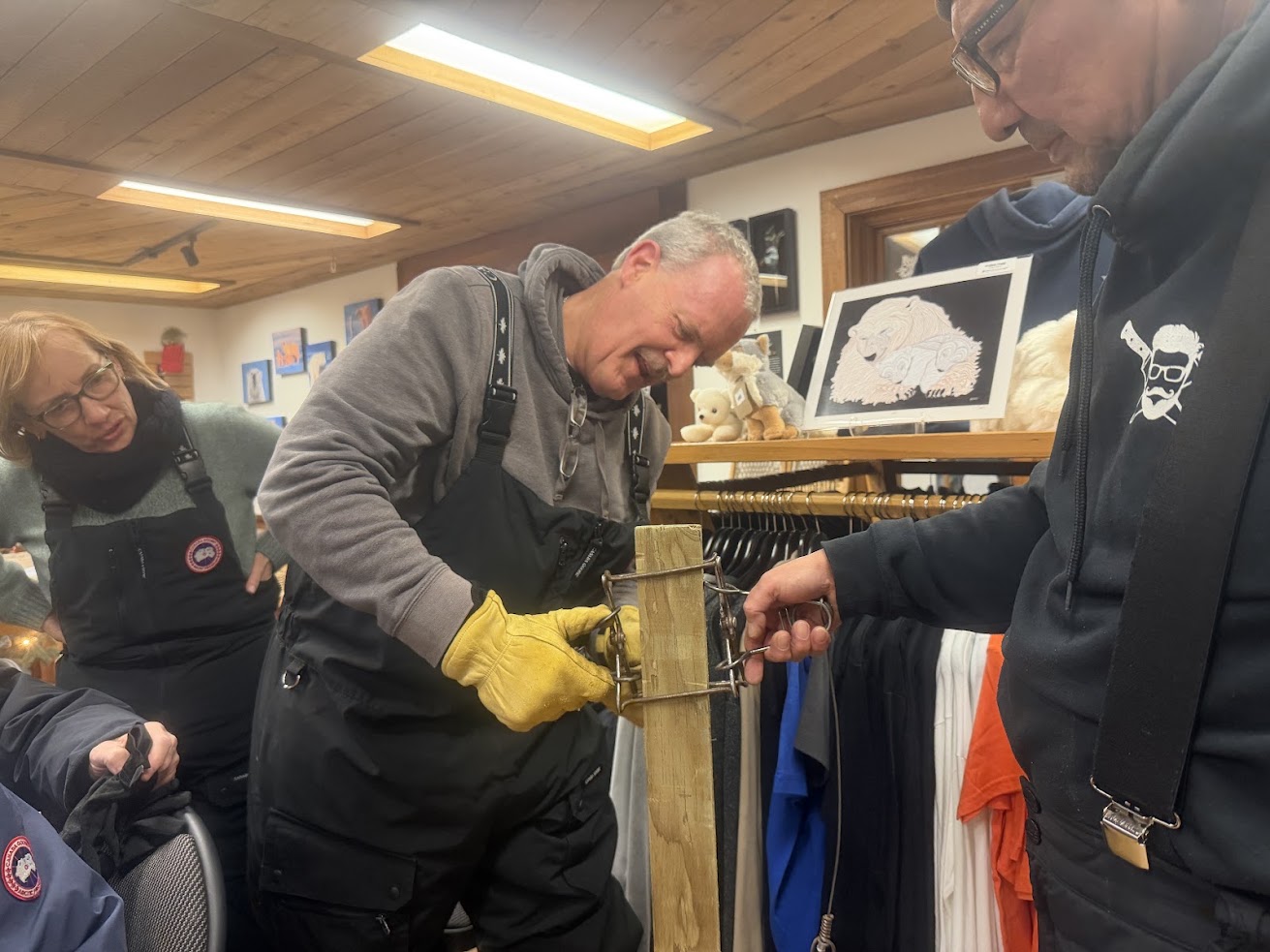
We also spent time with Stanley Spence, a Cree elder and former Canadian Ranger who has spent his life hunting and trapping around Churchill.
He laid out his gear in front of us and worked through it piece by piece, holding up steel traps and explaining how each one is set and where it goes.
Winter is trapping season here, summer is for hunting, and he takes four or five caribou each fall. He mentioned, almost in passing, that he uses fish for bait.
Flying Back to Winnipeg
Before long, it was time to return to Churchill Airport and board our flight back to Winnipeg. Looking out the window as the tundra disappeared beneath the clouds, it was hard to believe how much we'd experienced in just four days and three nights under the lights.
Know Before You Book Your Churchill Northern Lights Tour
Planning a trip to Churchill is a little different from booking a typical winter getaway. Because of its remote location and limited tour availability, it's helpful to know what to expect before you reserve your spot.
Tour Prices
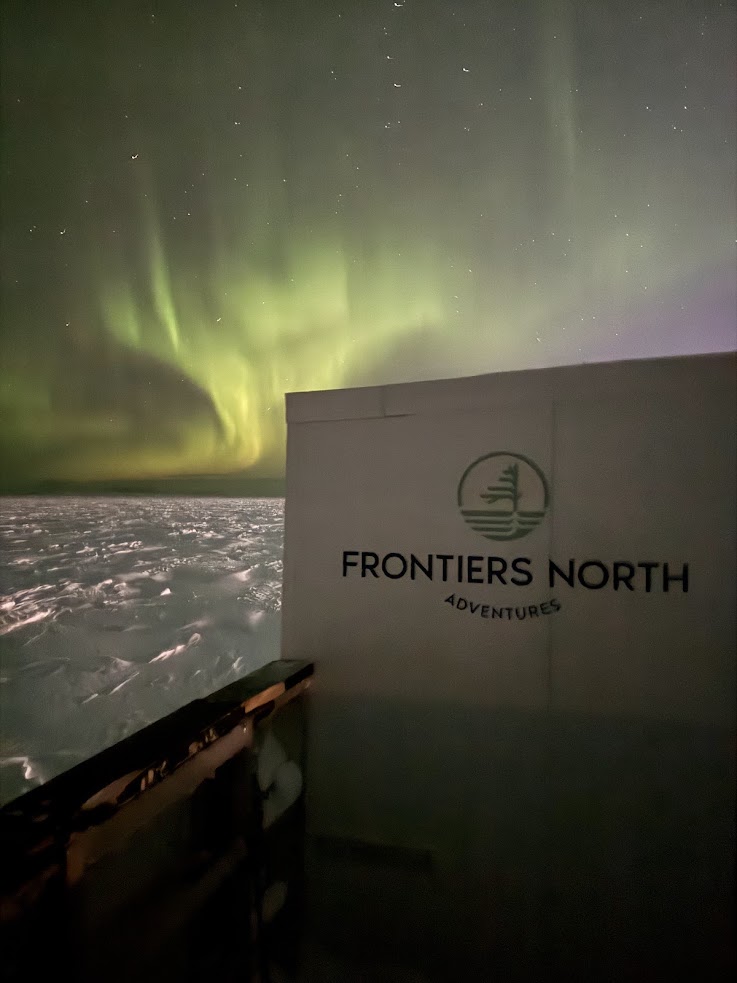
Churchill Northern Lights tours aren't cheap, but they include far more than just aurora viewing.
Frontiers North's six-day, five-night itinerary starts at approximately CAD $8,051 per person (around USD $5,900, depending on exchange rates), with single rooms available at an additional cost.
Since departures operate as small-group trips and the most popular dates often sell out months in advance, it's worth booking as early as possible if you're planning a winter visit.
The Tour Includes Flights, Meals, and Arctic Gear
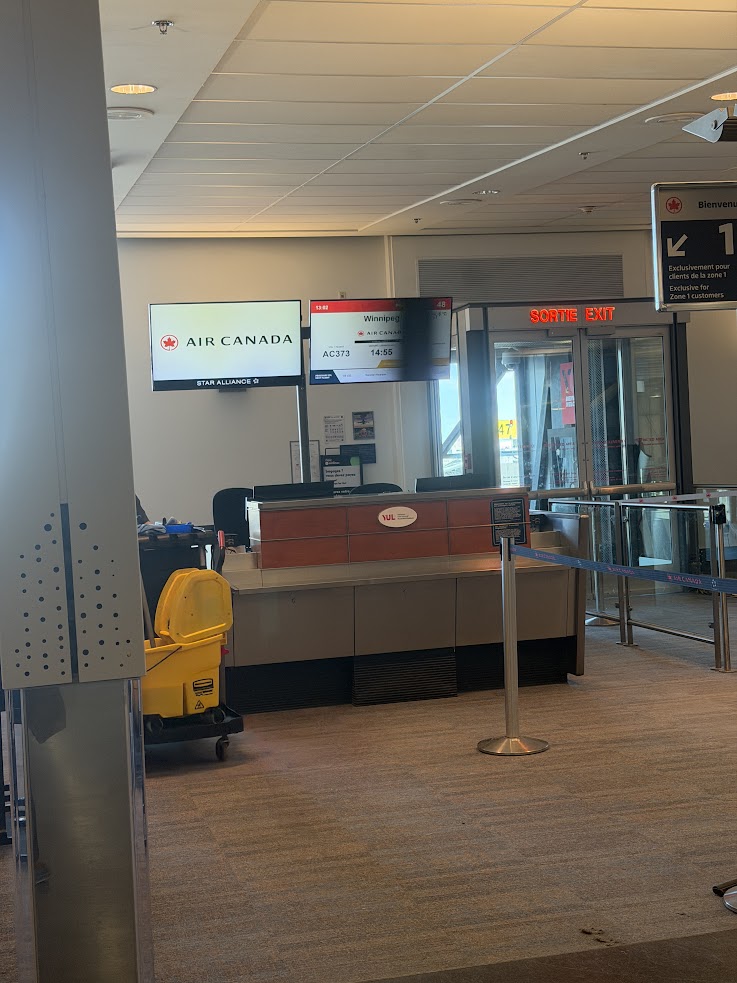
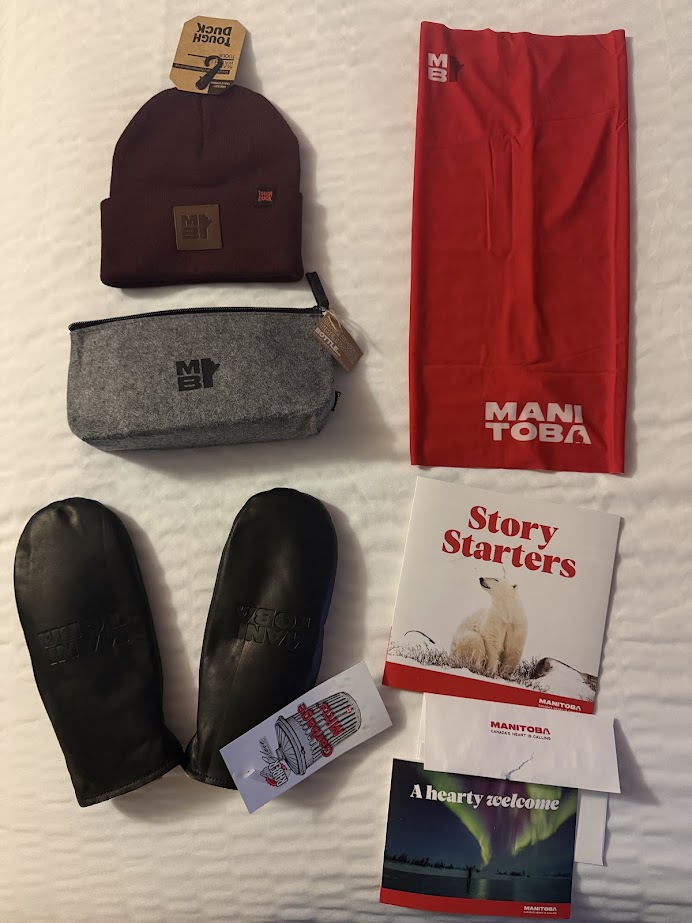
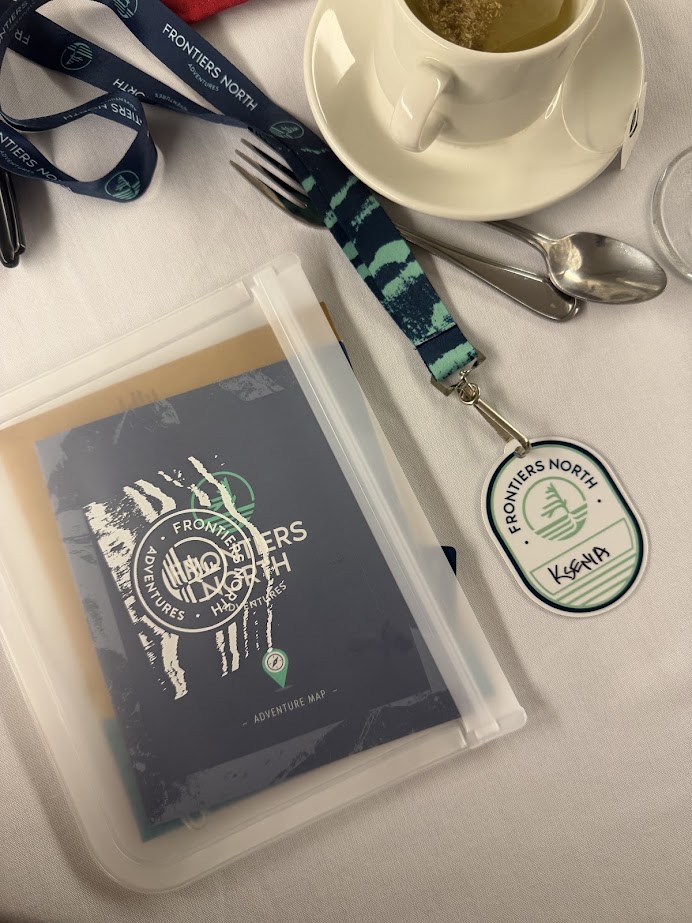
One thing that surprised us was how much was included. Round-trip flights between Winnipeg and Churchill, accommodations, guided excursions, and all meals are covered, making it easy to enjoy the trip without worrying about logistics.
Just note that getting yourself to Winnipeg is not included, so budget for that separately.
For 2026 departures, guests also receive premium winter gear, including a Canada Goose parka, insulated snow pants, and Baffin boots, so you don't have to invest in specialized Arctic clothing for a single vacation.
Wildlife Depends on the Season
Although we visited Churchill for the northern lights, the region is also famous for its wildlife.
Known as the polar bear capital of the world, Churchill draws crowds in the fall when the bears gather near town, and this bear capital of the world fills its river with thousands of beluga whales during summer.
Winter visitors are still likely to spot Arctic foxes, snowshoe hares, ptarmigan, and other cold-weather wildlife during excursions, even if polar bear sightings are less common. Some Frontiers North trips even venture to Riding Mountain National Park in search of moose, elk, and bison.
Looking Back on Our Churchill Adventure
Our Churchill Northern Lights tour was everything we hoped for and more. Seeing the aurora dance across the Arctic sky was unforgettable, but it was the people, history, and sense of place that made the trip truly special. It felt less like a winter vacation and more like an experience we'll remember for years.
If you're looking for one of the best places to see the northern lights, Churchill is hard to beat. We came for the aurora, but we left with a much deeper appreciation for Canada's North and memories our family will be talking about for years to come.
Leave a Reply