Let me introduce to you the perfect itinerary for one day in Naples, Italy. Naples was one of our stops on the MSC Fantasia Mediterranean cruise, and while we only had a single day to explore, it turned out to be one of the most memorable parts of our trip.

Jump to:
With just one day in Naples, we wanted to make the most of every hour, balancing a taste of the city itself with a side trip to the ruins of Pompeii.
This one-day guide shares exactly how we spent our time. Where we walked, what we saw, and where we ate. From historic landmarks to casual bites, you’ll find some of the best things to do in Naples if you’re short on time.
Our stop in Naples was part of our MSC Fantasia Cruise 7-Day Itinerary with the whole family! We also stopped in Marseille, France so be sure to check out our one day itinerary for Marseille as well!
And yes, we didn't have a lot of time at each destination, but we made the most of it!

Plan Your Trip
Save on fees abroad with the Wise Card—use it at ATMs, restaurants, and for flights or hotels in over 150 countries. Manage 40+ currencies in real-time with the Wise app.
Need Help Planning?
- Cheap Flights: Find the best deals.
- Accommodation: From hostels to luxury stays.
- Car Rental: Affordable options worldwide.
- Sightseeing Tours: Explore without breaking the bank.
- Travel Adapter: One adapter for all your needs.
- Travel Insurance: Don’t risk it—stay covered.
This post includes affiliate links, and as an Amazon Associate I earn from qualifying purchases. Read my full disclosure and privacy policy.
Naples can feel overwhelming at first, but once you’re on the ground, it’s easy to see why it’s considered one of the best places in southern Italy to experience history, food, and daily life all at once.
One Day in Naples Itinerary Overview
Naples is the third largest city in Italy, and while it has more than enough to fill several days, it’s also a place you can get a good feel for in just one.
If you’re short on time, this one day Naples itinerary shows how to balance sightseeing, food, and even a side trip to Pompeii.
Exploring when Arriving by Cruise
If you’re arriving by cruise ship, like us on our MSC Fantasia Cruise, most of the central areas are within walking distance of the port, which makes it convenient to dive right into the city without losing precious hours. Be careful, though! As soon as you get off the boat, you’re swamped with offers for tours and taxis. I say avoid them and go somewhere you can book an Uber.
When is the Best time to Visit Naples?
The best time to visit Naples depends on what kind of pace you want. Spring and fall bring mild weather and fewer crowds, while summer is busier but full of energy. Winter makes for a much quieter city, with shorter lines at restaurants and museums, and a chance to experience Naples.
Ready to make the most of your stop in Naples?
Read through our full one day in Naples itinerary for practical tips, food stops, and ideas on how to plan your time. We'll also suggest all the best things to do in Naples!
Getting Around Naples

One of the first things you notice in Naples is how lively (and sometimes chaotic) the streets feel. Cars, scooters, buses, and pedestrians all seem to move at once, so patience goes a long way.
That said, the city is surprisingly easy to navigate once you get your bearings!
The best way to see Naples is on foot. For short visits, walking is the greatest way to experience the atmosphere. Many of the main sights are clustered close together, so you can stroll between them without needing transport.
Just be prepared for uneven sidewalks and the occasional scooter zipping by - pack walking shoes.
If you need to go further, the Naples underground metro system is efficient and affordable. Line 1 connects the central train station (Napoli Centrale) with key stops like Toledo, which is often called one of the most beautiful metro stations in Europe.
Taxis, rideshares, and Uber are available, too, but traffic can be heavy during peak hours.
For day trips, the Circumvesuviana train is the most practical option. It’s a bit old and crowded, but it gets you where you need to go.
Ferries from Molo Beverello connect Naples with Capri, Ischia, and Procida, making island escapes very doable.
What are the Must-Sees in Naples for One Day?
If you only have one day in Napoli, the best way to experience the city is simply to get out and walk. Naples is compact enough that you can see a lot in a short time, and the streets themselves are just as memorable as the landmarks
Unfortunately, we didn't get to visit the more popular sites like the San Gregorio Armeno, Naples Cathedral, Historical Center of Naples, and the National Archaeological Museum of Naples.
But this doesn't mean we didn't see any of the city's beautiful attractions in Naples!
We focused on the areas that fit into our schedule and still came away with a strong sense of Naples’ character. Even without covering every must-see in Naples, our trip was still nothing short of memorable.
You can also check out this small group walking tour if you want more structure to your day.
The Royal Palace of Naples (Palazzo Reale)

The Royal Palace was built in the early 1600s for Spanish rule, and over the centuries it became the home of Bourbon and Savoy monarchs.
Walking through it, you really get a sense of how Naples used to be one of Europe’s most important cities.
From the outside, it’s a massive, elegant building that immediately gives you the sense that this city was once a center of real power. Inside, the rooms are beautifully preserved, with high ceilings, chandeliers, and walls that tell stories of kings and queens who once lived here.


Fortunately, it’s not overwhelming, which made it easy to enjoy even with kids in tow.
What’s also nice is that the palace is located right in the heart of Naples, so stepping outside puts you in the middle of the city’s energy, with cafes and gelato shops nearby.
Teatro di San Carlo

San Carlo Theatre is Naples’ historic opera house. Built in 1737, it’s actually the oldest continuously active opera theater in the world; older than La Scala in Milan or even the Paris Opera.
From the outside, the building looks elegant but understated, so it’s only when you step inside that you realize how much grandeur is hidden within.
The theater is breathtaking, with its red velvet seats, gold detailing, and tiers of private boxes stacked high around the stage. Even the kids were impressed (which is saying something, because ornate interiors don’t always hold their attention!).
They whispered about how it looked “like a movie set,” while my mom and mother-in-law admired the chandeliers and ceiling fresco.
We didn’t watch a performance, but simply visiting there was worth it!
It gave us a chance to see a side of Naples’ culture that isn’t just about food and history, but also about art and music. It felt special to know that so many great composers—like Rossini and Donizetti—once worked here.
Galleria Umberto I

Right across from the famous Teatro di San Carlo, we went into one of Naples’ most beautiful indoor spaces. It’s a shopping gallery from the late 1800s, built after a cholera outbreak as part of an effort to modernize the city.
The kids immediately ran to the middle and looked up at the ceiling, spinning around until they got dizzy. The mosaic floor beneath them is just as impressive, covered in star patterns and intricate designs that make you stop and notice the details.

We didn’t come here to shop, though there are a few cafés, souvenir stands, and boutiques.
My mom and mother-in-law enjoyed sitting on one of the benches to rest and watch people passing through, while my husband and I walked around taking photos of the architecture. It was the perfect quick stop: an impressive sight that you don’t need hours to enjoy
Piazzetta Duca D’aousta

We also spent some time walking around Piazzetta Duca d’Aosta, the square in front of Napoli Centrale. It’s not the kind of place you’d find in a postcard, like the Piazza del Plebiscito, but it gave us a real sense of the city’s rhythm.
The area was busy and a little chaotic, with buses pulling in, taxis honking, and people rushing to catch their trains. At the same time, there were cafés, small shops, and street vendors that gave us a chance to slow down and take it all in.
The kids were fascinated by the movement of trains in and out of the station, while the grandparents were happy to sit for a bit and people-watch.
What I enjoyed about Piazzette Duca d'Aosta: For me, it was interesting to see a side of Naples that isn’t polished for tourists. This is where daily life happens, where locals go about their routines. It wasn’t beautiful in the traditional sense, but it felt authentic.
Walking around this area also gave us a chance to grab some snacks and stretch our legs before moving on.
Mercato Pignasecca

One of the liveliest parts of our walk in Naples was Mercato Pignasecca, the city’s oldest street market.
It’s not fancy at all.
In fact, it’s a little messy and crowded, but that’s exactly what makes it feel so authentic!
The narrow street is packed with vendors selling everything from fresh fish and produce to cheese, bread, clothes, and even phone chargers.


For us, it was a feast for the senses. The kids were wide-eyed at the seafood stalls, especially the octopus and fish still moving on ice. Our parents lingered at the fruit stands, amazed at how bright and fresh everything looked, while my husband couldn’t resist pointing out the rows of cheeses and cured meats.
We stopped to grab a few snacks along the way. Street food here is both cheap and delicious, allowing you to eat as you wander.
What I loved most was how alive it felt! Locals were doing their daily shopping, chatting with vendors, and weaving through the crowd as if it were second nature.
Fontana del Gigante

We made a short stop at the Fontana del Gigante, or Fountain of the Giant. It’s not as famous as the other landmarks in Naples, but it turned out to be one of those little surprises that made the walk special.
The fountain itself is ornate, with arches, statues, and carvings, originally built in the early 1600s near the Royal Palace and later moved to its current spot along the waterfront.
From here, you get a beautiful view of the gulf of Naples, with Mount Vesuvius in the background.
The kids had space to move around, while the grandparents took a break on the benches nearby and soaked in the sea breeze. It felt like a quieter, more relaxed corner of the city compared to the busier piazzas.
Want to save this?
We also did a Pompeii Day Tour!

The highlight of our day was definitely the Pompeii tour. After the busy streets of Naples, it felt like stepping into another world: one that’s been frozen in time for almost two thousand years.
We booked a guided tour for ease and comfort, especially considering we have kids and grandparents in tow. But people usually take the Circumvesuviana train from Napoli Centrale.
The Forum

One of the first places we stepped into at Pompeii was The Forum, the heart of the ancient city. Standing there, with Mt. Vesuvius in the distance, it was easy to imagine how busy this space must have been almost 2,000 years ago: people buying goods, attending ceremonies, and gathering for political debates.
Today, it’s mostly ruins, but you can still see the outlines of temples, public buildings, and even where shops once stood.
My kids had fun running across the big open square (carefully hopping between the ancient stones), while the grandparents took their time pointing out the columns and archways that still stand.
The Basilica

Right beside the Forum is The Basilica, and at first glance, it looks like just a big hall of ruined columns.
But once you learn what it was used for, it becomes a lot more interesting. Unlike the basilicas we think of today, this wasn’t a church. It was actually a kind of courthouse and business center, where legal cases were heard and trade agreements were made.
What I found fascinating was how modern it all felt. A public hall where justice was served and deals were made; it’s not so different from how cities still work today. The structure itself is huge, and even in ruins, you get a sense of the authority it must have carried.
House of the Faun

The House of the Faun was one of the most impressive stops we made in Pompeii.
It’s enormous, more like a palace than a house. The name comes from the little bronze statue of a dancing faun that still stands in the central courtyard, and even though it’s small, it somehow captures your attention right away.
Walking through the remains, what struck me most was the mosaics. Even though many of the originals have been moved to the Naples Archaeological Museum, you can still see replicas, including the famous Alexander Mosaic that once decorated the floor.
The scale of the place makes you imagine what life must have been like here: lavish parties, quiet garden walks, children running through the courtyards.
But also, it was strange to think this wasn’t just decoration for visitors; it was literally part of someone's home.
Amphitheater of Pompeii

The Amphitheater was one of the last big stops we made in Pompeii, and it instantly stood out because of its size. Built around 80 BC, it’s actually the oldest surviving Roman amphitheater in the world, even older than the Colosseum in Rome.
We climbed up a few rows to get a better view, and that’s when it really hit me just how massive it is.
The kids had fun testing the acoustics by calling out to each other across the space (which echoed surprisingly well), while the rest of us sat for a moment, taking in the sheer history of the place.
What I liked about this spot was how open it felt. After weaving through narrower streets and smaller ruins all afternoon, the amphitheater gave us a chance to pause, breathe, and just take in the scale of Pompeii as a city. It was both grand and sobering at the same time.
Garden of the Fugitives


The Garden of the Fugitives was, without question, the most moving part of Pompeii for me!
Tucked away in what was once a vineyard, you’ll find plaster casts of some of the victims who didn’t make it out when Vesuvius erupted. They’re human skeletons frozen in their final moments, lying on the ground as if still trying to shield themselves.
Walking through, the atmosphere felt very different from the rest of the ruins. The kids grew quiet without us telling them to, and even my usually chatty mother-in-law stood silently for a while, just taking it in.
It wasn’t like looking at history in the abstract anymore; it was suddenly real, personal, and heartbreaking.
What struck me most was that this garden, once a place of growth and life, became a resting place for people who were simply caught in the wrong place at the wrong time. It was sobering, but also important.
It reminded us that Pompeii isn’t just about grand villas and impressive ruins, but about ordinary people whose lives were interrupted in the most tragic way.
Where to Eat in Naples in a Day
Even with limited time, we got a real taste of what makes Neapolitan cuisine so famous. The city is full of quick bites, family-run trattorias, and lively food markets, so you don’t have to go far to find something delicious.
If you’re wondering where to go, you’ll find no shortage of great restaurants in Naples that fit into a Naples 1-day itinerary.
- For more restaurant and food guides in Europe, check out my guide to the best beachfront restaurants in Barcelona!
Here's everything we ate:
Zero Zero Grano

Tucked away on Via Carlo de Cesare, it’s a small, family-run restaurant that is completely gluten-free and also offers many lactose-free options.
Expect homemade pasta like gnocchi and ravioli, fried seafood and appetizers, and even classic Neapolitan desserts such as tiramisu or babà, all prepared gluten-free.
The restaurant itself is cozy and welcoming, though it’s on the smaller side, so it’s a good idea to book ahead, especially during busy hours.


Prices are slightly higher than your average trattoria, but the quality and peace of mind make it worth it for anyone who usually struggles to find safe but still enjoyable gluten-free meals like me!
Leopoldo Cafebar - Senza Glutine


This café/patisserie has a dedicated lab upstairs and produce pastries, breads, sweets etc., entirely without gluten.
It is located in Piazza Cavour (78/79), opposite the National Archaeological Museum, which makes it a convenient stop if you’re in that part of the city.
It’s known for offering Neapolitan classics like sfogliatella, cornetti, and babà, all made gluten-free and surprisingly close to the “real” versions.
They also serve savory options such as pizza, bread, and panini, making it a good stop for breakfast, a quick snack, or if you just want something sweet and/or savory to go with your coffee.
The space isn’t very large, so a lot of visitors choose to grab their food and espresso to go.
Gino Sorbillo Lievito Madre al Mare


A scenic pizzeria sitting right on Naples’ seaside promenade at Via Partenope 1, with views of the sea and the Lungomare. It’s part of Gino Sorbillo’s famous network of pizzerias, known for regular Neapolitan pizza, high-quality dough, and good ingredients.
Gino Sorbillo Lievito Madre al Mare delivers classic Neapolitan pizza with serious attention to quality. The dough is made using lievito madre (natural sourdough starter), which gives the crust that airy chewiness on the inside and a golden, slightly blistered edge outside.
However, do note that their gluten-free options are not always reliably available.
- If you are gluten-free like me, check out how I managed being gluten-free on our MSC fantasia cruise, with my MSC fantasia dining options review!
Sometimes, they’re marked on the menu but then not offered due to staff or supply issues.
Where to Stay in Naples?

If you’re planning just 24 hours in Naples, choosing the right neighborhood to stay in can make a big difference, especially if you want to maximize your time without overspending.
In the Historic Centre (Centro Storico), Hotel Piazza Bellini & Apartments is a favorite for its leafy courtyard and relaxed atmosphere. It’s right in the middle of Naples’ old town, so you can walk to piazzas, cafés, and museums within minutes.
Another option in the historic centre is Casa D Hotel Napoli. This hotel is close to the Duomo and has a clean, modern feel, making it a comfortable base if you want to explore the historic streets just outside your door. It’s especially convenient if you prefer a straightforward, no-fuss stay with the main sights nearby.
If you're like us and you're planning a side trip to Pompeii, staying near Napoli Centrale station is very practical. Hotel Vergilius Billia is only a short walk from the platforms, so you can easily hop on the Circumvesuviana train. It’s a simple but convenient choice if saving time on transportation matters more than atmosphere.
For something a little more stylish, Gold Tower Lifestyle Hotel is your best bet. It’s not right in the centre, but that can be an advantage if you want a quieter base after a day of sightseeing. The rooftop views and modern amenities give it a touch more polish than the average mid-range hotel.
What are the Best Day Trips from Naples

If you have more than one perfect day in Naples, why not take a day trip?
The city’s location makes it so easy to hop on a train, bus, or ferry and be somewhere completely different within an hour or two.
For a change of pace, the Amalfi Coast is just a train and bus ride away. Sorrento is the most accessible choice if you want coastal charm without a long journey, while Positano and Amalfi give you those famous pastel cliffside towns.
If palaces are more your style, the Royal Palace of Caserta makes a grand and easy side trip.
And then there are the islands.
A ferry ride from the port takes you to Ischia with its thermal spas and lush gardens, or to Procida, a smaller island full of color and quiet corners to explore. Both are wonderful ways to slow down after the bustle of Naples.
A Family’s Reflections on Experiencing Naples City in Just 24 Hours
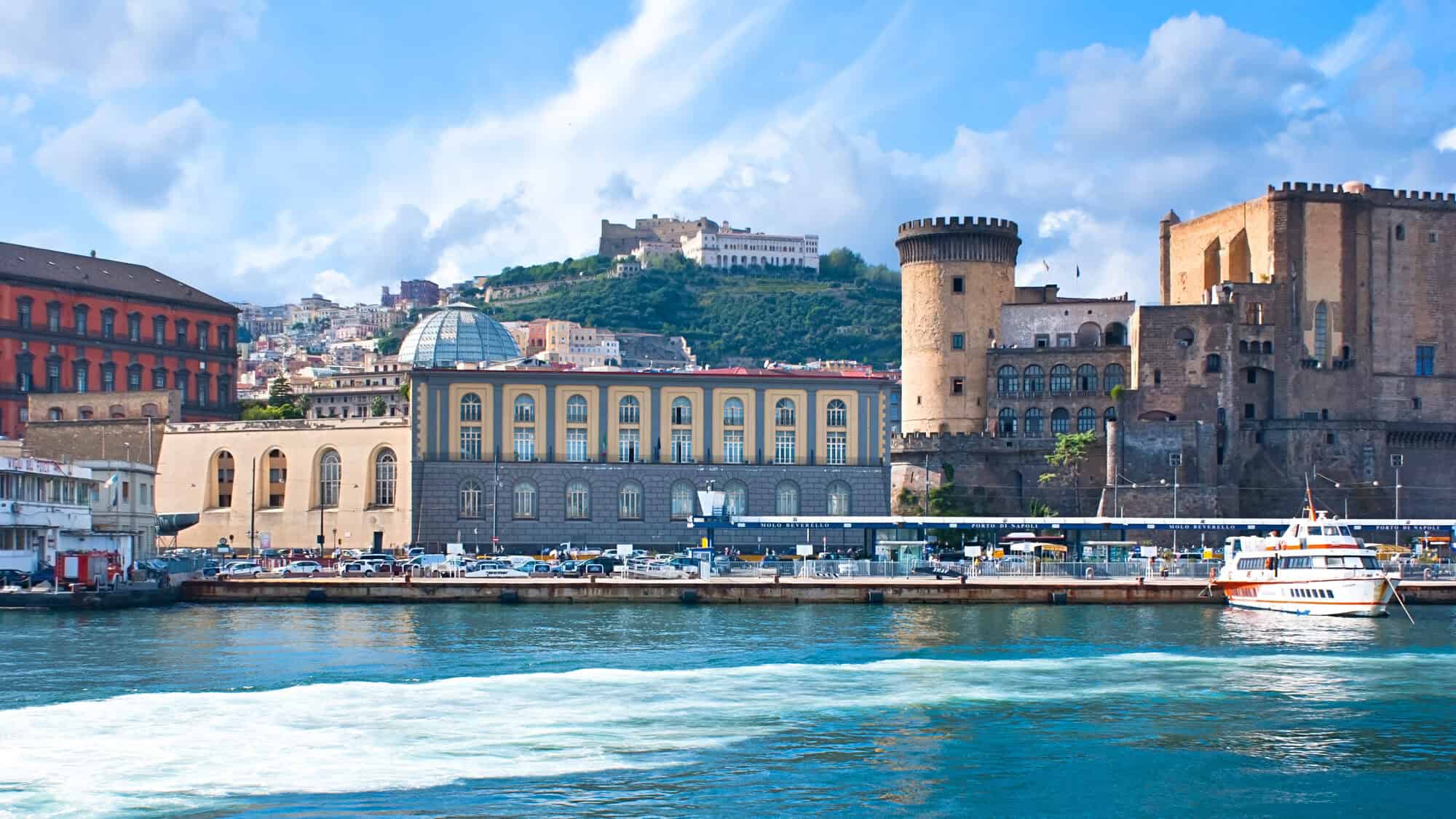
Spending even a short amount of time in Naples shows just how much this city has to offer. From the food to the atmosphere, every corner feels alive with history and culture that make it unlike anywhere else in Italy.
Even with only one day in the city, we were able to experience a mix of sights, flavors, and moments that left a lasting impression. Walking its busy streets, eating pizza by the sea, and then stepping back in time at Pompeii made this stop one of the most unique of our trip.
It reminded us once again why Italy is such a dream destination: even in just 24 hours, you can have an experience that stays with you long after you’ve left.
If you ever have a chance to spend 1 day in Naples, don't even hesitate. Take the chance to see the best of Naples for one day!