
Europe has no shortage of grand residences and old fortresses, and each one reflects a different chapter of history. When people talk about the 13 most beautiful castles and palaces in Europe, they’re usually thinking about soaring towers, massive stone walls, painted ceilings, and gardens that stretch for acres. Some were built to defend kingdoms, while others were designed to show power and wealth.
Today, they stand as reminders of ambition, artistry, and royal life that still shape how we see the continent. What makes these places so great isn’t just their age or size. It’s how they sit in the landscape and how they make you feel when you see them up close. A castle on a cliff or a palace behind perfect rows of trees leaves a lasting impression. Whether you love history or just beautiful views, these landmarks are always worth the trip.
Versailles Palace (France)
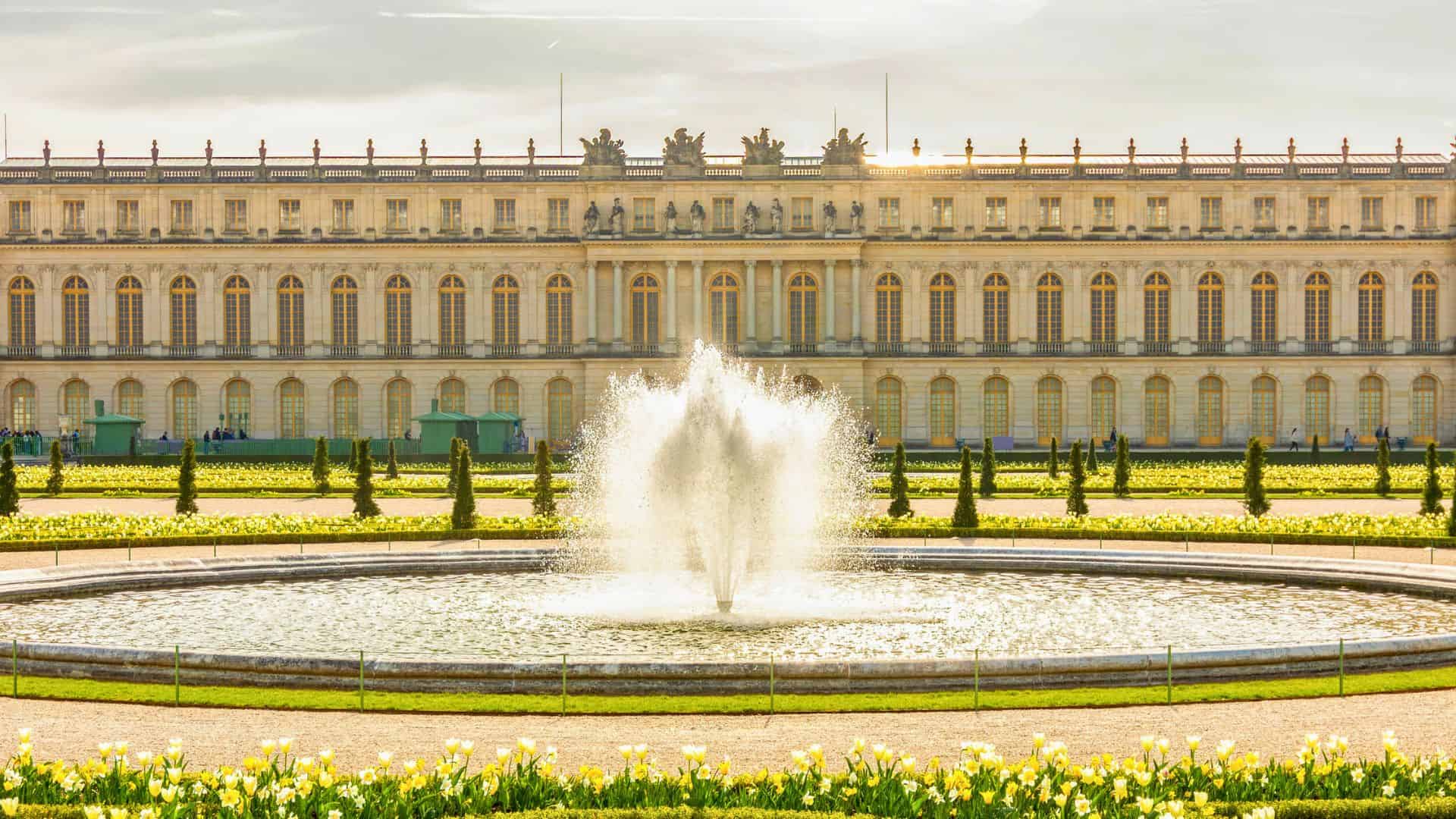
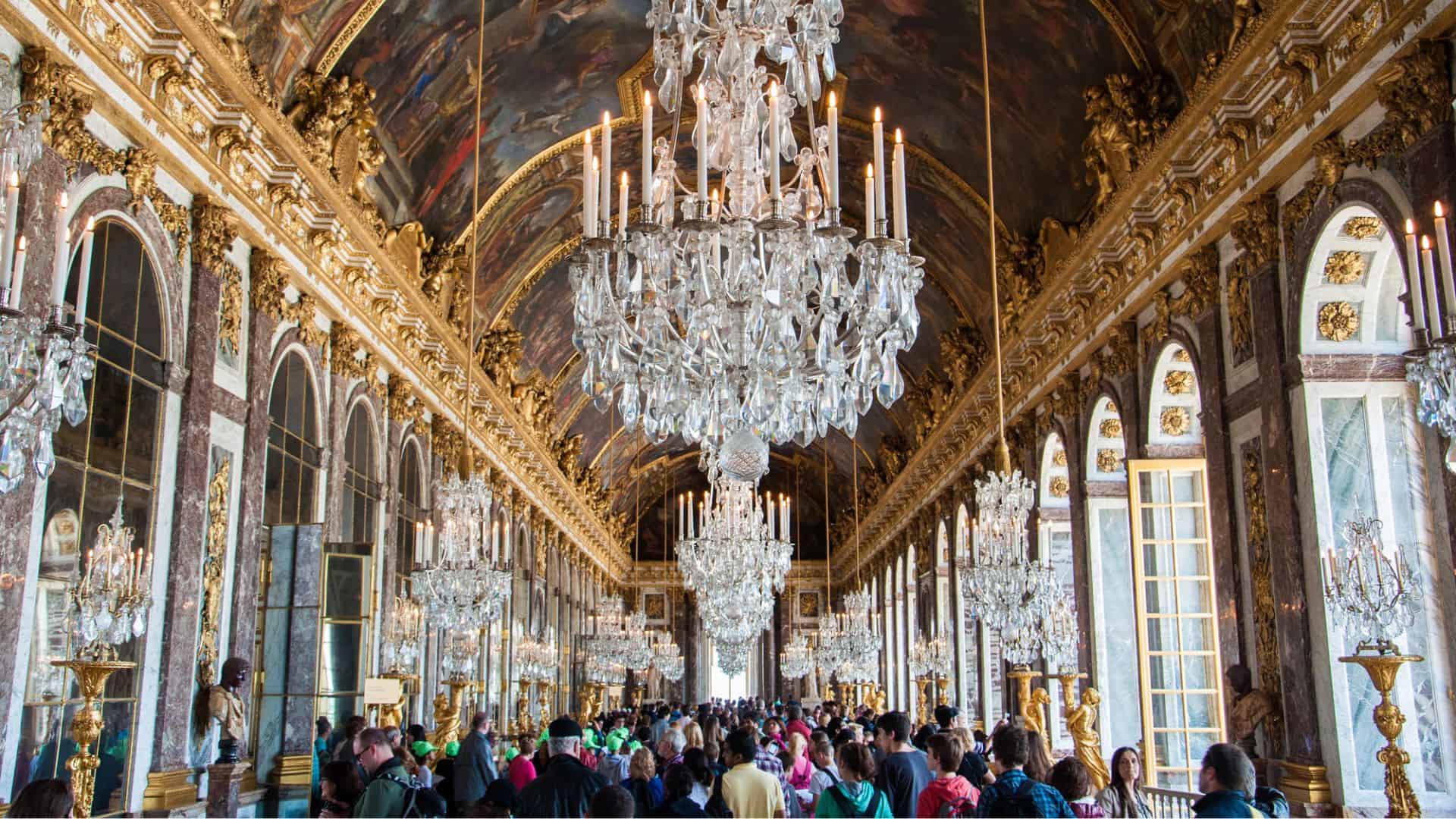
The Palace of Versailles symbolizes the absolute power of Louis XIV and the grandeur of the French monarchy. Expanded from a hunting lodge into a vast Baroque complex, it features a majestic façade overlooking meticulously designed gardens arranged in precise geometric patterns. The Hall of Mirrors, lined with seventeen arched mirrors facing tall windows, reflects light across gilded sculptures and painted ceilings. Lavish state apartments display ornate furnishings, marble accents, and elaborate tapestries. Beyond the main palace lie the Grand Trianon and Marie Antoinette’s estate, revealing contrasting facets of royal life within this monumental domain.
Prague Castle (Czech Republic)
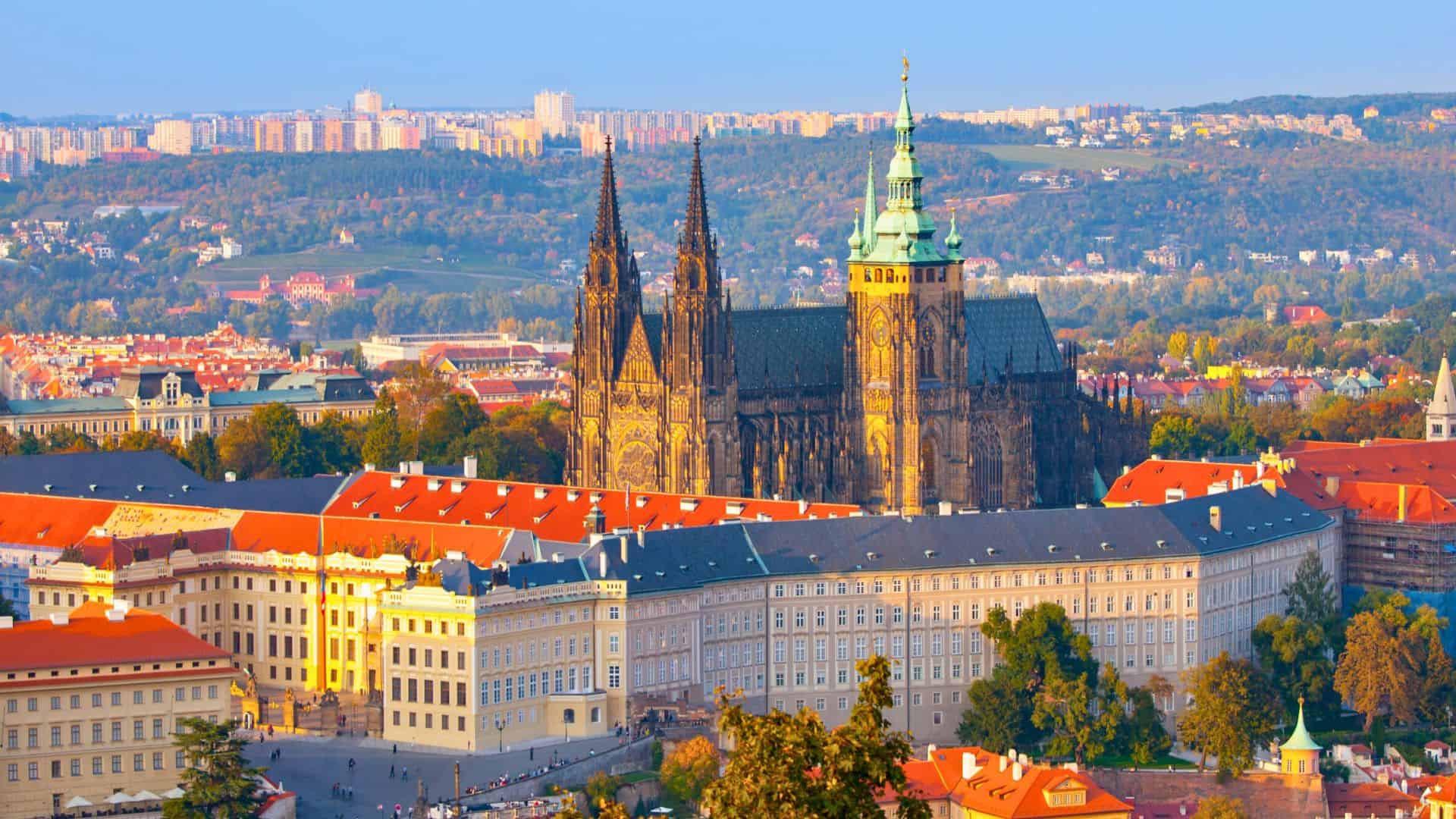
Spanning a vast hilltop overlooking the Vltava River, this sprawling complex ranks among the largest ancient castle sites in the world. Founded in the 9th century, it evolved through Romanesque, Gothic, and Baroque periods, reflecting shifting dynasties and artistic movements. At its heart stands St. Vitus Cathedral, crowned with soaring spires and intricate stained glass. Old Royal Palace halls, colorful Golden Lane houses, and serene courtyards reveal layers of political and cultural history. Panoramic views from its terraces capture Prague’s red rooftops and winding streets, underscoring centuries of Bohemian sovereignty and architectural achievement.
Pena Palace (Portugal)

Perched high above the town of Sintra, this 19th‑century Romanticist palace crowns a forested hill with vivid red and yellow walls, decorative battlements, and ornate terraces. Commissioned by King Ferdinand II on the ruins of a former monastery, the structure combines Gothic, Moorish, and Renaissance influences in dramatic fashion. Elaborate stone carvings, domed towers, and painted tiles create a striking profile against the Atlantic sky. Interior chambers retain period furnishings reflecting royal life of the era. From its ramparts, sweeping views extend across rolling hills toward the coastline, reinforcing its storybook presence.
Edinburgh Castle (Scotland)
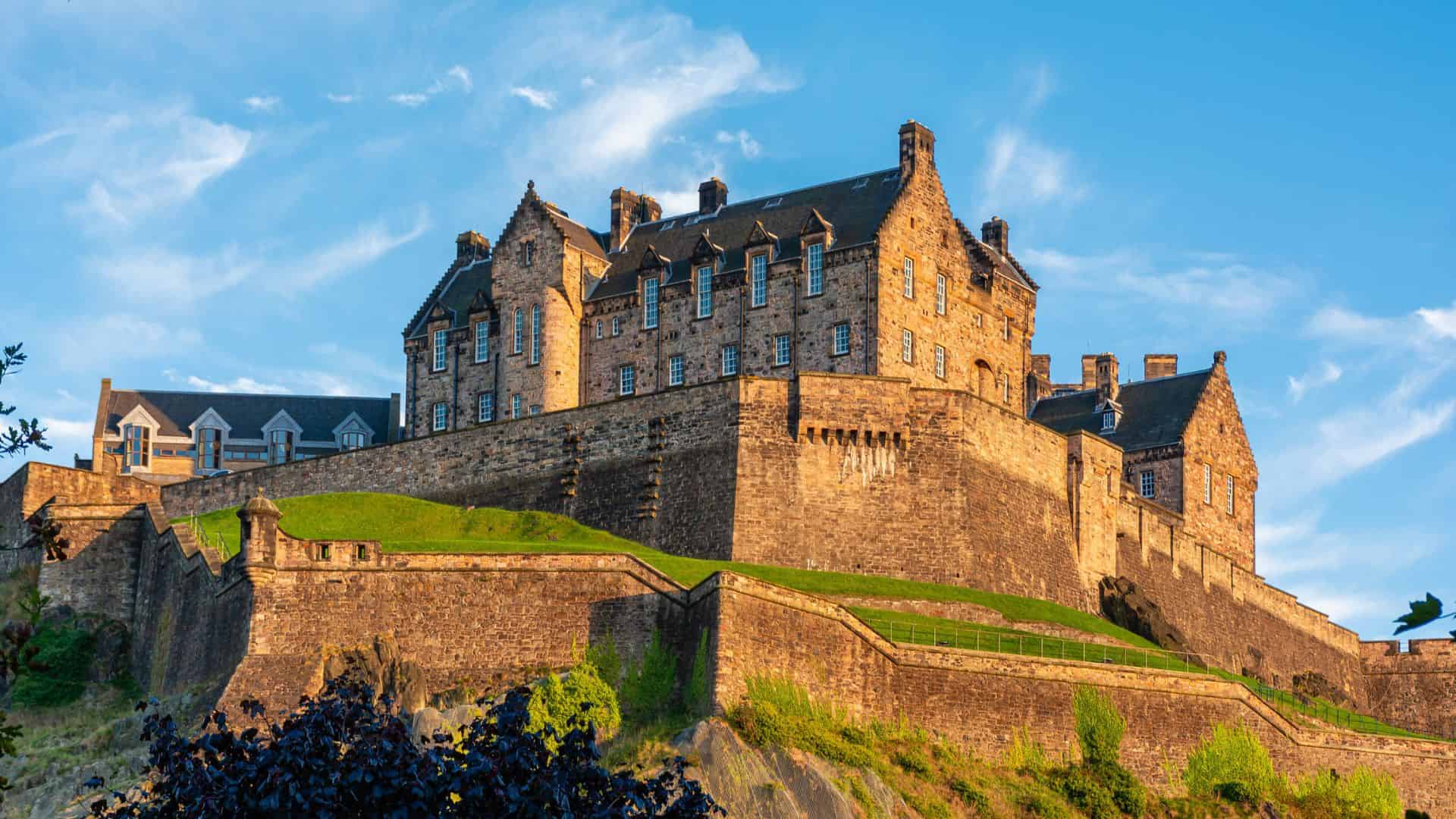
Rising from Castle Rock, an extinct volcanic crag, this ancient fortress dominates the skyline of Scotland’s capital. Its strategic position made it a focal point of military conflicts for centuries, shaping the nation’s turbulent history. Massive stone walls enclose St Margaret’s Chapel, the oldest surviving building in Edinburgh, along with the Crown Jewels of Scotland and the Stone of Destiny. Military barracks and museums trace centuries of regimental heritage. From the battlements, sweeping views stretch across the Royal Mile to the Firth of Forth, highlighting its commanding presence above the city streets below.
Hohenzollern Castle (Germany)
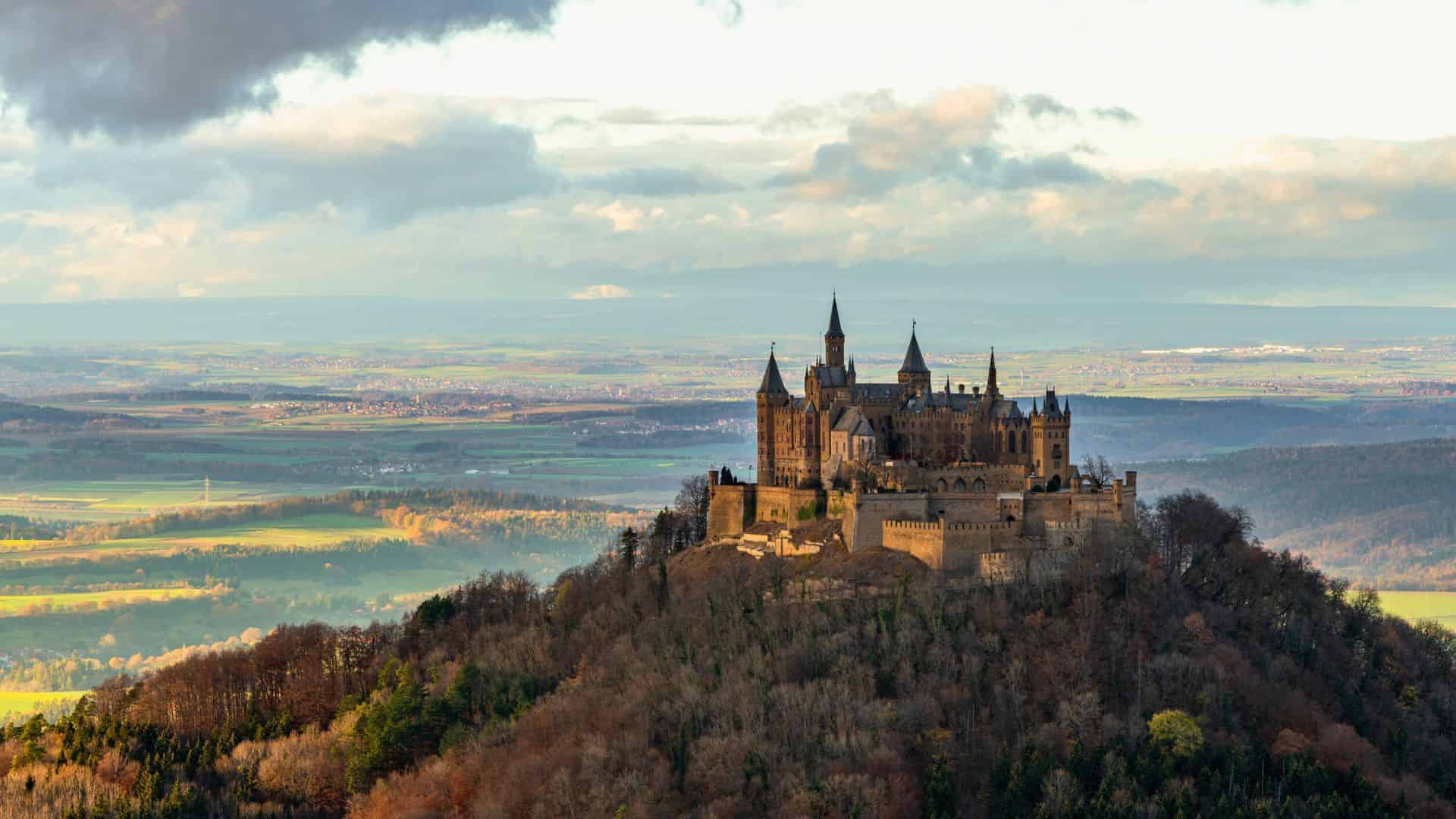
Crowning the summit of Mount Hohenzollern in Baden‑Württemberg, this 19th‑century reconstruction evokes medieval chivalry with pointed towers and fortified walls. Ancestral seat of the Prussian royal family, the castle traces its origins to the 11th century, though the present structure reflects Romantic ideals of knighthood and monarchy. Grand halls display royal artifacts, including the Prussian crown and personal belongings of Frederick the Great. Cloistered courtyards and chapels enhance its dramatic silhouette against the Swabian Alps. On clear days, far‑reaching views extend across rolling countryside, reinforcing its commanding hilltop setting.
Schönbrunn Palace (Austria)
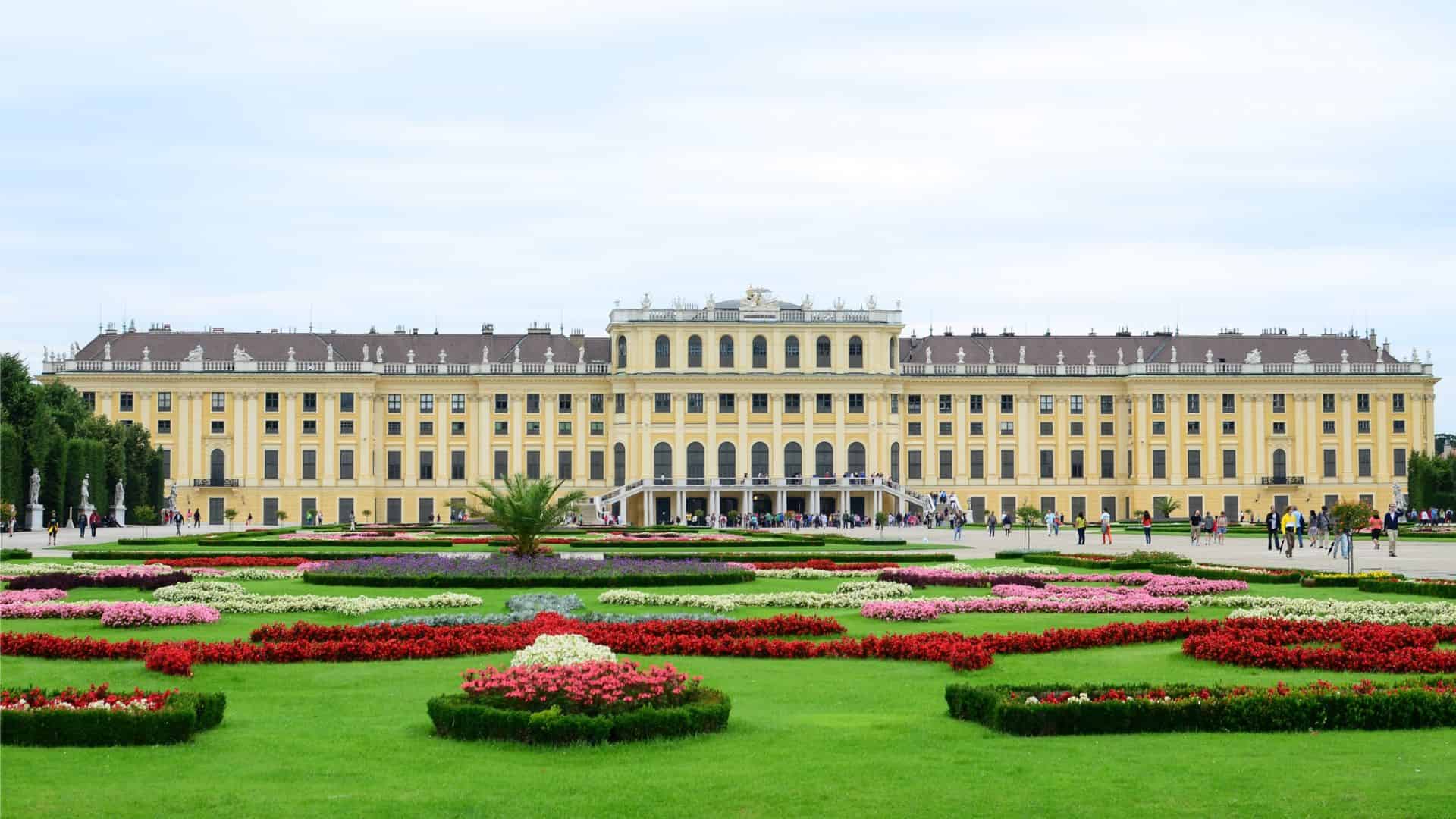
Schönbrunn Palace in Vienna served as the summer residence of the Habsburg dynasty and remains a masterpiece of Baroque design. Its symmetrical yellow façade stretches grandly across landscaped gardens adorned with fountains, statues, and manicured hedges. Inside, more than 1,400 rooms display Rococo interiors, crystal chandeliers, and ceiling frescoes depicting imperial grandeur. The Great Gallery hosted lavish court events beneath glittering ornamentation. Beyond the palace, visitors encounter the Gloriette monument crowning a hill, as well as the world’s oldest zoo, founded in 1752. Schönbrunn reflects centuries of political influence, artistic patronage, and refined court life.
Catherine Palace (Russia)
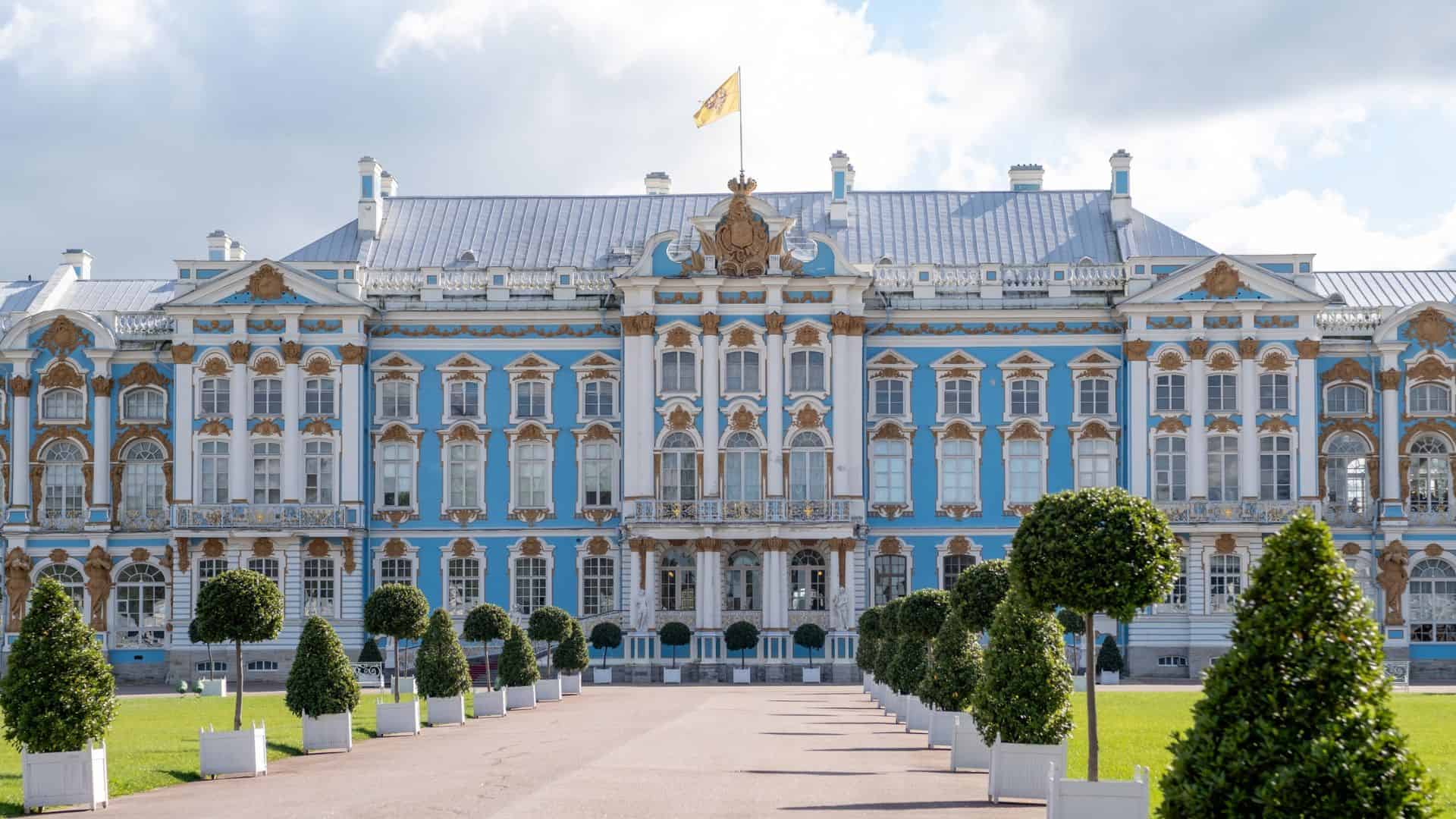
Located in Tsarskoye Selo near St. Petersburg, this Rococo palace stands as a symbol of imperial Russian grandeur. Commissioned in the early 18th century and later expanded under Empress Elizabeth, its blue‑and‑white façade stretches nearly 300 meters, adorned with gilded columns and decorative moldings. Lavish interiors feature parquet floors, mirrored walls, and ornate stucco work. The famed Amber Room, reconstructed after wartime destruction, glows with panels of amber backed by gold leaf. Formal gardens and reflecting ponds extend behind the palace, reinforcing the ceremonial scale and artistic ambition of the Romanov court.
Alcázar of Segovia (Spain)
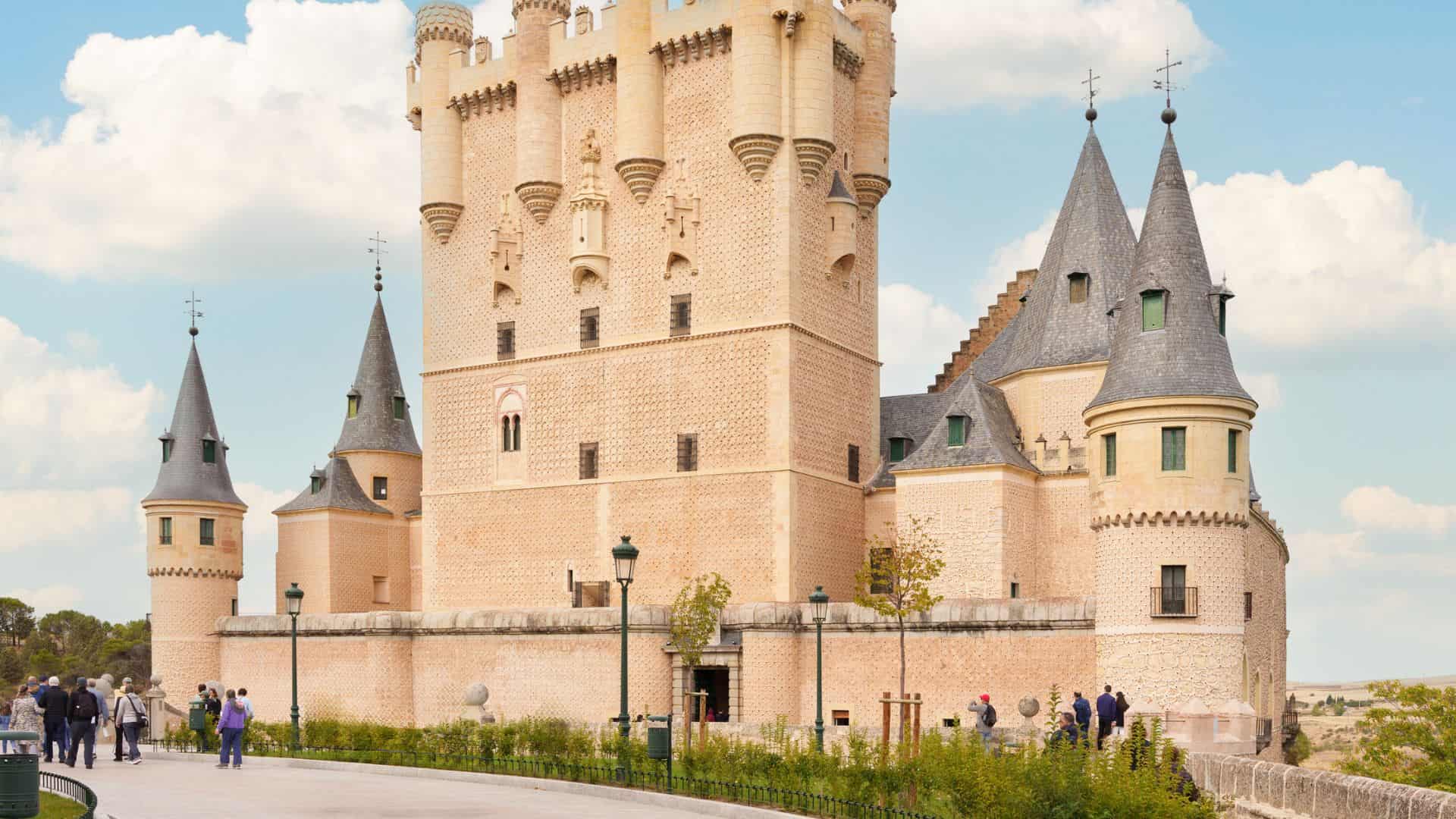
Rising above the confluence of two rivers, this fortress in Segovia resembles the prow of a stone ship. Its origins trace back to Roman foundations, later transformed by medieval monarchs into a royal residence. Slender turrets, slate‑covered spires, and thick defensive walls create a striking silhouette against the Castilian sky. Inside, richly decorated halls display carved ceilings, heraldic symbols, and historic armory collections. The Hall of Kings presents sculpted figures of Spanish rulers, reflecting dynastic continuity. From the tower summit, expansive views reveal rolling plains and distant mountains surrounding the ancient city below.
Want to save this?
Alhambra (Spain)

The Alhambra crowns a hill overlooking Granada, embodying the height of Moorish art and architecture in medieval Spain. Constructed primarily during the 13th and 14th centuries by the Nasrid dynasty, this palace‑fortress complex features intricate stucco carvings, geometric tilework, and graceful horseshoe arches. The Court of the Lions stands as its most iconic space, centered on a marble fountain supported by sculpted lions. Flowing water channels, shaded courtyards, and fragrant gardens create a tranquil atmosphere within fortified walls. From its towers, sweeping views extend across the city toward the Sierra Nevada mountains.
Bran Castle (Romania)

Perched dramatically on a rocky outcrop in Transylvania, this medieval stronghold is often linked to the Dracula legend. Constructed in the 14th century as a defensive fortress, it guarded a strategic mountain pass between Transylvania and Wallachia. Narrow staircases, hidden passages, and timber‑framed rooms create an atmosphere shaped by centuries of regional conflict. Though its association with Bram Stoker’s fictional vampire draws visitors, the castle’s authentic history centers on Queen Marie of Romania, who restored it as a royal residence. Forested hills and rugged peaks surround the site, enhancing its dramatic presence.
Château de Chambord (France)

Château de Chambord stands as a monumental symbol of the French Renaissance in the Loire Valley. Commissioned by King Francis I in the 16th century, the castle showcases a striking façade lined with turrets, chimneys, and sculpted stonework. Its most celebrated architectural feature is the double‑helix staircase, often linked to Leonardo da Vinci, allowing two people to ascend and descend without crossing paths. Surrounded by vast woodlands and a 32‑kilometer wall enclosing a royal hunting park, Chambord reflects both artistic ambition and royal power. The expansive terraces reveal panoramic views of the estate’s geometric rooftops and surrounding countryside.
Bled Castle (Slovenia)
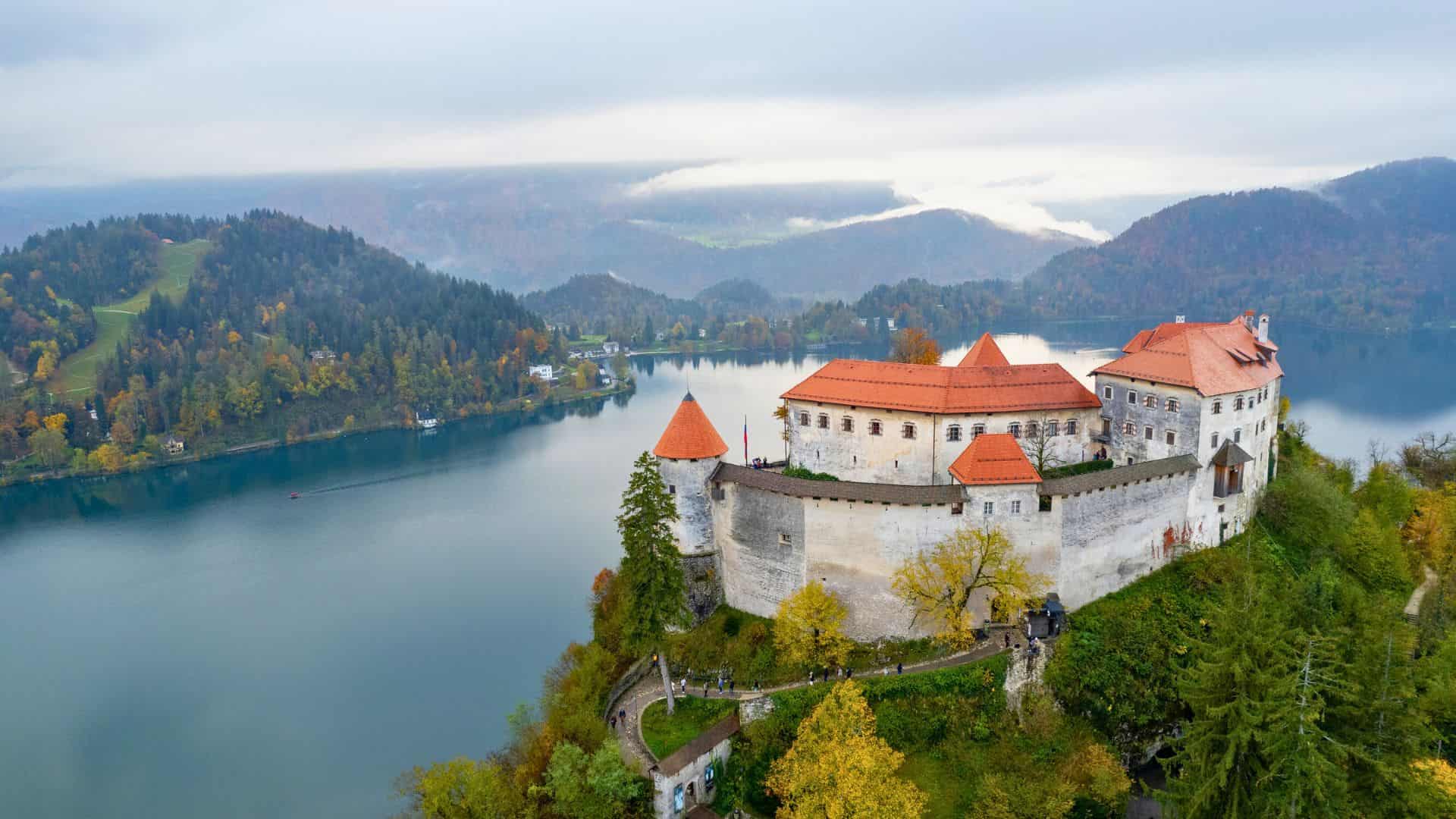
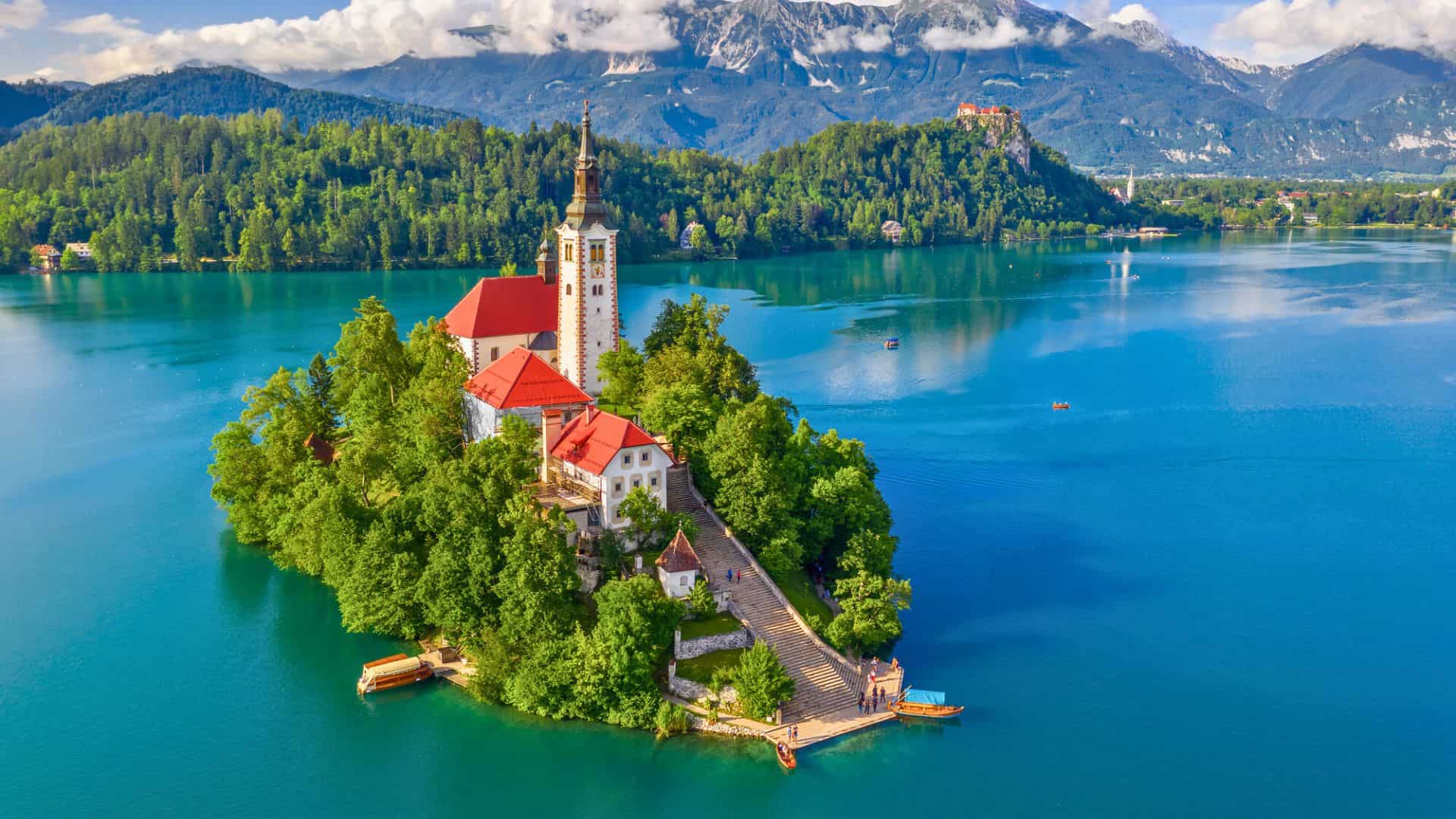
Set atop a steep cliff overlooking Lake Bled, this medieval castle commands sweeping views of alpine peaks and emerald waters. Dating to the 11th century, it ranks among Slovenia’s oldest fortifications, originally serving as a defensive stronghold for regional bishops. Stone ramparts enclose courtyards, a chapel adorned with frescoes, and a small museum detailing local history. The terraced layout follows the natural contours of the cliff, enhancing its dramatic position above the lake. From its viewing platforms, the island church and surrounding Julian Alps create a scene of remarkable visual harmony.
Neuschwanstein Castle (Germany)
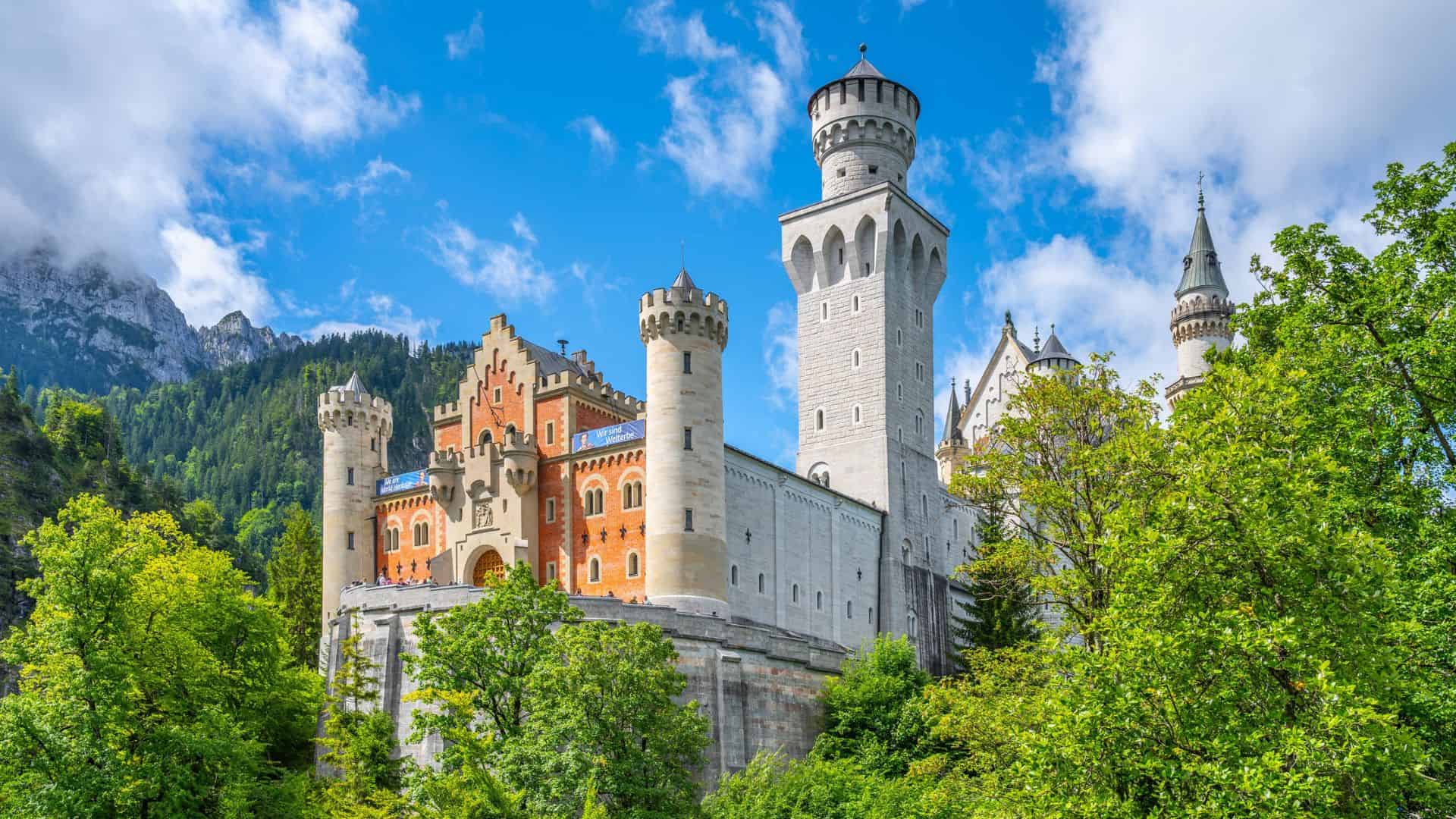
Neuschwanstein Castle rises dramatically above the Bavarian Alps, commissioned in 1869 by King Ludwig II as a romantic retreat inspired by medieval legends and Wagnerian opera. Its soaring towers, white limestone walls, and deep blue turrets create a storybook silhouette against forested mountains. Inside, lavish rooms feature murals depicting Germanic myths, gilded ornamentation, and intricate woodcarvings. Though designed to resemble a medieval fortress, it incorporated advanced 19th‑century technology such as running water and central heating. Perched near the village of Hohenschwangau, the castle commands sweeping views of alpine lakes and valleys, making it one of Europe’s most photographed landmarks.
Start Planning Your Throne Tour
The 13 most beautiful castles and palaces in Europe are more than old buildings with fancy details. They reflect centuries of power, conflict, creativity, and change. Walking through grand halls or standing beneath tall towers makes history feel real in a way that books just can’t match. You see how rulers lived, how architects pushed limits, and how entire cities grew around these landmarks.
What makes them so great today is how accessible they are. You can tour the rooms, stroll the gardens, and take in the views for yourself. Some sit high on cliffs. Others anchor busy capitals. Each one leaves a strong impression without trying too hard. If Europe is on your travel list, adding a few of these stops is a perfect move. They’re timeless, photogenic, and still central to the story of the continent.
10 Beautiful Riverside Cities in Europe for Scenic Walks and Views
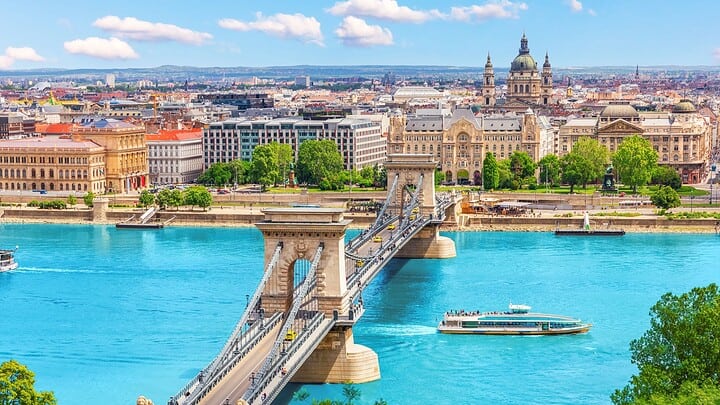
There’s something about a city built along a river that just works. The water adds space, light, and a natural path through the streets. It shapes where people gather, where bridges rise, and where the skyline makes its biggest statement. There are 10 beautiful riverside cities in Europe that still draw locals and visitors to their banks. Here, early mornings feel calm and clear, while evenings bring reflections of towers, domes, and streetlights across the surface.
Read More Here: 10 Beautiful Riverside Cities in Europe for Scenic Walks and Views
11 European Towns That Look Straight Out of a Storybook
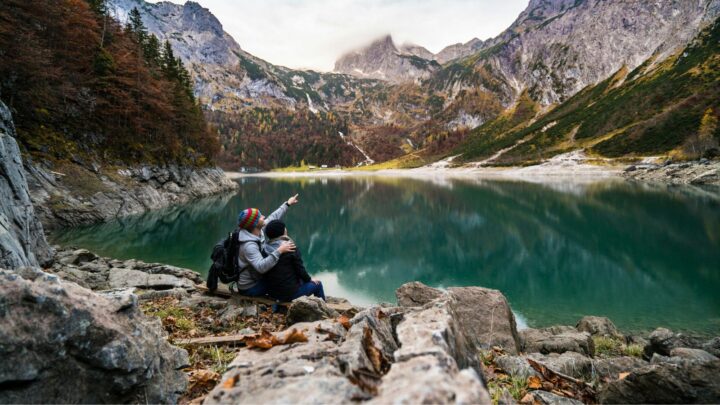
Europe is filled with cobblestone streets, half-timbered houses, and colorful squares that feel like they’ve been lifted straight from a fairytale. While many travelers flock to famous capitals, there are European towns that look straight out of a storybook, where time slows down and everyday life feels touched by history and charm. From alpine villages surrounded by mountains to seaside gems with pastel facades, these towns carry an atmosphere that captures both imagination and heart. They aren’t just about scenic views but about experiencing life in places where tradition and scenery come together beautifully.
Read More Here: 11 European Towns That Look Straight Out of a Storybook



Leave a Reply