There’s something about a striking staircase that makes you slow down. It’s not just about getting to the top. It’s about the setting, the design, and the feeling you get halfway up when you stop and look around. In this post, we’re getting into 12 beautiful public staircases that turn an everyday structure into something far more memorable. Some are bold and colorful, while others are historic and grand.
One thing's for sure: each one stands out for its own reasons. Public staircases can shape the character of a place. They become meeting spots, photo backdrops, and landmarks people talk about long after they leave. You don’t have to be an architect to appreciate them. You just have to look up and start climbing. Sometimes the best views and the best stories begin with a single step.
Spanish Steps – Rome, Italy
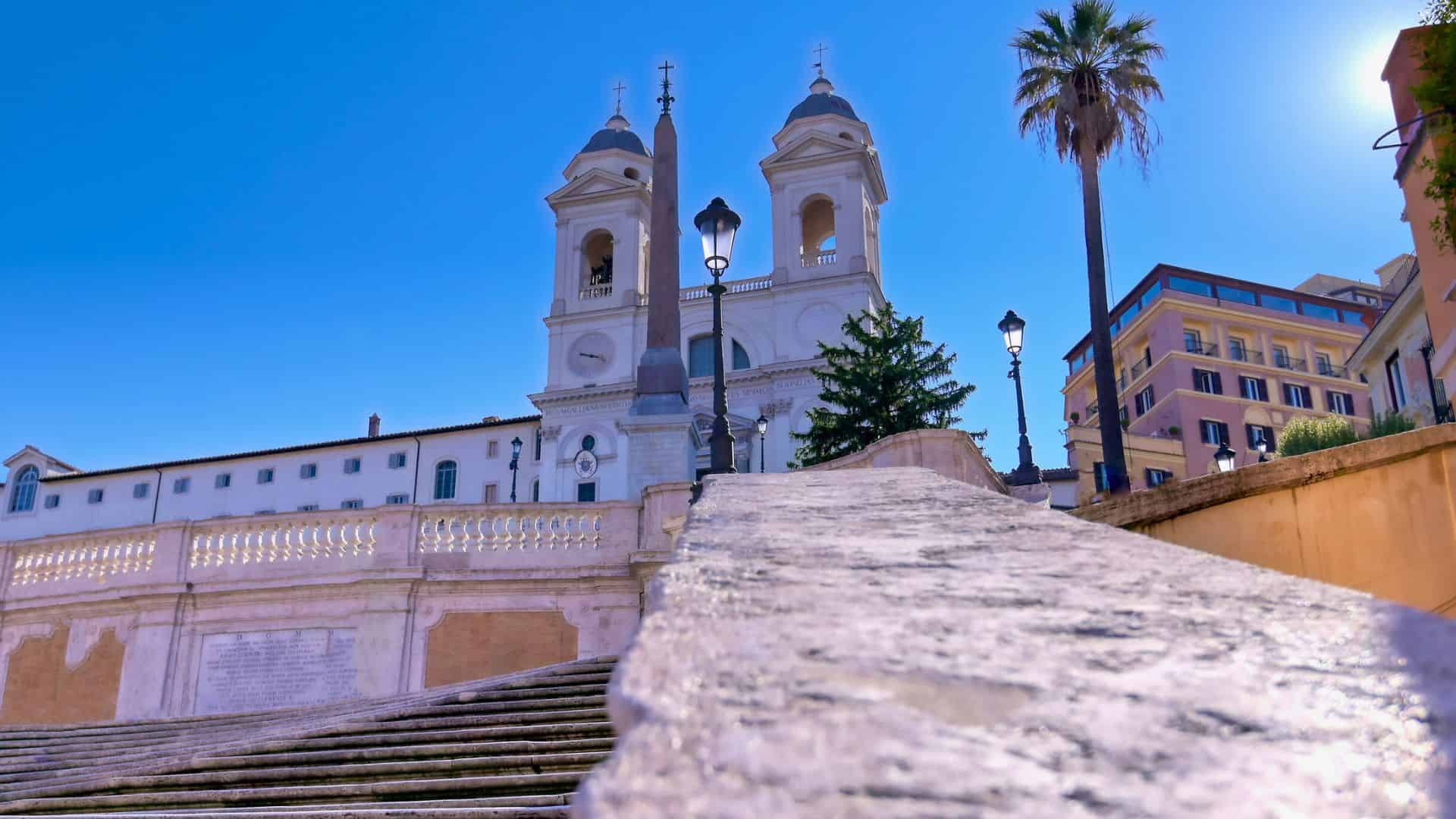
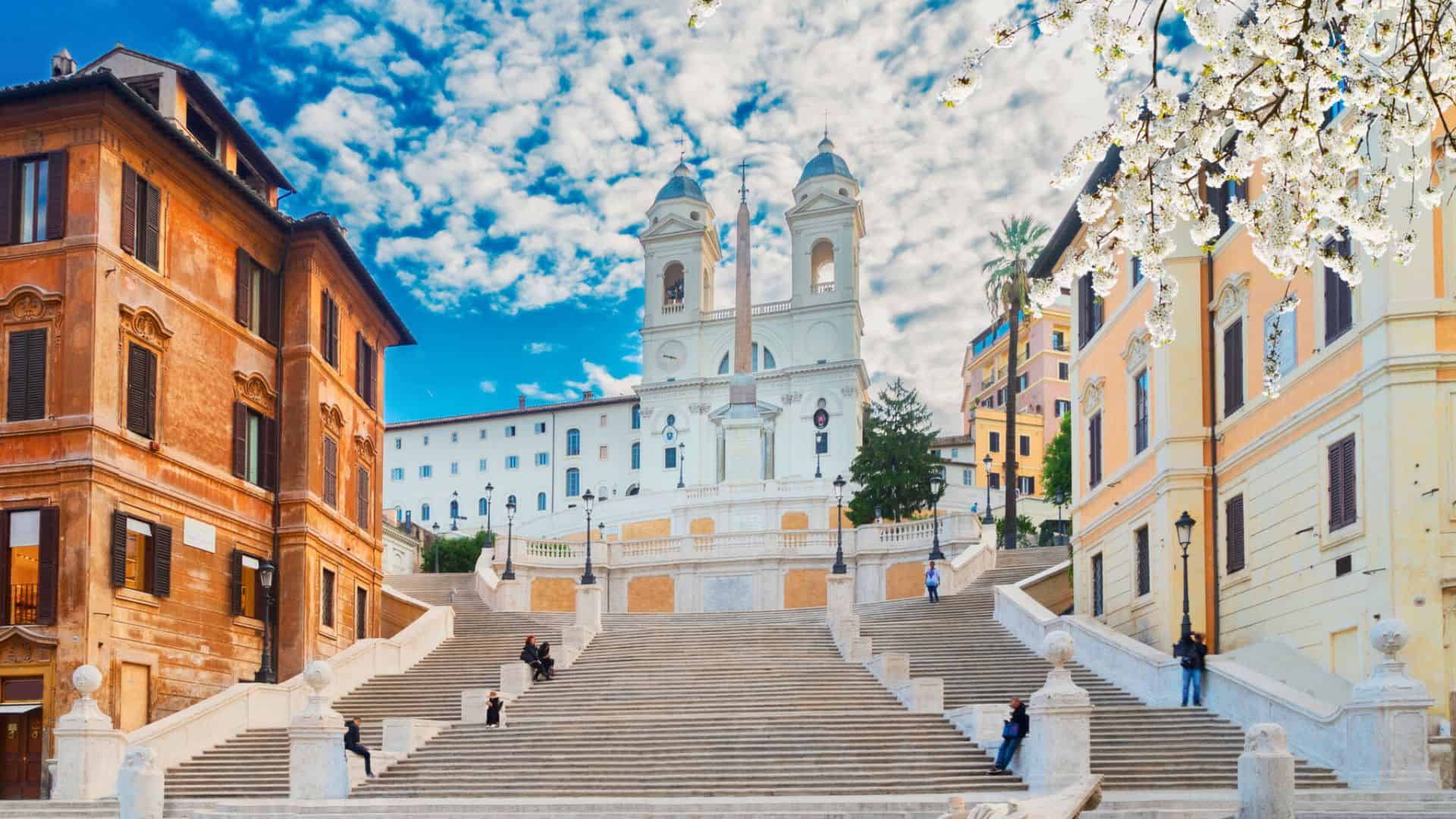
The Spanish Steps rise in graceful tiers between Piazza di Spagna and the church of Trinità dei Monti, forming one of Rome’s most recognizable landmarks. Completed in 1725 and designed by Francesco de Sanctis, the sweeping Baroque staircase unfolds in a rhythmic pattern of curves, terraces, and balustrades. In spring, pink azaleas line the steps, adding vibrant color against the pale stone. Artists, poets, and filmmakers have long gravitated here, drawn by the theatrical setting and lively atmosphere. From the top, rooftops and domes stretch across the historic center, while the Fontana della Barcaccia anchors the lively square below.
Loretto Chapel Spiral Staircase – Santa Fe, USA
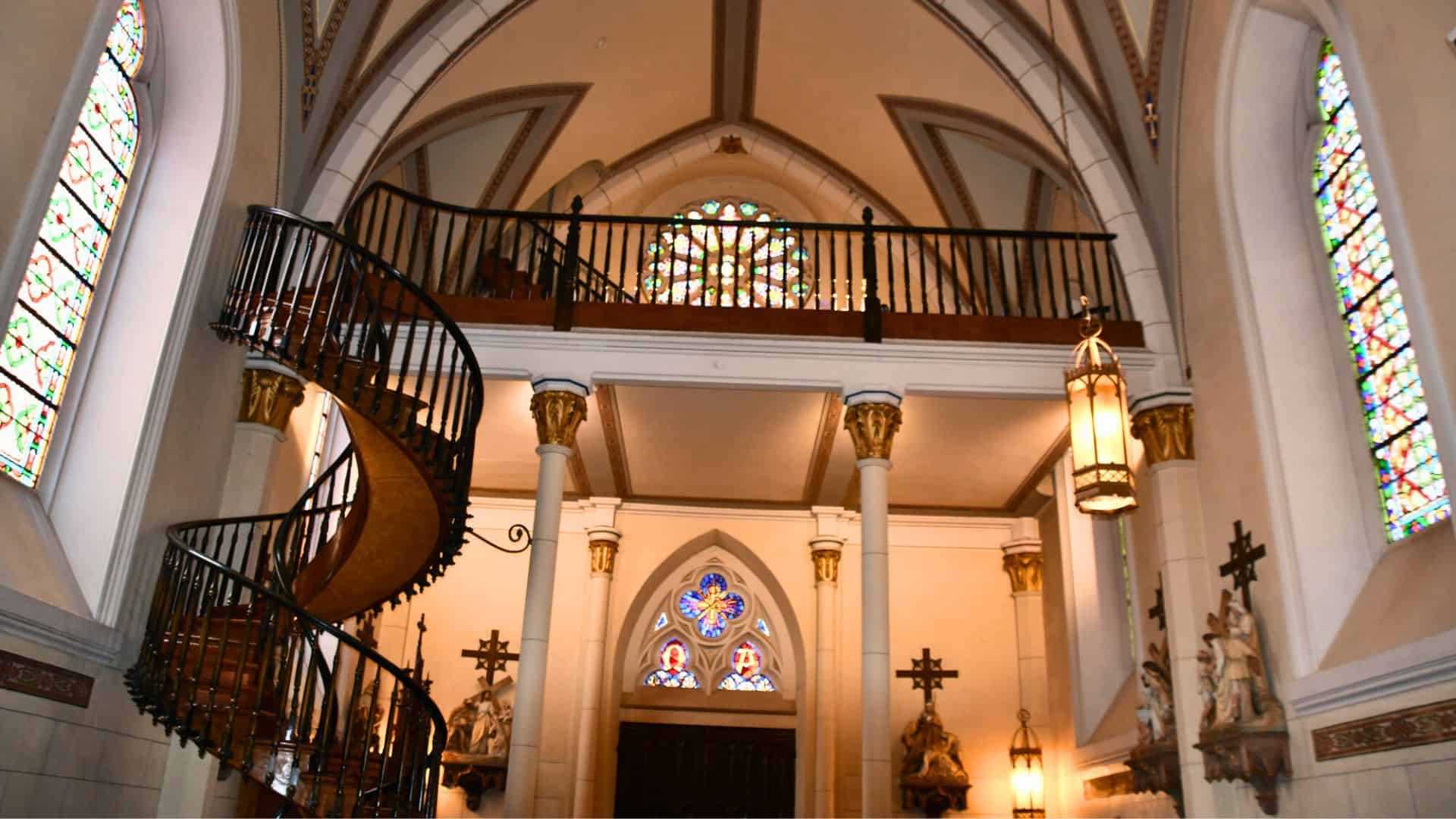
Inside a small Gothic Revival chapel in Santa Fe stands a remarkable wooden spiral staircase constructed in the late nineteenth century. Rising approximately twenty feet to the choir loft, it completes two full rotations without a visible central support. Crafted from tightly fitted timber pieces joined by wooden pegs, the structure has inspired legends regarding its mysterious builder and method of construction. The graceful curve draws the eye upward toward stained glass windows and vaulted ceilings. Long admired for both craftsmanship and engineering ingenuity, the staircase remains a focal point of the historic chapel’s interior.
Haiku Stairs (Stairway to Heaven) – Oahu, Hawaii, USA

The Haiku Stairs climb steep ridgelines along Oahu’s Koʻolau Mountains, tracing a dramatic path above lush valleys and sheer cliffs. Originally installed in 1942 as a wooden ladder system to access a military radio station, the staircase was later rebuilt in metal, totaling nearly 4,000 steps. The ascent passes through misty peaks and narrow platforms suspended high above the landscape. Though closed to the public due to safety and access concerns, the structure continues to capture attention for its daring placement and sweeping views of Windward Oahu. Its silhouette remains etched against the island’s rugged skyline.
Escadaria da Lapa – Rio de Janeiro, Brazil
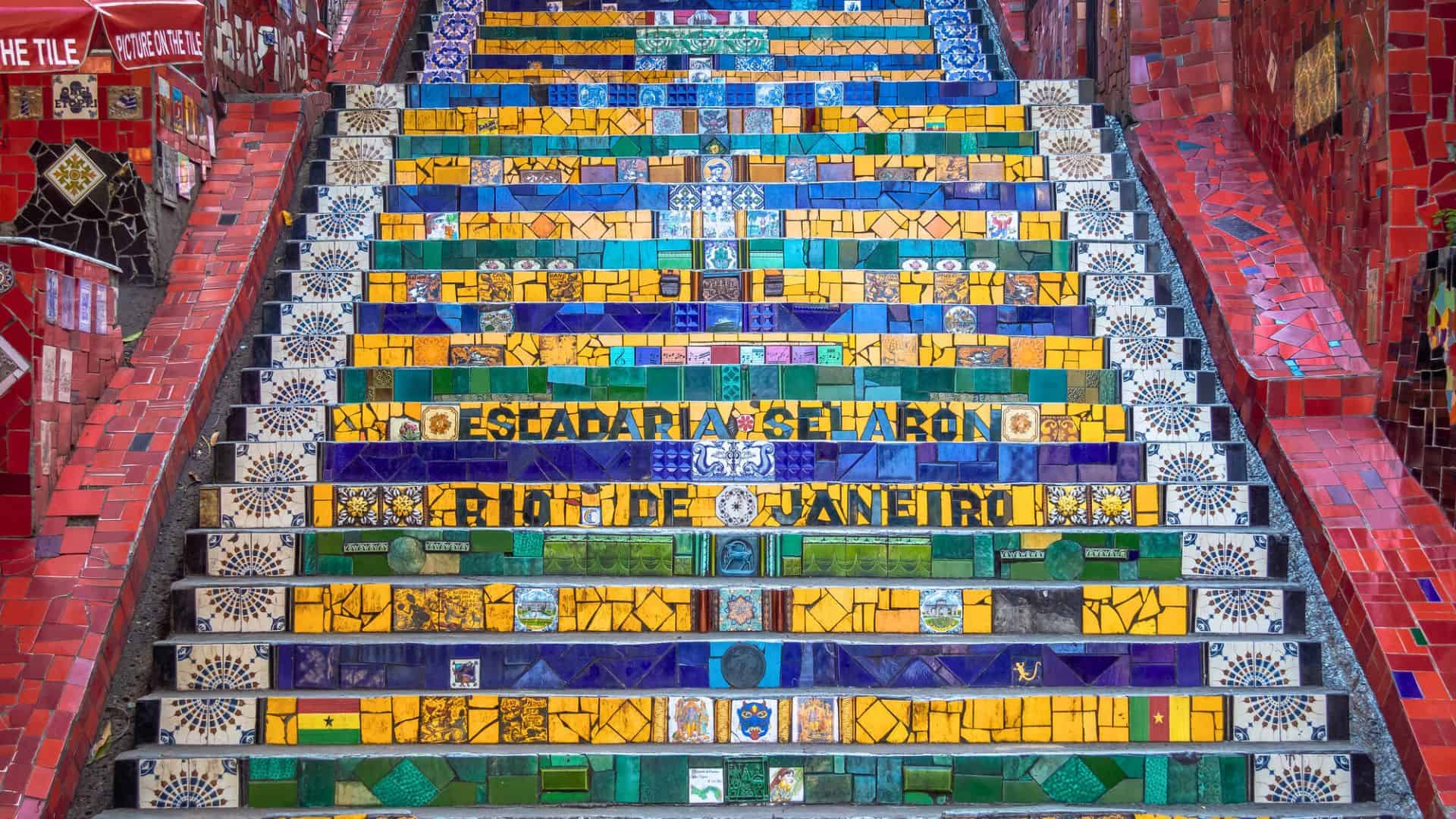
Stretching between Lapa and Santa Teresa, this tiled staircase transformed an ordinary urban passage into a vibrant public artwork. Covered in thousands of ceramic pieces arranged in bold patterns, the design grew gradually under the dedication of artist Jorge Selarón. Red paint frames many of the steps, while flags and graphic motifs reflect global contributions from visitors who donated tiles. Musicians, dancers, and street vendors frequently animate the surrounding area, reinforcing its cultural significance. Over time, the staircase evolved into both a neighborhood landmark and a symbol of artistic devotion within Rio’s dynamic streetscape.
Potemkin Stairs – Odesa, Ukraine
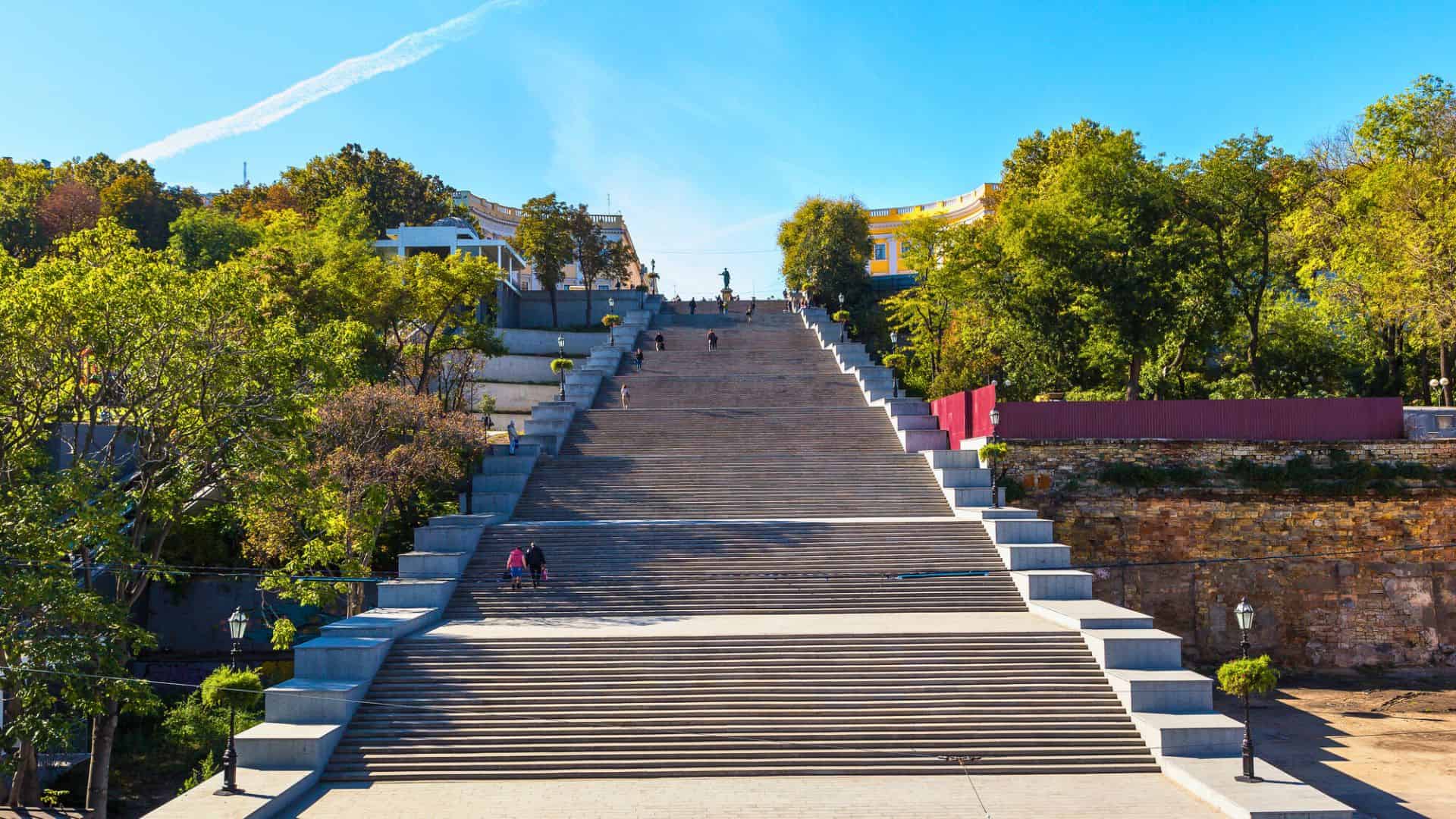
The Potemkin Stairs form a monumental entrance to the port city of Odesa, stretching from the harbor up to Primorsky Boulevard. Constructed between 1837 and 1841, the staircase was engineered to create a powerful optical effect: from the base, only the broad landings are visible, making the ascent appear endless; from above, the steps dominate the view. Comprising 192 steps, the structure widens toward the bottom, enhancing the illusion of grandeur. The stairs gained international recognition through Sergei Eisenstein’s 1925 film Battleship Potemkin. Today, they remain a defining symbol of the city’s architectural ambition.
The Vessel – New York City, USA
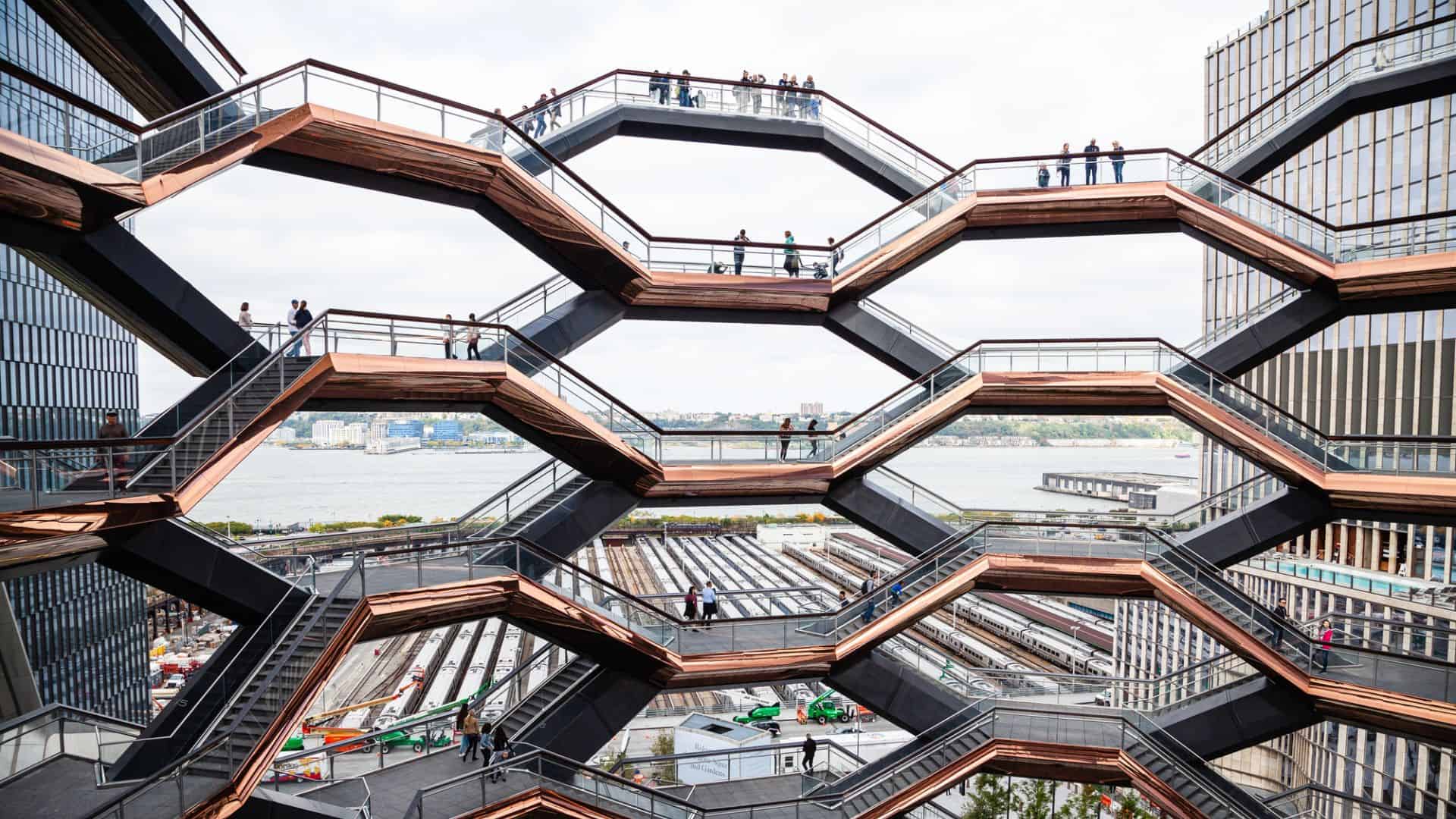
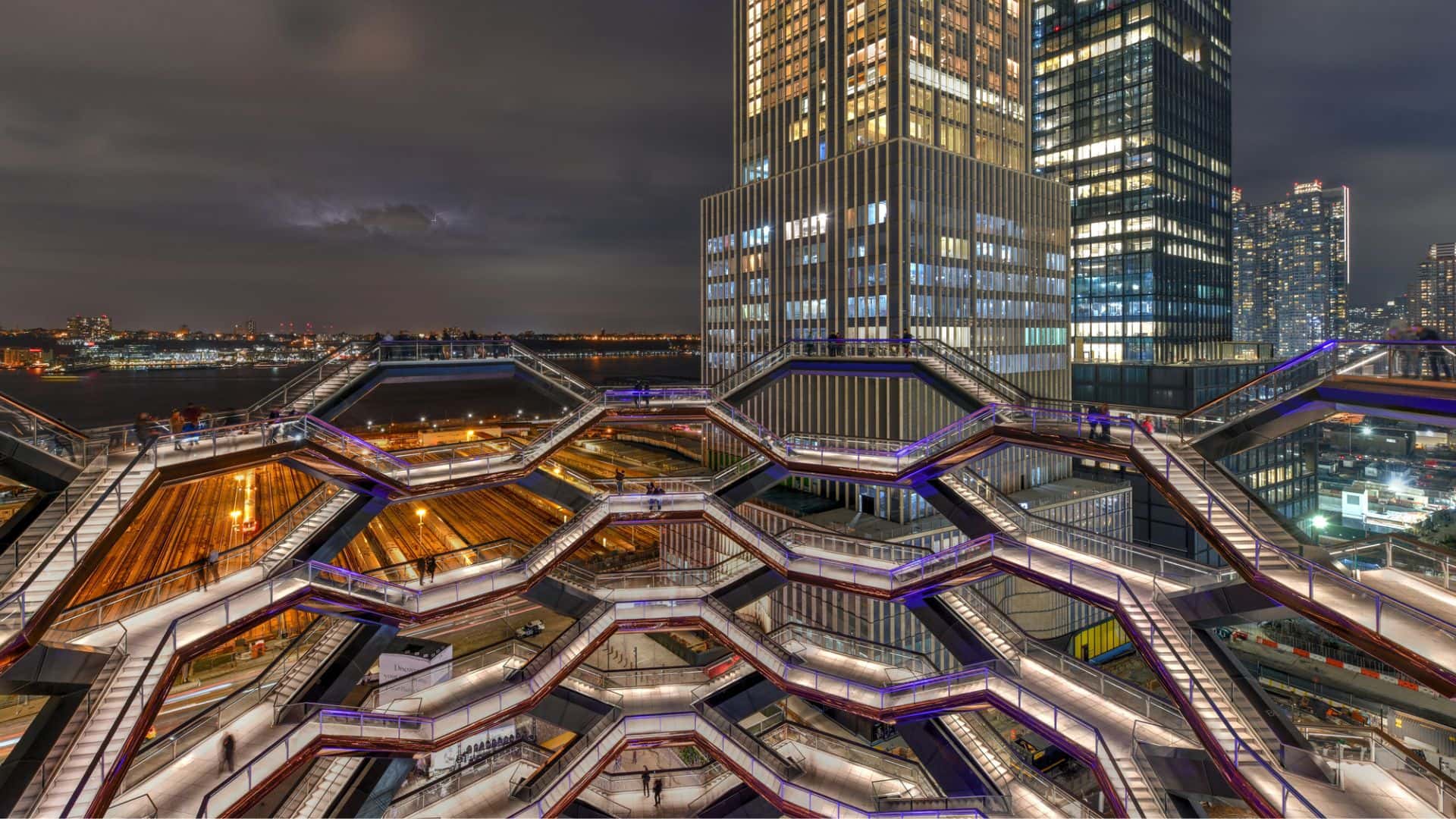
Rising dramatically within Hudson Yards, this interactive structure consists of interlocking staircases arranged in a honeycomb pattern. Designed by British architect Thomas Heatherwick and unveiled in 2019, it features 154 flights and nearly 2,500 individual steps. The copper-toned steel exterior reflects the surrounding skyline, shifting in color with the light. Visitors ascend interconnected platforms that reveal changing perspectives of the Hudson River and Manhattan’s west side. Conceived as a climbable landmark rather than a traditional building, the structure quickly became a focal point for photography and public gatherings in one of New York’s newest developments.
Scala dei Turchi Stair Access – Sicily, Italy
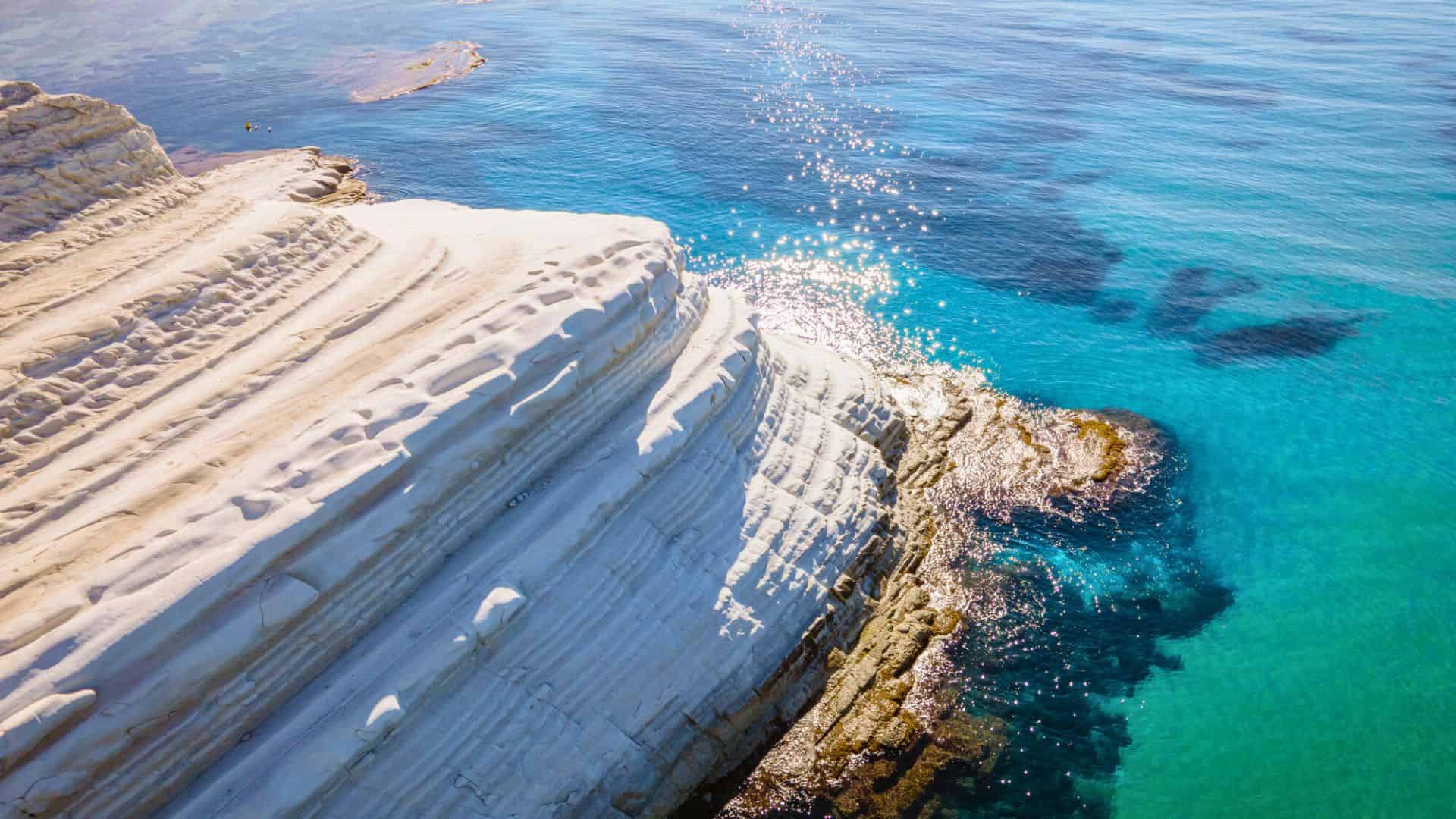
Along Sicily’s southern coast, brilliant white marlstone cliffs descend toward the Mediterranean in broad, natural terraces resembling giant steps. Wind and sea have sculpted the rock into smooth, undulating layers that contrast sharply with the deep blue water below. Visitors carefully traverse these formations to reach secluded coves and panoramic viewpoints. The name, meaning “Stair of the Turks,” recalls centuries‑old tales of pirate landings along the shoreline. Sunlight intensifies the pale stone during the day, while sunset casts soft shadows across its contours, highlighting the geological drama of this coastal landmark.
Want to save this?
Chand Baori Stepwell – Abhaneri, India
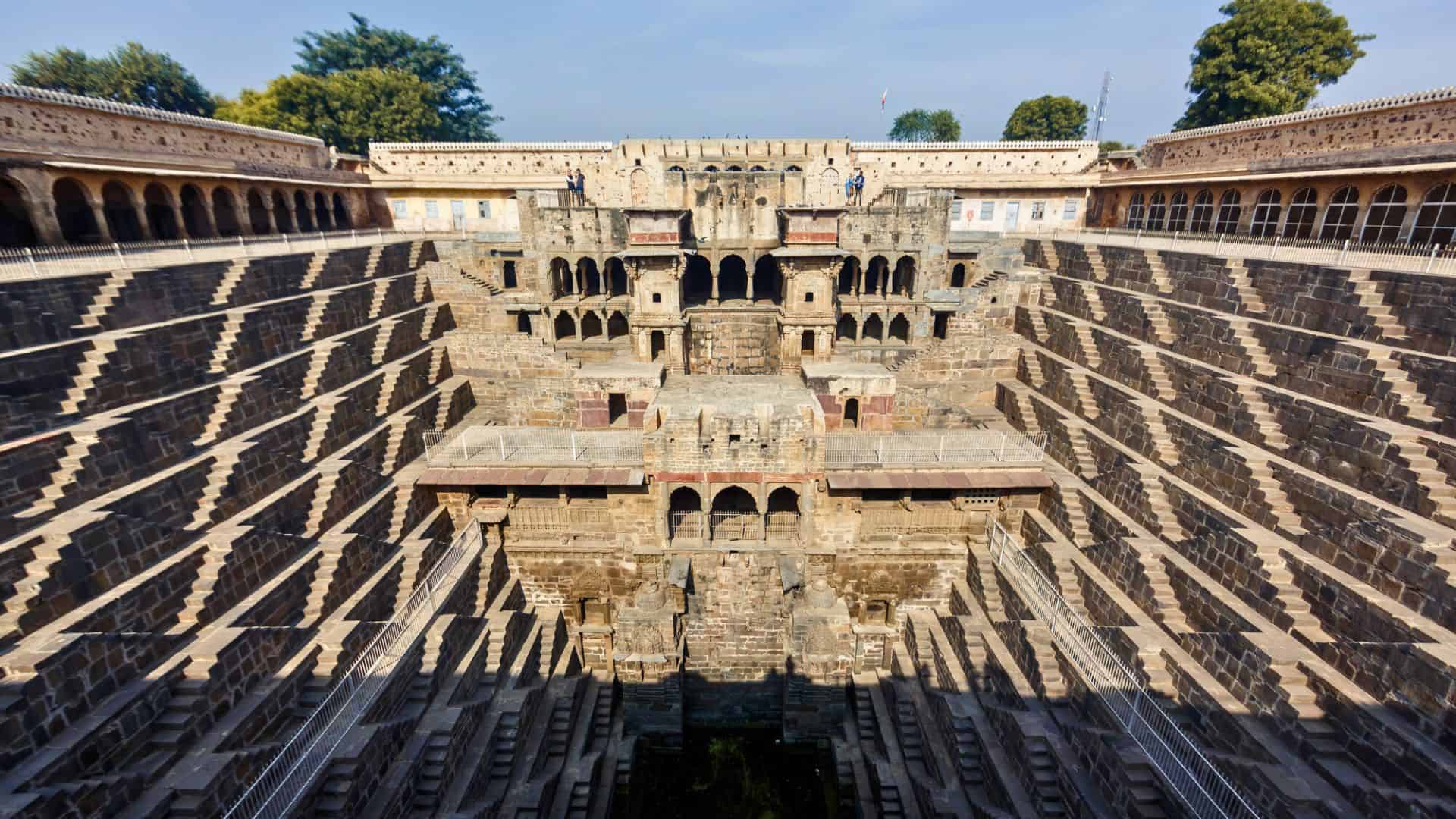
Chand Baori is a 9th‑century stepwell renowned for its geometric precision and dramatic depth. Built during the reign of King Chanda of the Nikumbha dynasty, it descends approximately 13 stories, with more than 3,500 narrow steps arranged in a striking crisscross pattern. The repeating triangular formations create a visual rhythm that shifts as sunlight moves across the structure. Originally constructed to conserve water in Rajasthan’s arid climate, the stepwell also served as a community gathering place. Intricately carved pavilions and shrines line one side, reflecting both practical engineering and spiritual significance within ancient Indian architecture.
Grand Staircase of the Palais Garnier – Paris, France
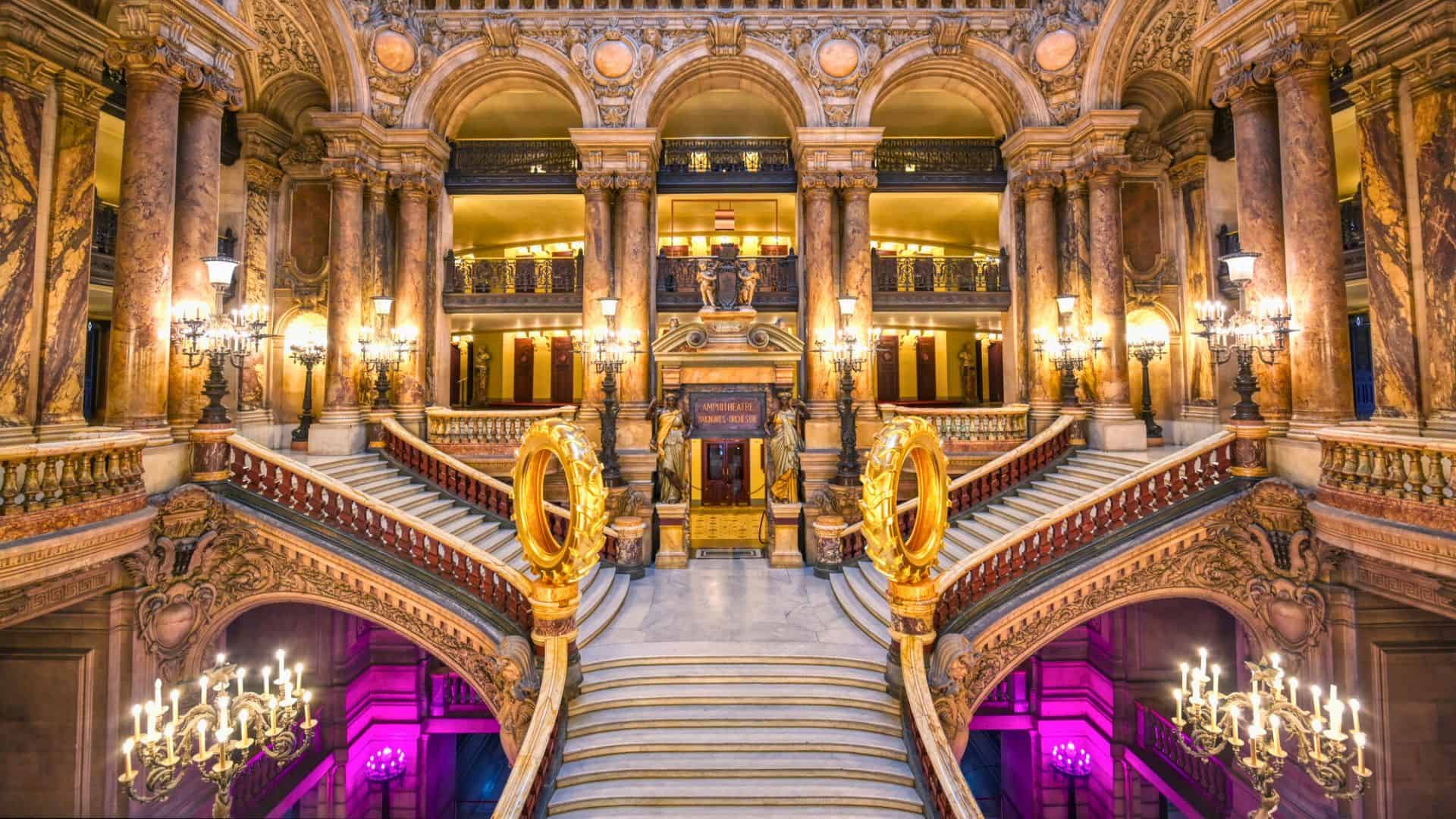
Within the opulent interior of the Palais Garnier, a sweeping marble staircase unfolds beneath gilded ceilings and ornate chandeliers. Designed by architect Charles Garnier and completed in 1875, the staircase was conceived as a theatrical stage for society as much as a functional passage. Balustrades of onyx and marble frame broad steps that divide into symmetrical flights, guiding guests toward balconies and foyers. Sculpted figures and intricate decorative details line the surrounding walls, reinforcing the grandeur of the Second Empire style. Ascending the staircase feels like entering a performance before the opera even begins.
Tiger & Turtle – Magic Mountain Stairs – Duisburg, Germany
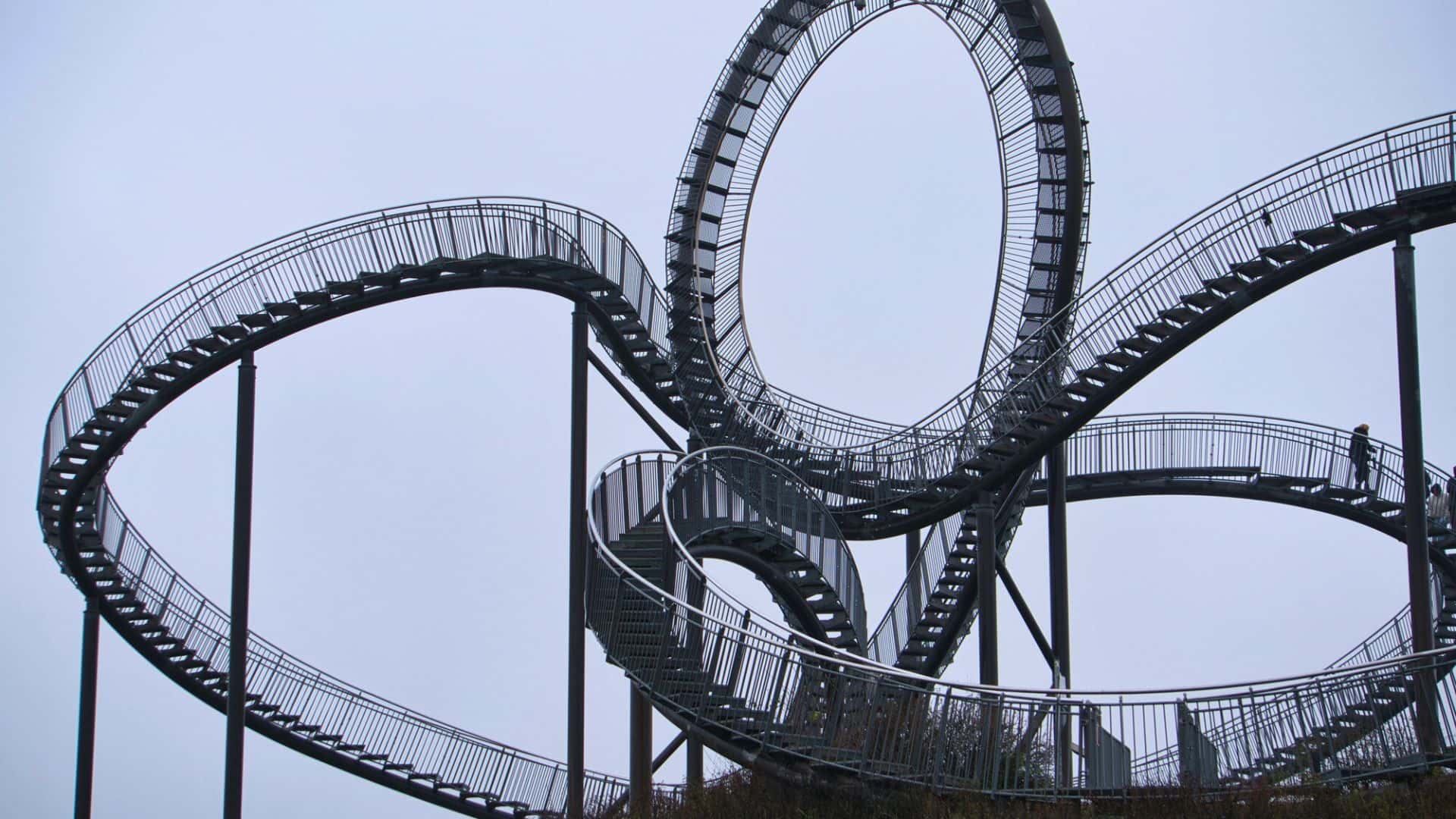
Perched atop a former industrial slag heap in Duisburg, this walkable sculpture resembles a looping roller coaster frozen in motion. Designed by artists Heike Mutter and Ulrich Genth, the steel structure rises and dips in sweeping arcs, with staircases tracing its dramatic curves. Although it appears to form a full vertical loop, that section remains inaccessible, preserving safety while maintaining visual impact. From its highest points, expansive views stretch across the Rhine landscape and surrounding industrial heritage sites. Illuminated at night, the framework glows against the dark sky, transforming the once‑industrial setting into a striking public landmark.
Batu Caves Steps – Selangor, Malaysia
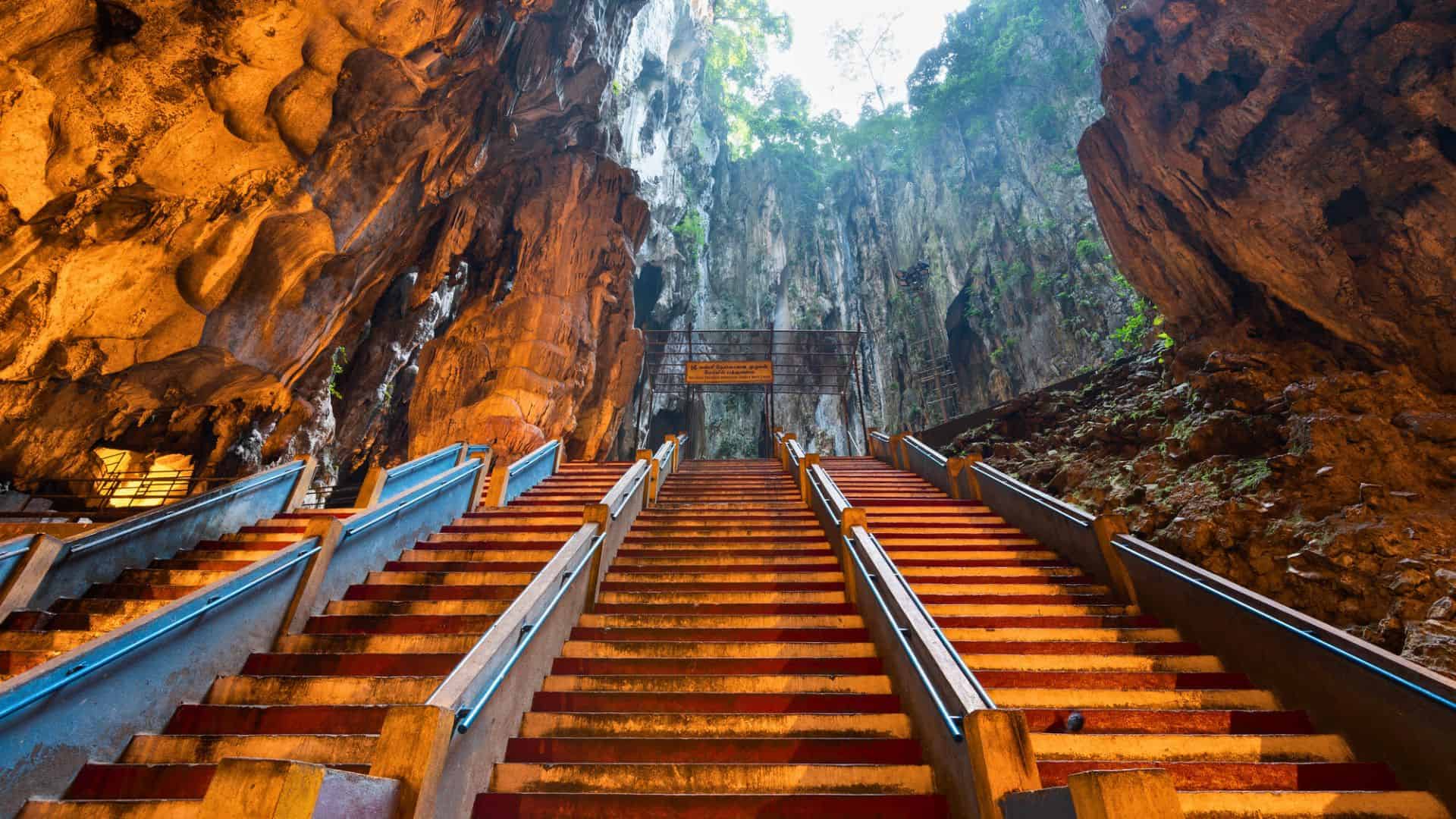
Leading to a vast limestone cave complex north of Kuala Lumpur, these 272 steps form a vibrant pathway to one of Malaysia’s most significant Hindu temples. Painted in bold rainbow hues in 2018, the staircase contrasts strikingly with the towering golden statue of Lord Murugan at its base. The climb is steep and exposed to tropical heat, with macaques frequently darting along the railings. At the summit, visitors enter Cathedral Cave, where high ceilings and filtered daylight create a dramatic setting for shrines and ceremonies, particularly during the annual Thaipusam festival.
Montmartre Stairs – Paris, France
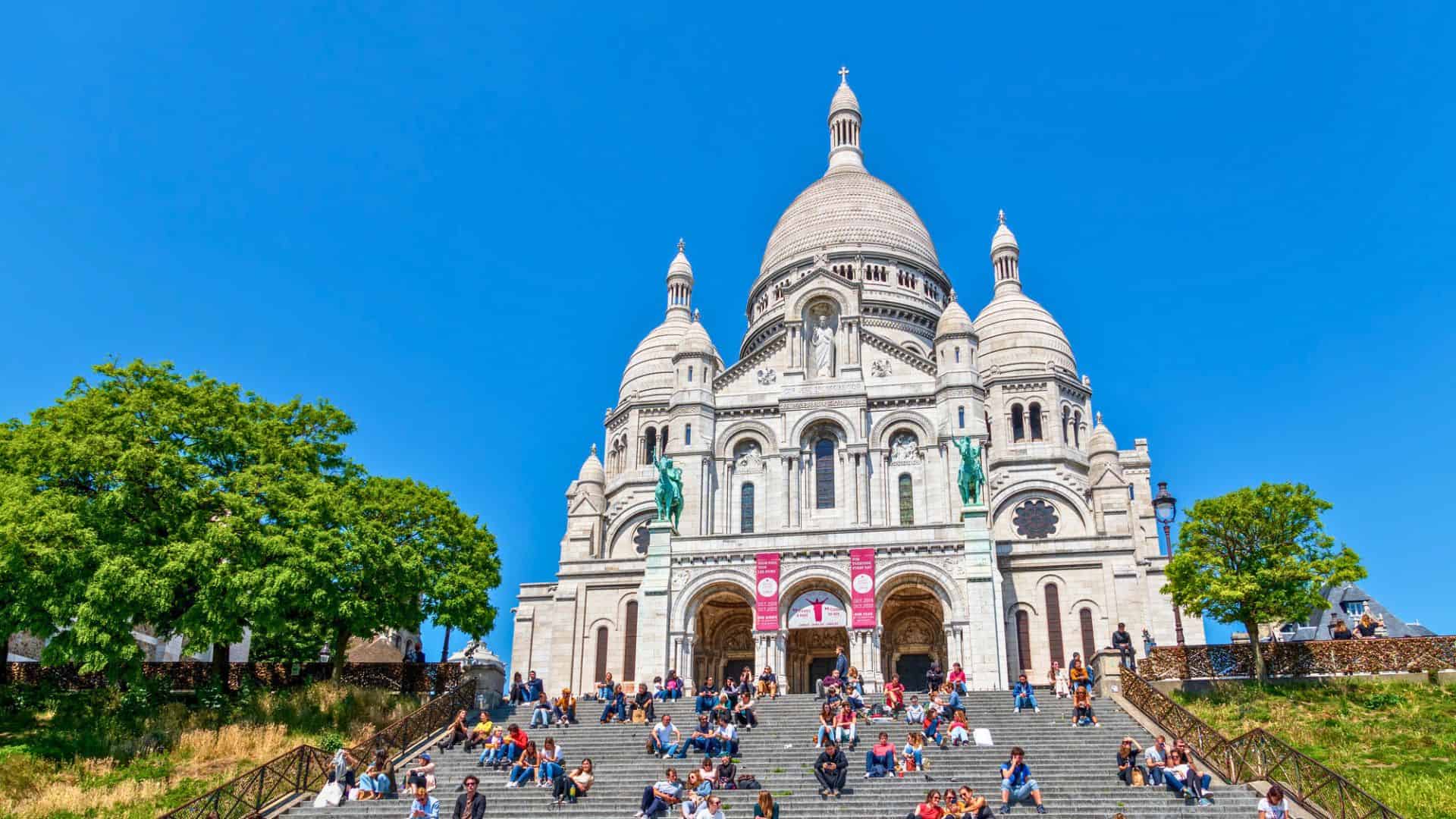
Winding up the steep hill of Montmartre, these stairways connect quiet residential lanes with the white domes of Sacré‑Cœur Basilica. Stone steps, sometimes narrow and uneven, trace routes once walked by artists such as Picasso and Toulouse-Lautrec. Street lamps and ivy-covered facades add character to the ascent, while landings reveal glimpses of rooftops across Paris. The climb can be demanding, yet each turn brings shifting views and small cafés tucked along side streets. At the summit, the basilica’s terrace opens onto sweeping panoramas of the city, rewarding those who make the journey upward.
Take it One Step Higher
Great design doesn’t always come in the form of skyscrapers or famous bridges. Sometimes it’s a staircase that leaves a lasting impression. The 12 beautiful public staircases we’ve looked at show how something so practical can also shape a city’s identity. They draw people in, spark conversations, and turn an ordinary climb into a moment worth remembering. That’s what makes them stand out.
Next time you travel, pay attention to the stairs around you. Take the long way up. Stop halfway and look back. You might find that the climb becomes one of the best parts of the trip. Public staircases connect streets, neighborhoods, and viewpoints—but they also connect people. And honestly, that’s pretty great for something most of us usually rush past without a second thought.
15 Public Squares That Turn City Centers Into Beautiful Spaces
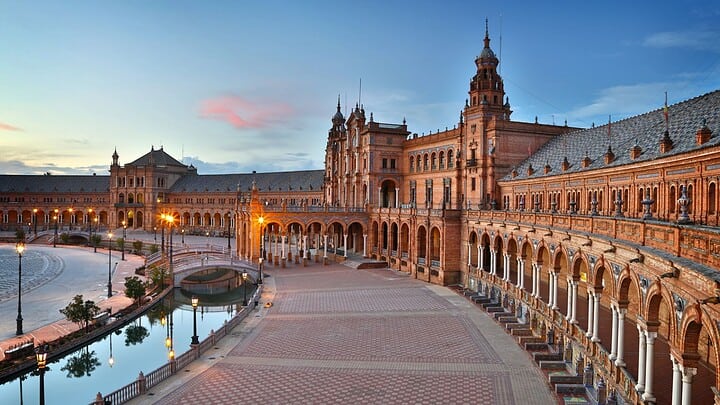
Public squares are where a city shows its real self. This is where people cross paths, pause, argue, laugh, and watch the day move by. You don’t need a plan here; you just show up and let the place do its thing. These 15 public squares tell stories through sound, movement, and how people share the space. Some of them feel loud and busy, while others feel calm and slow.
Read More Here: 15 Public Squares That Turn City Centers Into Beautiful Spaces
12 Countries Where Public Transport Makes Travel Easy

Navigating through a new country can be a challenge, especially when dealing with unfamiliar public transport systems. However, some countries have perfected the art of making travel easy and accessible for visitors. Efficient, reliable, and often affordable, these countries offer seamless transportation options that allow travelers to explore cities and beyond without stress. From buses and subways to trams and trains, these transport systems are designed to help both locals and tourists get around with ease.
Read More Here: 12 Countries Where Public Transport Makes Travel Easy